
Revolved Half Moon (Parivrtta Ardha Chandrasana)
Find Your Balance While Everything Turns
Revolved Half Moon takes the balance of Half Moon and changes the direction of the opening.
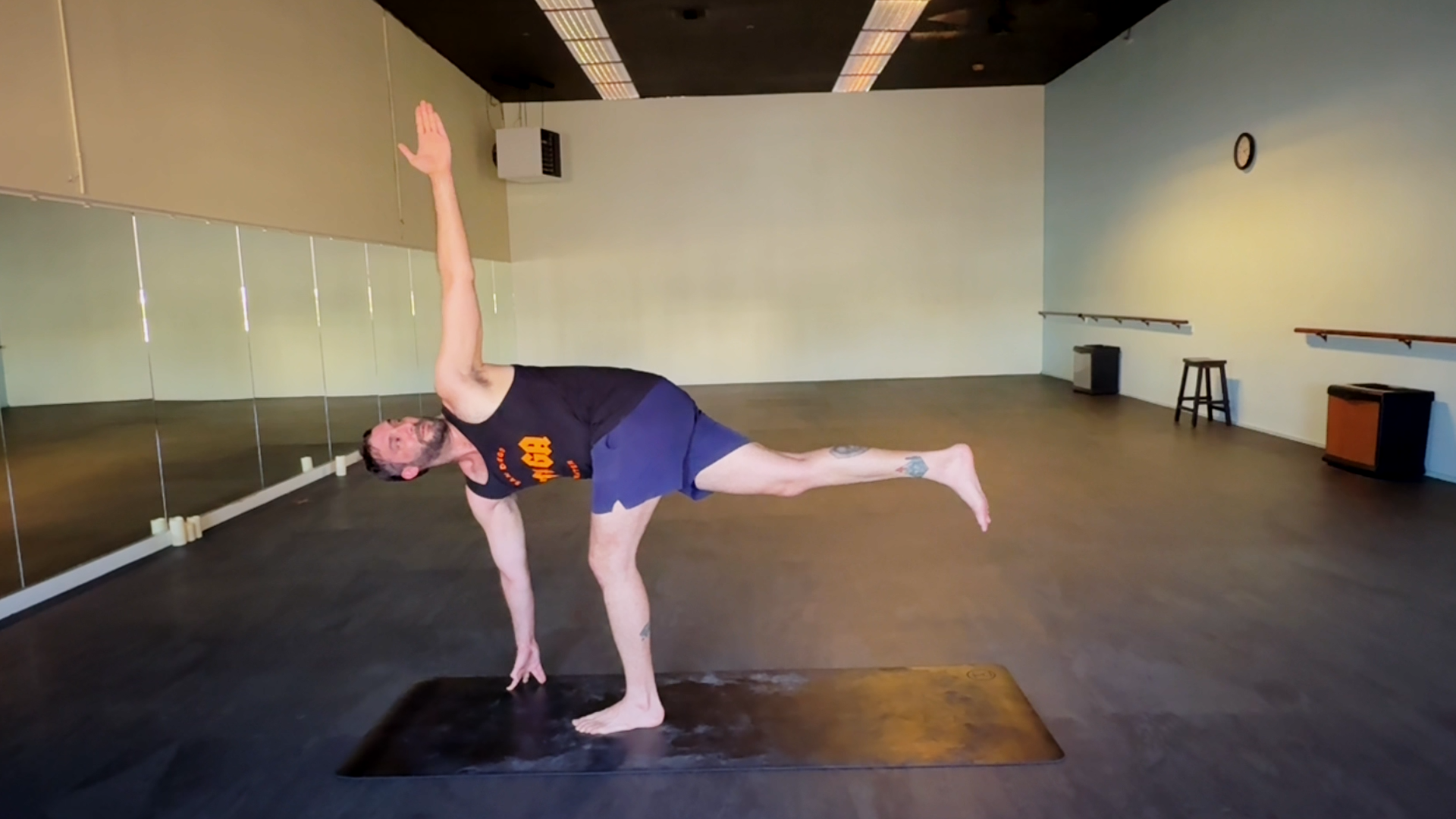
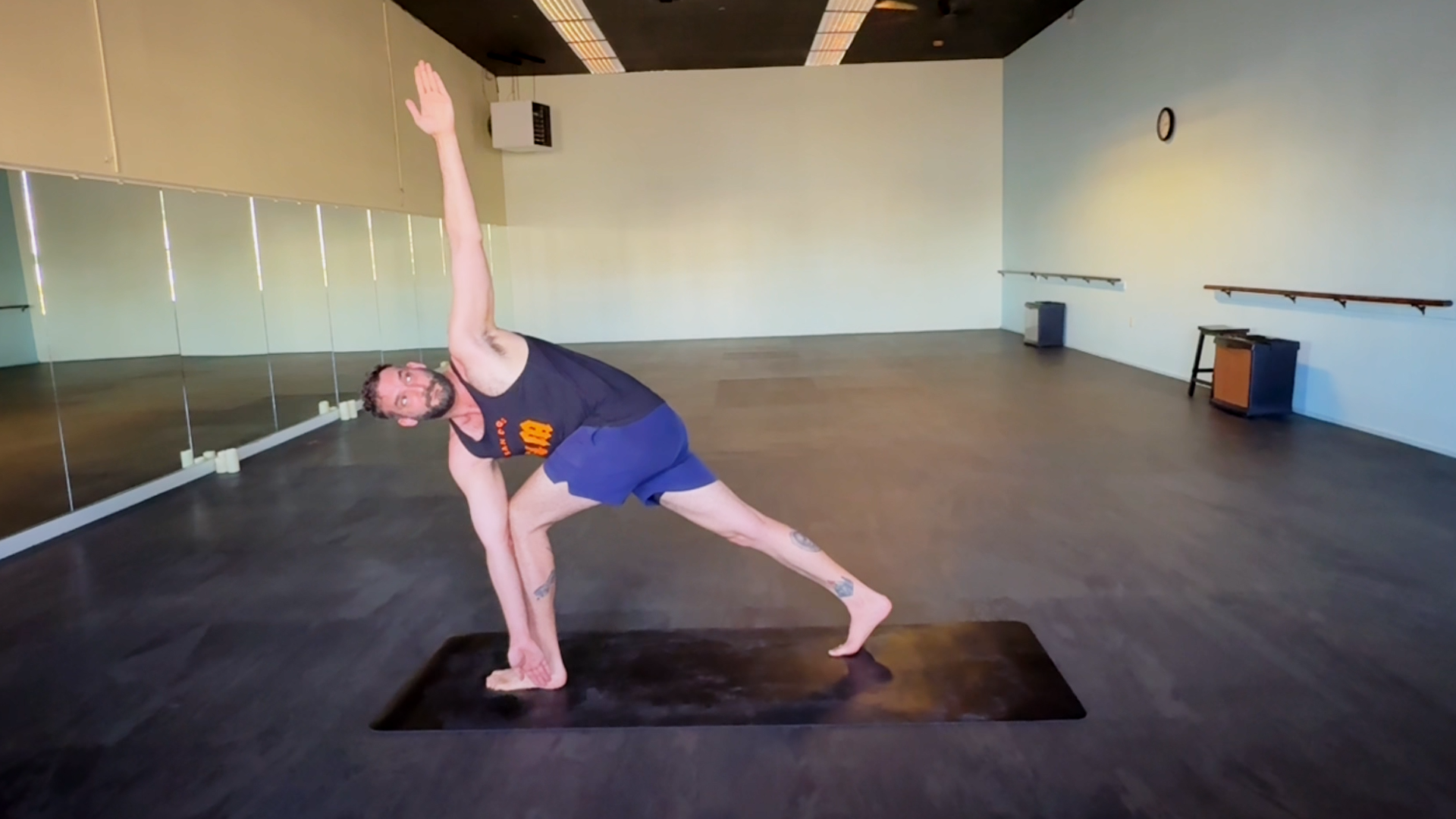
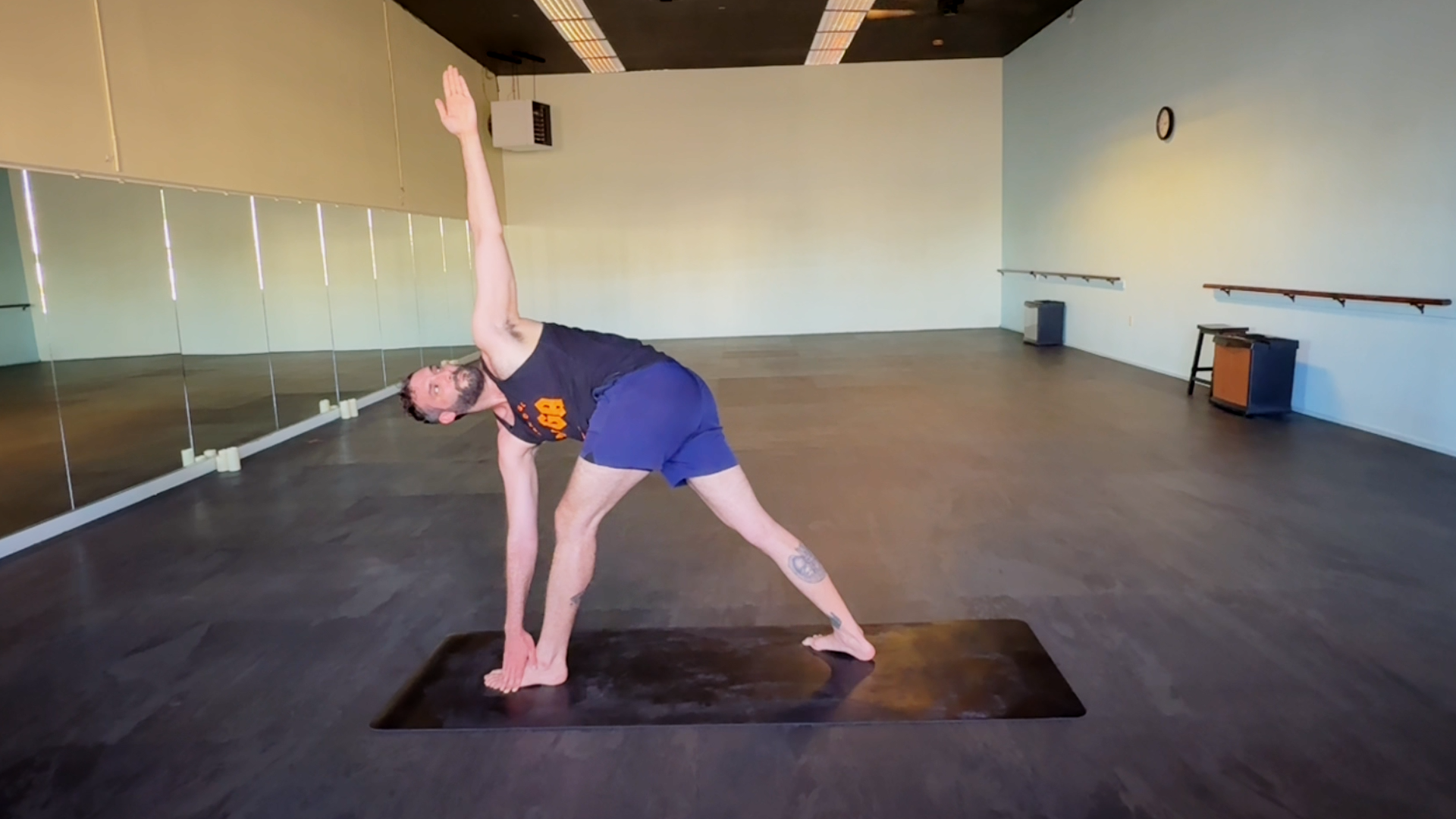
One foot grounds you. One leg extends behind you. Your torso rotates toward your standing leg while your arms reach in opposite directions. Balance is no longer the only challenge. Now you have to maintain it as you twist.
On the Warrior’s Path, Revolved Half Moon represents adaptability. You have already learned how to find your center. Now the pose asks whether you can keep finding it while your perspective changes.
The Meaning Behind Revolved Half Moon
In Sanskrit, Parivrtta means “revolved,” Ardha means “half,” Chandra means “moon,” and Asana means “pose.” Revolved Half Moon is the rotated counterpart to Ardha Chandrasana.
The relationship between the two poses tells much of the story.
Half Moon opens your body outward. Revolved Half Moon turns your torso toward your standing leg and asks you to create expansion through rotation instead. The foundation remains similar, but changing the orientation of your hips and chest transforms the experience.
There is something fitting about connecting this variation to the moon. The moon continually changes how much of itself we can see while remaining whole. Revolved Half Moon plays with that same idea of changing perspective.
Symbolically, the pose reminds you that seeing something differently does not require losing your center.
How to Practice Revolved Half Moon
1. Begin in a Lunge
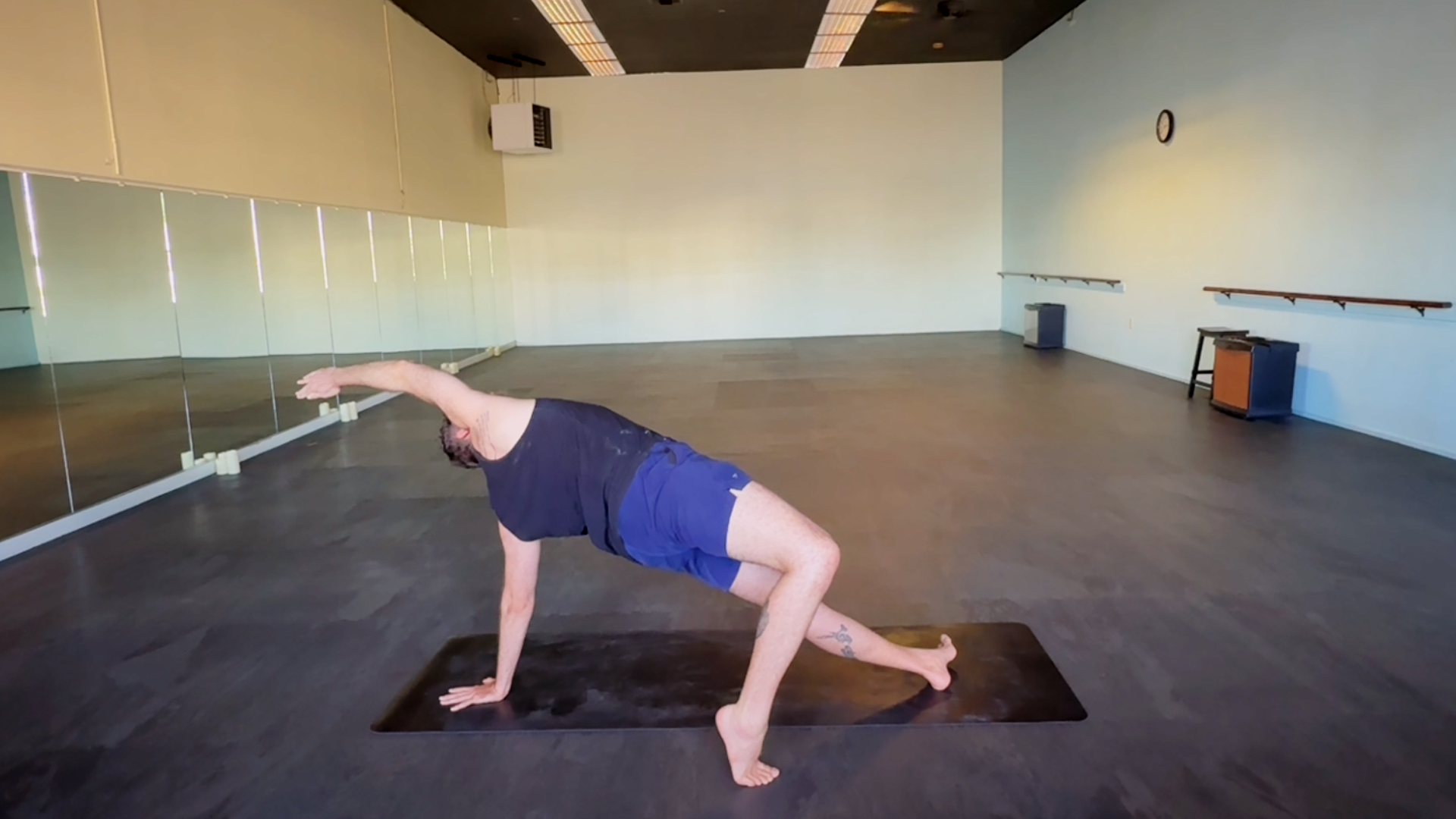
Step your right leg forward, bend your right knee, and extend your left leg behind you. Bring your hands to the floor or blocks on either side of your right foot.
2. Shift Your Weight
Transfer your weight into your right foot and begin lifting your left leg behind you. Straighten your right leg as you do so, but maintain a soft bend in your right knee to avoid hyperextension. Bring your hands in front of your standing leg.
3. Level Your Hips
Keep both hip points oriented toward the floor rather than stacking your hips as you would in traditional Half Moon.
4. Establish Your Bottom Hand
Place your left hand on the floor or a block slightly forward and inside your right foot. Press lightly into it while maintaining strength through your standing leg and core.
5. Begin Your Twist
Place your right hand on your hip and rotate your chest and top shoulder toward the right. Lengthen your spine before deepening the rotation.
6. Extend Your Top Arm
Once you feel stable, reach your right arm toward the ceiling. Turn your palm forward to open more in your shoulder. Stack your shoulders as much as your mobility comfortably allows.
7. Set Your Gaze
Look toward the floor, sideways, or up toward your top hand depending on your balance and neck comfort. To release, return your top hand to the floor and lower your lifted foot with control before repeating on the opposite side.
Props and Modifications
Place a block beneath your bottom hand to bring the floor closer to you.
Keep your top hand on your hip instead of extending it upward.
Practice with your lifted foot pressing into a wall for additional stability.
Focus on leveling your hips and lifting your back leg before adding the twist.
Common Misconceptions and Misalignments
Opening your hips like traditional Half Moon. Keep your pelvis relatively level so the rotation comes primarily through your torso.
Trying to twist before finding length. Extend your spine first, then rotate.
Dumping your weight into your bottom hand. Let your standing leg and core provide most of your support.
Letting your lifted leg drop as you focus on the twist. Continue reaching actively through your back heel.
Locking your standing knee. Maintain strength without forcing the joint into hyperextension.
Chasing the upward gaze. Looking down is still the full pose.
Benefits of Revolved Half Moon
Physical
Strengthens your legs, ankles, and core.
Improves balance and coordination.
Encourages mobility through your thoracic spine.
Strengthens your glutes and standing-leg stabilizers.
Develops full-body proprioception and control.
Mental and Emotional
Demands sustained concentration.
Builds patience when balance fluctuates.
Encourages adaptability within complexity.
Develops confidence as multiple challenges come together.
Wrings out the toxins of life.
Cautions and Considerations
Use a block or wall if balance is challenging.
Keep your gaze toward the floor if turning your head affects your stability.
Approach the rotation gradually if you have spinal or low back sensitivity.
Maintain a slight bend in your standing knee if needed.
Prioritize stability and length over achieving the deepest possible twist.
The Edge Connection
Your edge in Revolved Half Moon is staying centered while everything seems to pull you somewhere else.
Your standing foot adjusts beneath you. Your lifted leg reaches backward. Your chest rotates sideways. Your top arm reaches upward. There is no single direction to organize around.
That is precisely the challenge.
Can you adapt without becoming scattered? Can you let your body make small corrections without interpreting every wobble as failure? Can you maintain your foundation while allowing your perspective to change?
Half Moon taught you to balance as you expand. Revolved Half Moon asks you to maintain that balance when the orientation itself changes.
On the Warrior’s Path, adaptability is not losing your direction. It is knowing where your center is well enough to find it from somewhere new.
Warrior’s Edge Takeaway
In Revolved Half Moon, you embody the adaptable warrior.
Your foundation remains steady while everything above it changes direction. You balance, rotate, adjust, and continue reaching.
This pose reminds you that stability does not require staying the same. True balance gives you the freedom to change.
Find your center. Shift your perspective. Stay steady through the turn.

Half Moon Pose builds from the foundation of Triangle and shifts it into balance. You are no longer supported by both feet. One leg roots down while the other lifts. Your body opens wide into space. This is where structure meets instability.