Find your edge.
Strength and ease through yoga—designed to meet you where you are.
The Warrior’s Path starts with you
At Warrior’s Edge, your journey begins with one step. Whether you’re new to yoga or refining advanced skills, each practice builds strength, resilience, and balance — on and off the mat.
Discover your inner warrior. Start your practice with beginner-friendly poses, gentle flows, and foundations you can build on.
Grow deeper into your practice. Take your yoga further with strength-building sequences, balance work, and intermediate flows.
Hone your skills. Challenge yourself with advanced postures, creative flows, and the edge between ease and effort.
Start your Hero’s Journey
Explore philosophy, lifestyle, and practice tips that support your yogic path.
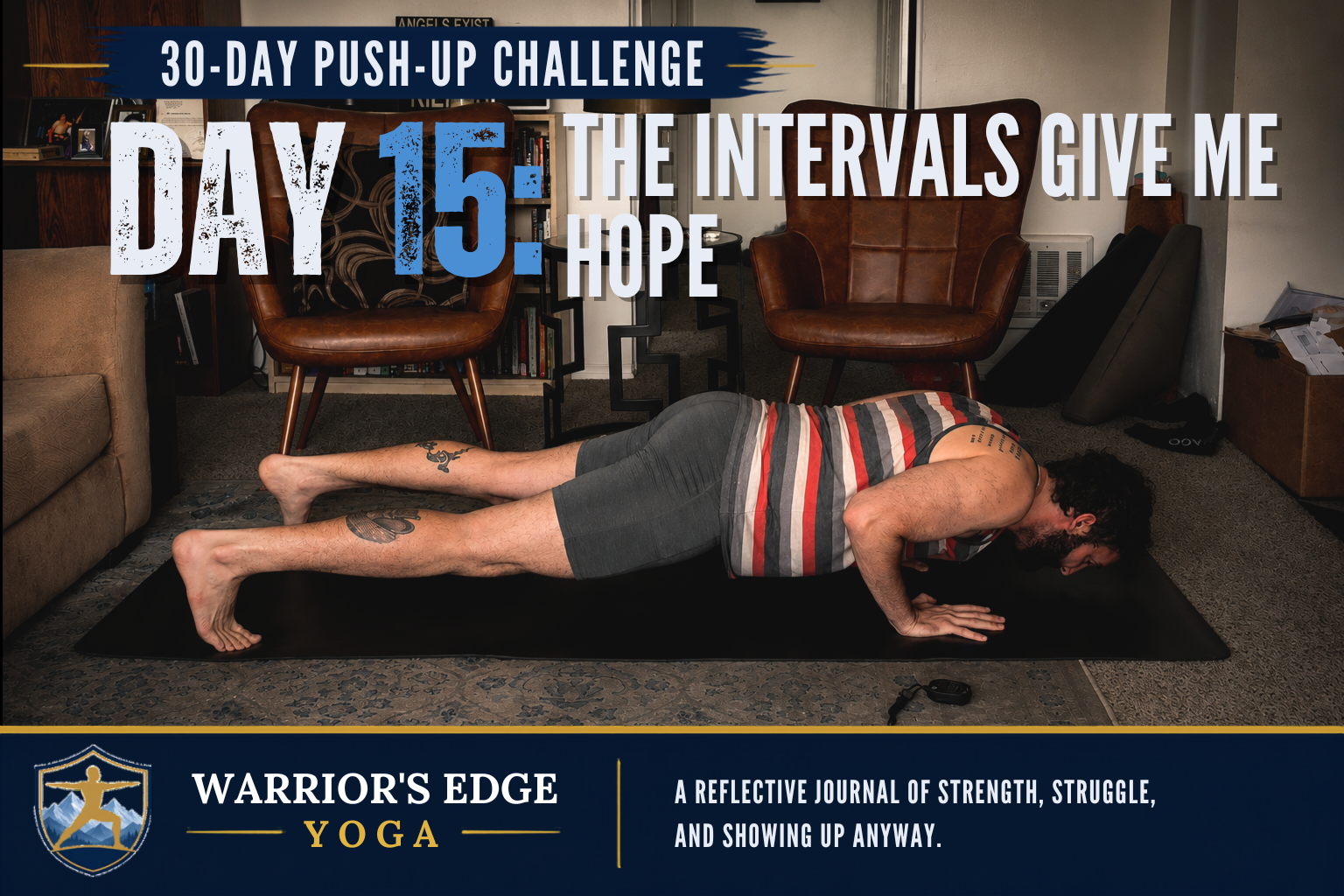
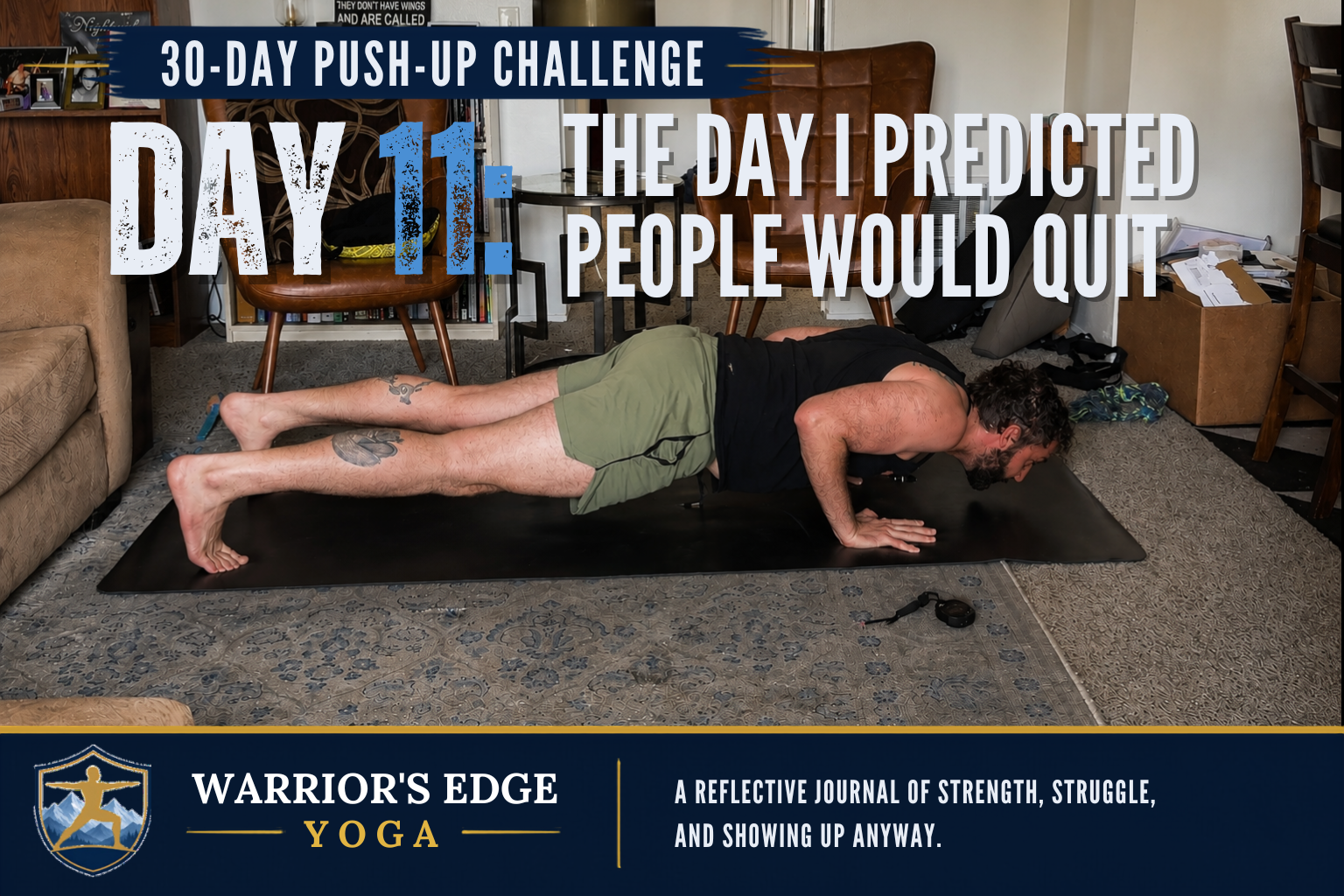
Long before this challenge began, I had circled Day 11 in my head. Combined with the slow rise until the challenge really gets tough, mixed with this day being the day you realized just how tough it’s going to be, made me believe it would be the day most people would quit.
The novelty would be gone. The push-ups would finally start to feel heavy. The finish line would still be so far away that it almost wouldn’t seem worth chasing anymore.
Then Day 11 arrived…and I became exactly the person I had predicted.
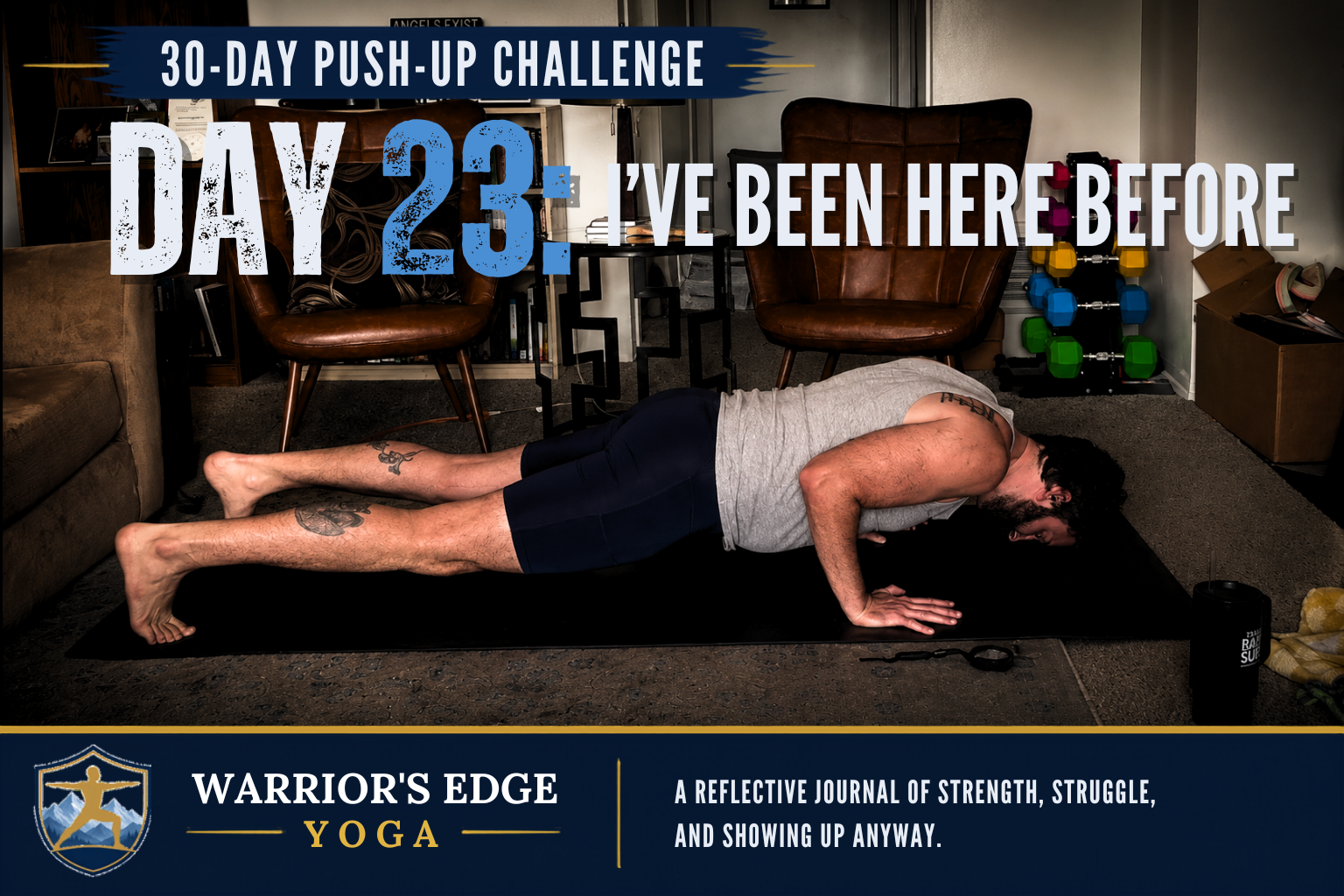
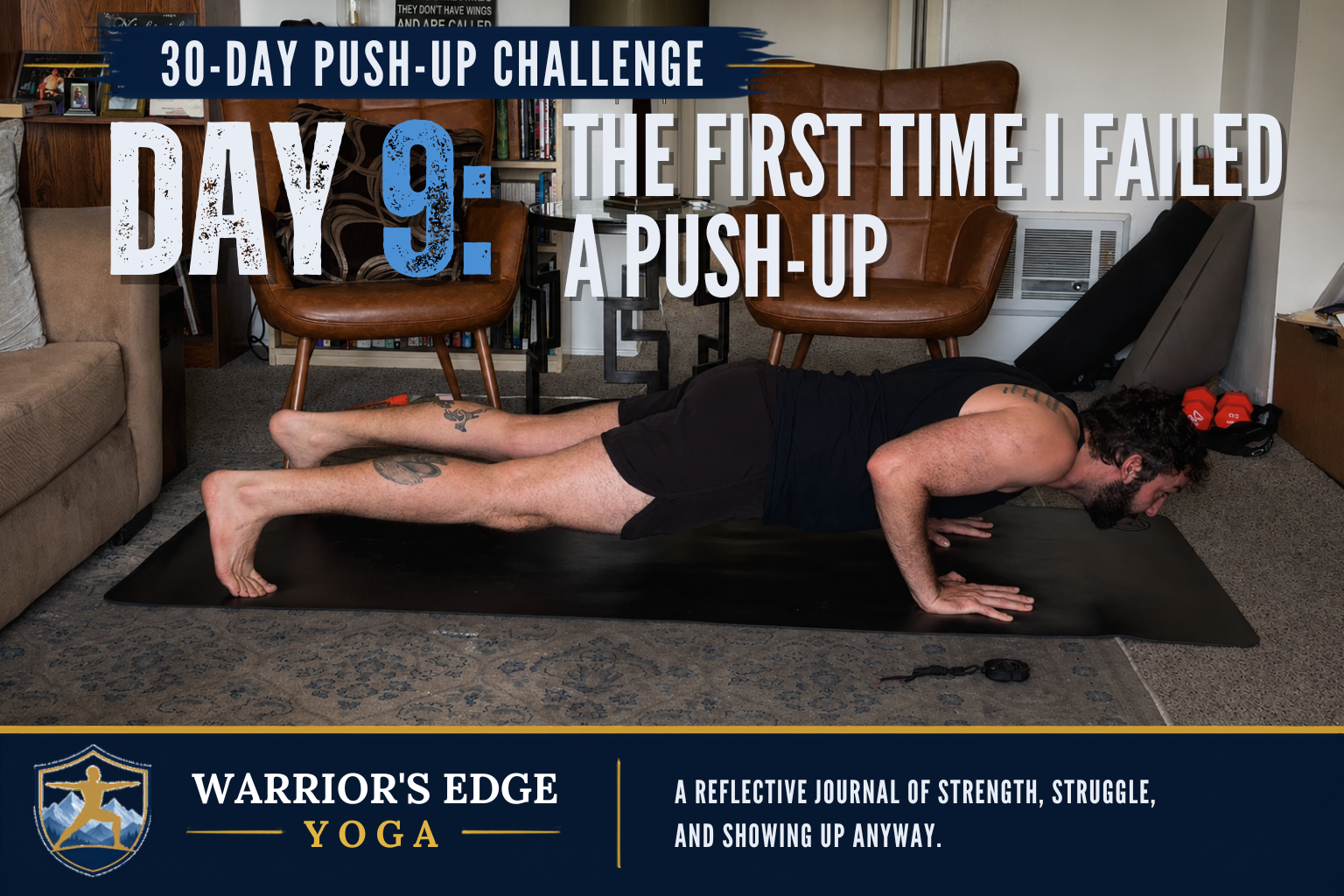
Today, I failed a push-up for the first time in the 30-Day Push-Up Challenge.
My arms gave out as I was pressing back up, and I collapsed face-first into the floor.
And then I laughed.
Honestly, there was something strangely comforting about it.
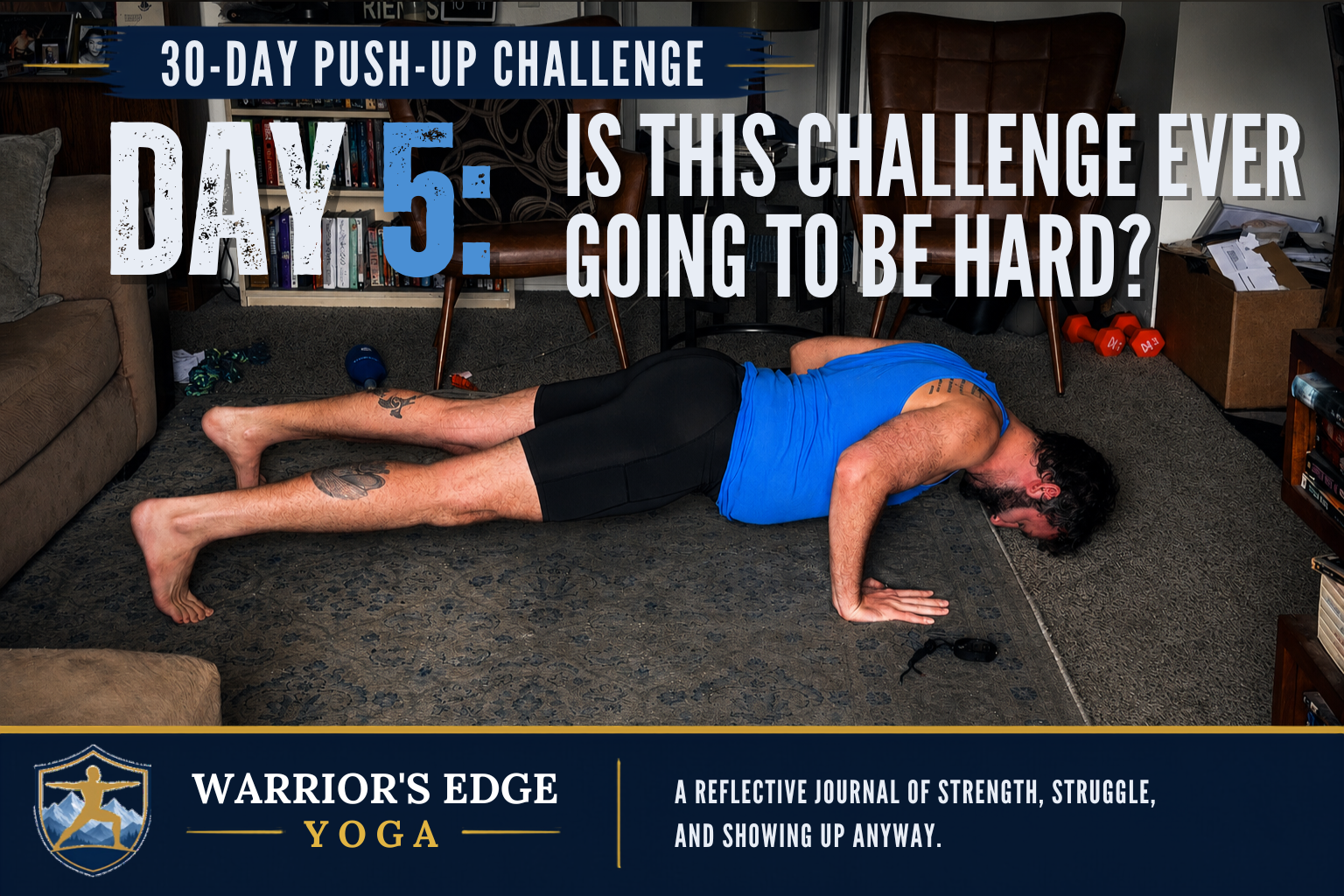
Five days in, and I keep waiting for this 30-Day Push-Up Challenge to punch me in the face.
So far, it hasn’t.
That’s not to say the workouts have been effortless. Push-ups and I have never exactly been friends, which is part of the reason I started this challenge in the first place. But Day 5 arrived and…I feel fine.
For now.
I hate push-ups.
An odd thing to say, I know, given the announcement of a 30-day pushup challenge that will take us on a journey of grit, consistency, and community.
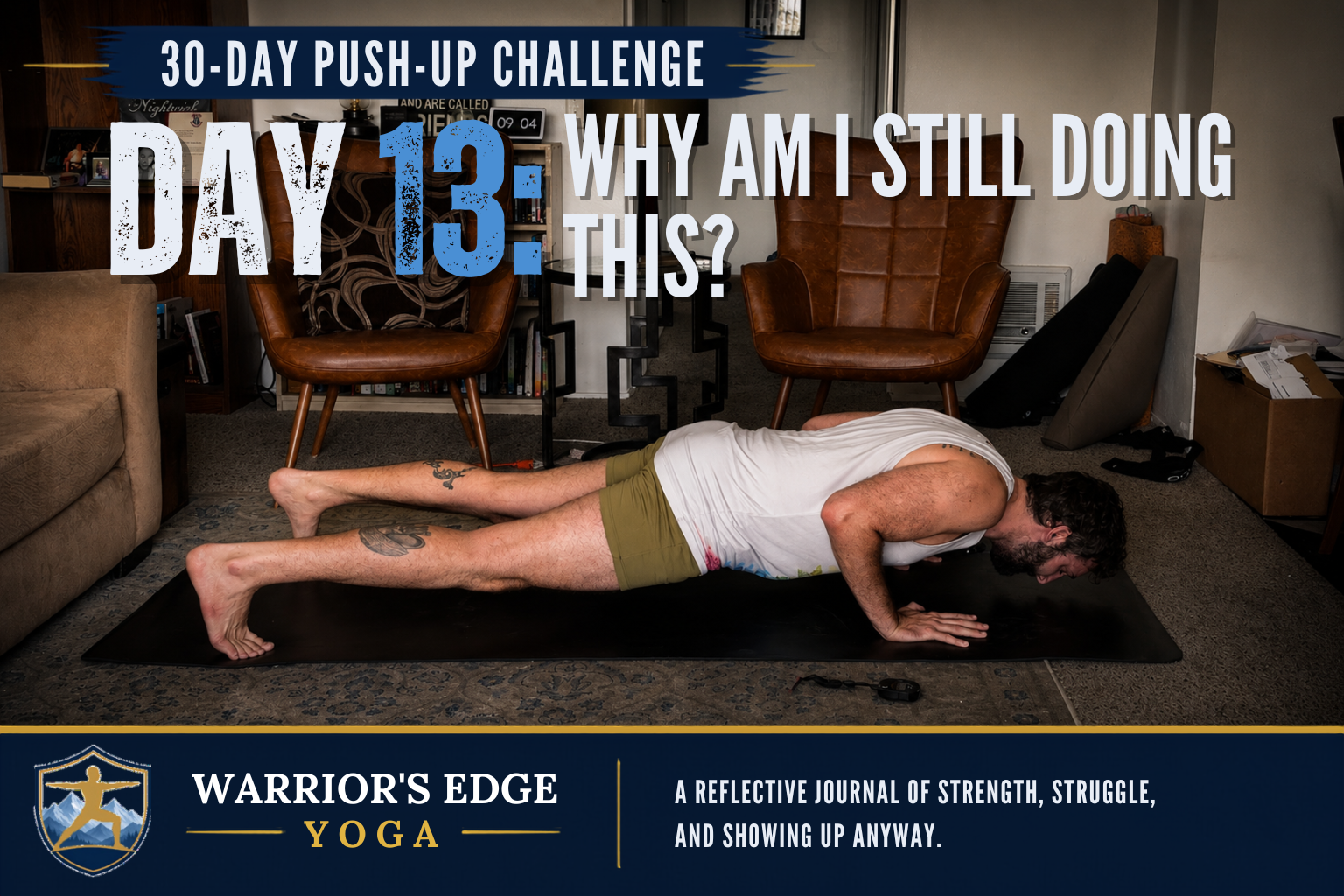
So why the hell am I doing this to myself?
We’re used to being good at things. Or at least getting good quickly. And when we don’t, we either push harder or check out completely. Yoga doesn’t really reward either of those approaches.
And that’s usually where the disconnect starts.
Savasana is often treated as the reward at the end of practice, but in many ways, it is the practice.
After the strength of Plank, the discipline of Warrior, the fire of Dragon, and the balance of Half Moon, Savasana asks you to stop doing anything and just receive.
This is where effort becomes wisdom.
The last thing you’re likely thinking about during your grief process is anything to do with joy or happiness. Depending on where you are in your journey, you may be more willing to move forward toward that sense of healing. You also may not, which is equally okay, but it’s what we’ll look at today anyway.
Our bodies store a lot more emotions than we think or give them credit for, particularly in our hips. Many people feel emotional after a deep yin practice because they’ve awakened emotions they otherwise considered dormant. Awaken all the good, bad, and ugly within you.
Half Moon Pose builds from the foundation of Triangle and shifts it into balance. You are no longer supported by both feet. One leg roots down while the other lifts. Your body opens wide into space. This is where structure meets instability.
Crescent Pose is where grounding meets elevation. Unlike Warrior 1, your back heel is lifted, which immediately demands more balance and engagement from your toes. You are not anchored through two flat feet. You are rising from a narrower base.
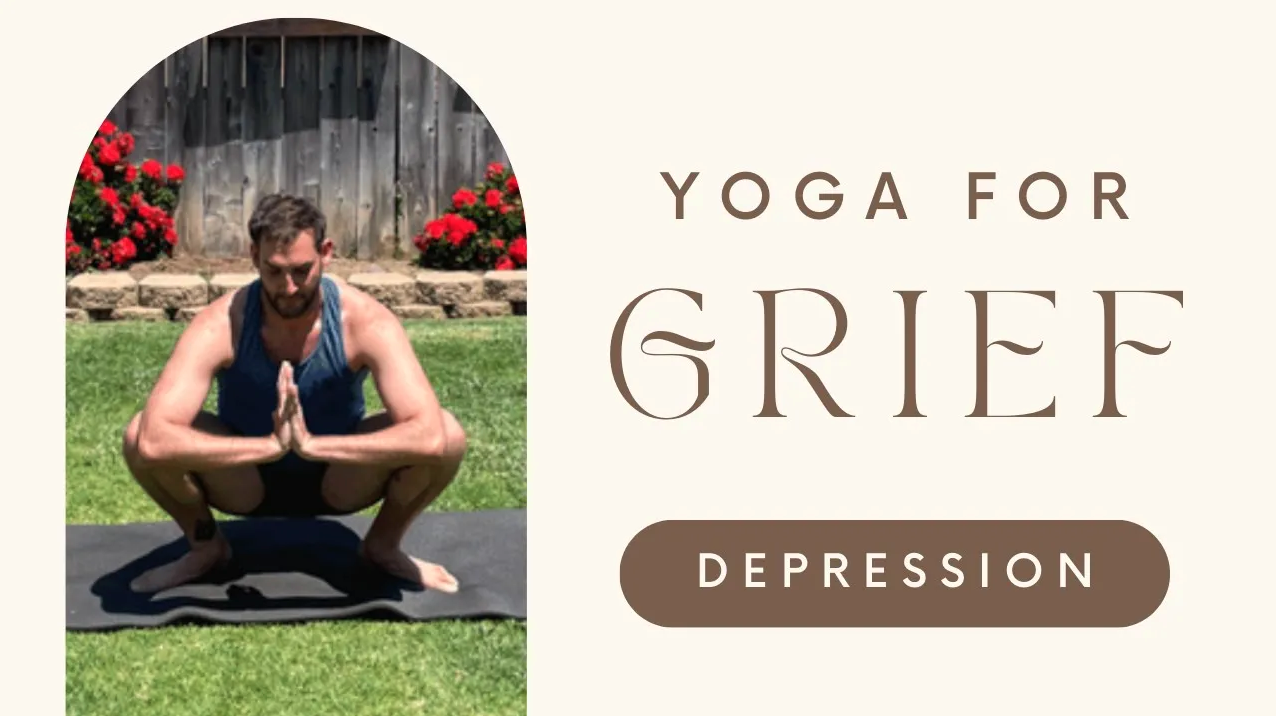
Depression comes with many emotions. Maybe it makes you angry and snippy. Maybe you feel numb and like doing nothing, or that you’ll never be happy again. Maybe you feel everything all at once, or maybe you feel nothing at all. Maybe you’re just wondering why all of this is happening.
Today’s practice taps into the duality of depression, starting off with building heat and moving quickly, then slowing things down immediately and tapping into the emotions you may have blocked yourself from feeling.
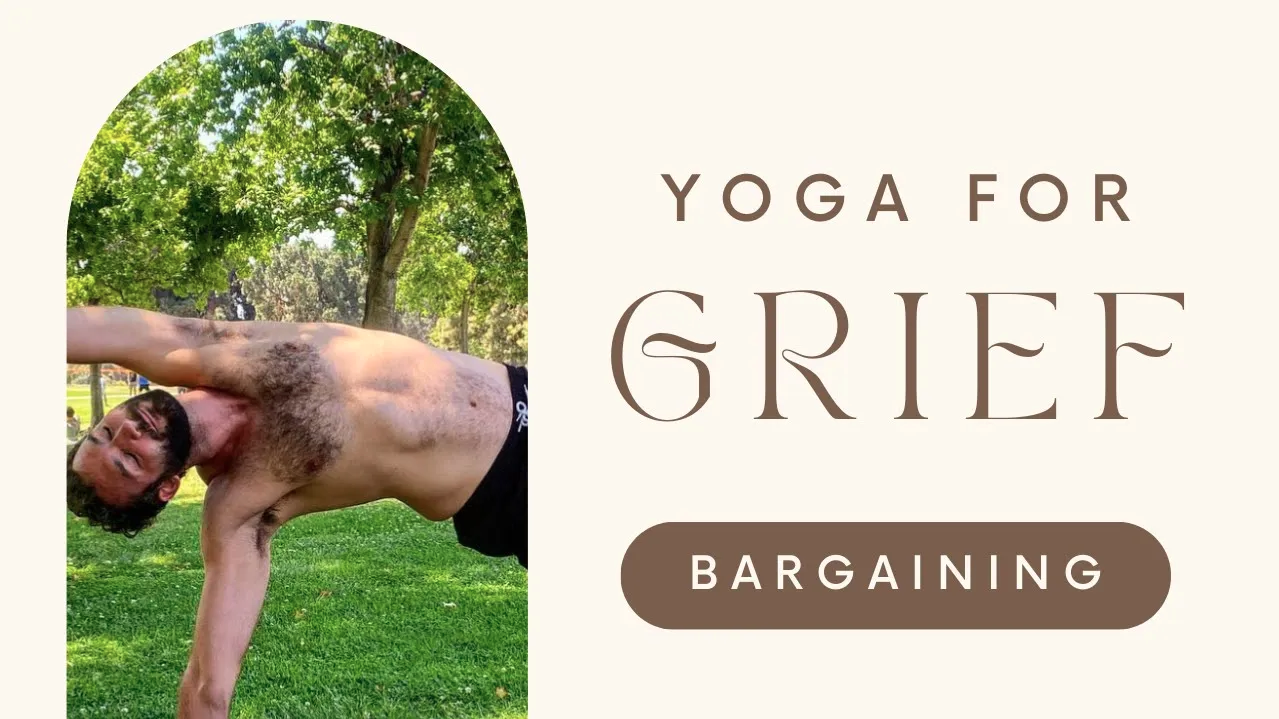
When tragedy strikes, it’s easy to get wrapped up in thoughts of “why.” Why did this happen to us? Why did this happen to them? Why does this hurt so much?
On the journey toward acceptance, this is the stage where you spend the most time wishing things were different or hoping you can change what is happening to you. Wherever you are, the grief yoga practice is here for you.
If you’re newer to yoga, “Ujjayi” becomes just another word you don’t understand. You’re moving, you’re trying not to fall out of a pose, and suddenly you’re supposed to control your breathing in a very specific way? And, at that, one that’s often encouraged to “engage,” but rarely comes with any instruction on how to do so?
Like most things in yoga, however, once it clicks, your Ujjayi breath becomes one of the most powerful tools in your practice.
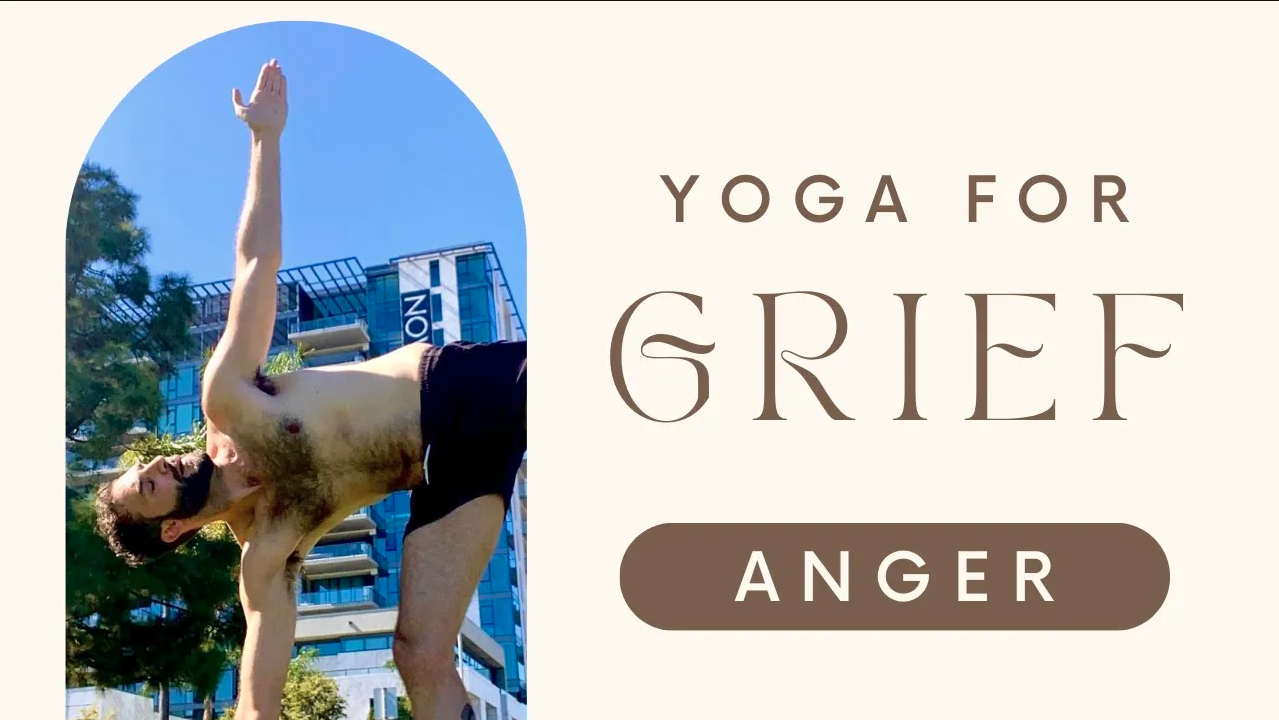
Often, anger is the first—or at least the most predominant—emotion we recognize during the grieving process. It’s sharp. Immediate. Loud.
The anger practice in the grief series taps into that rage on the mat and helps “lash out” the feelings you’re going through. You move through punches and kicks, incorporated into your yoga poses, to tap into the rage you’re feeling, then settle back into the experience as you return to the poses and postures.
“Focus on your breath,” the instructor says as they guide you through a meditation. “Go deeper inward,” they encourage, but your mind is too busy racing through a thousand other thoughts.
Then comes the quiet judgment. The narrator who tells you, “I’m bad at this,” and urges you to quit.
You are not failing at meditation because you can’t stop thinking. In fact, that expectation is the problem.
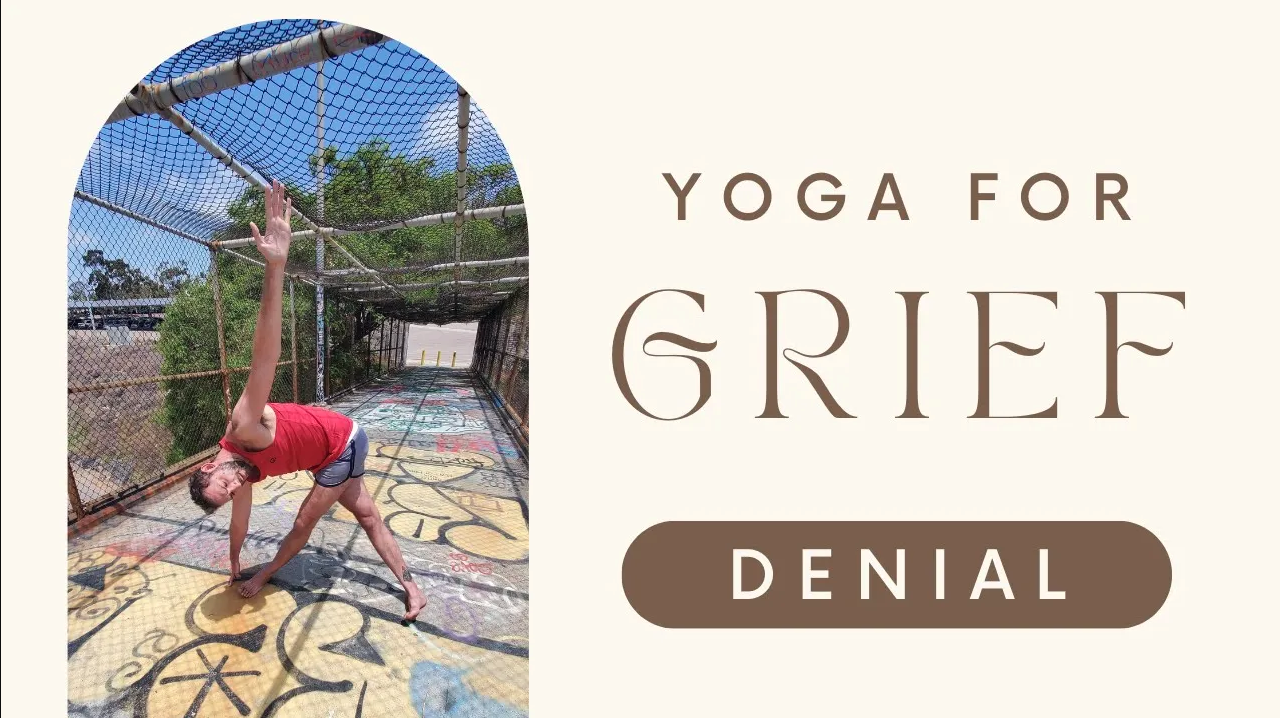
Sometimes, we simply cannot believe what has happened to us. Our body goes into a state of shock or protective mode when we witness or hear something that's too painful to process. When something comes to an "end" — whether it's a death, breakup, divorce, etc. — our brains try to imagine what life will be like now as we adapt to a new normal without the ones we love at our side. Oftentimes, denial is considered the "first stage" of grief because it comes right at the start when the information is still fresh. Although not linear, the other stages include anger, bargaining, depression, and acceptance.
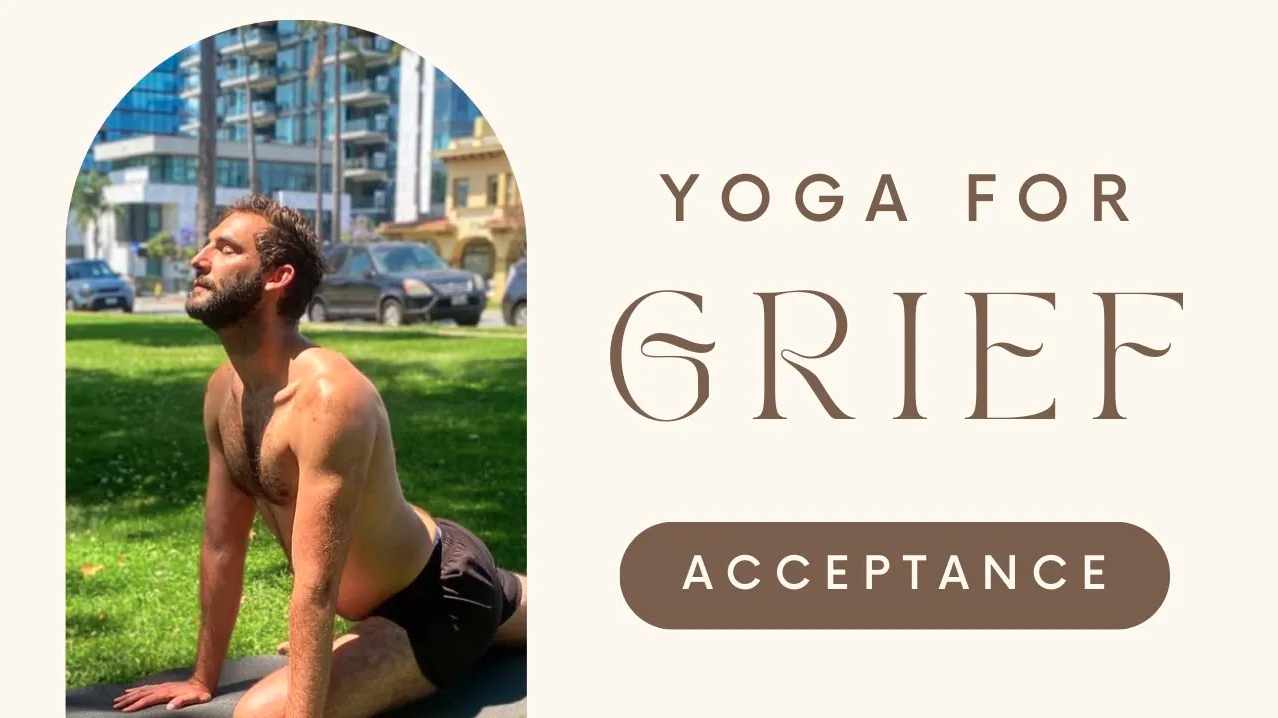
This is why Yoga for Grief is here for wherever you are on the journey.
I’m a 6-foot-6 yogi, and as strong as my core is from Boat Pose, as many Chaturangas as I do, and even as often as I strength train, I’m liable to throw out my back at any given moment.
Lower back pain is rarely just “one thing.” It’s usually a combination of habits, mechanics, strength imbalances, and sometimes plain bad luck. Let’s take a look at some of the most common complaints behind lower back issues.
Here are a few poses and exercises to help during your next flare-up.
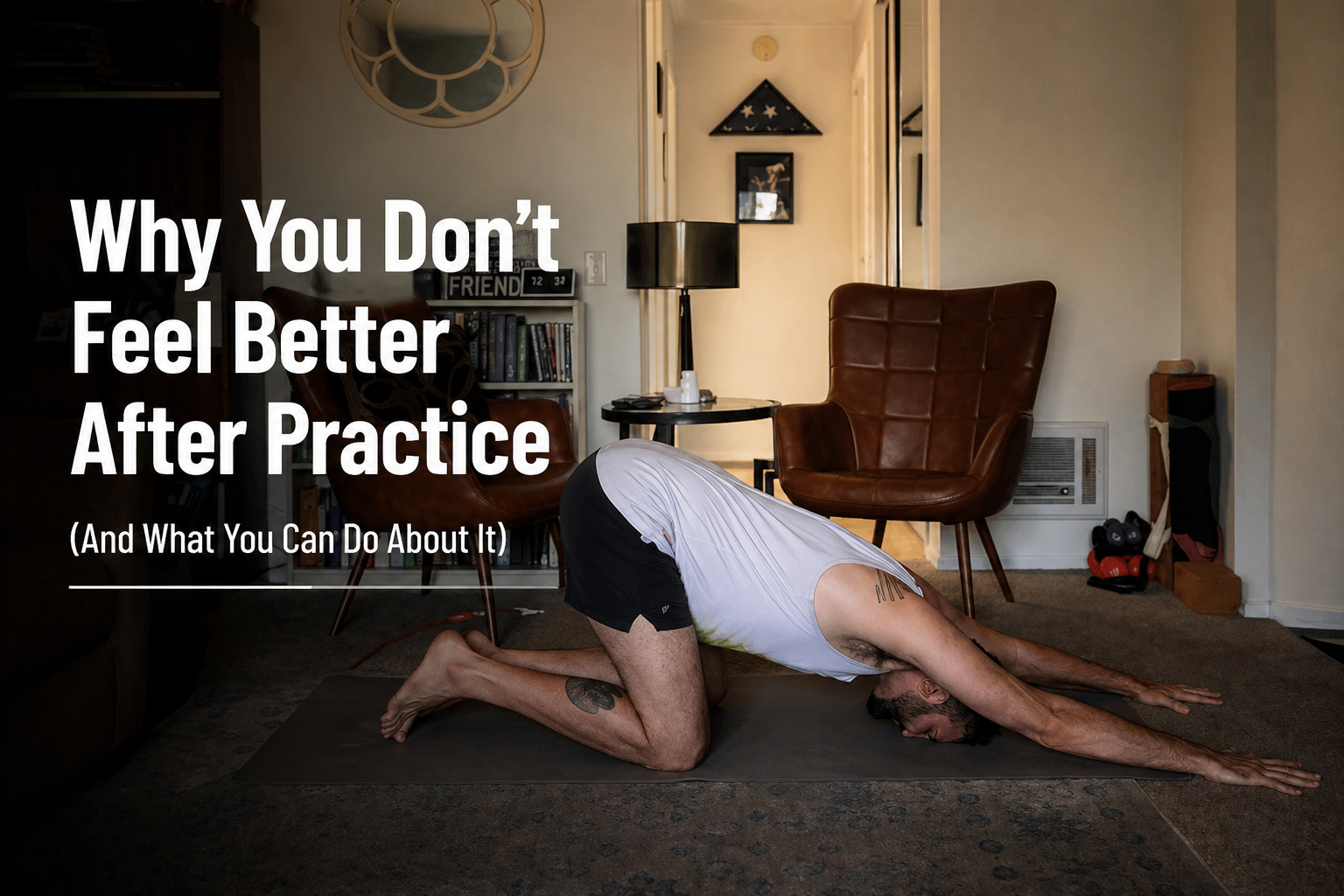
Child’s Pose is the place you return to when you need to rest, reflect, or reset. It’s a posture of surrender and grounding. It invites you to fold inward and find safety in stillness. Though often offered as a “break” in active classes, Child’s Pose is far from passive: it teaches you to listen, to breathe, and to reconnect to your center.
Learn how to build a sustainable home yoga practice that feels supportive, balanced, and burnout-free. Practical tips, mindset shifts, and weekly structure from Warrior’s Edge Yoga.
Finding a yoga mat as a tall person shouldn’t be this hard. This guide breaks down the best extra-long yoga mats on the market from 78” to 85”, including cork, rubber, budget picks, premium options, and tips for choosing the right mat for tall bodies.
Yoga has been around for thousands of years and has seen increasing popularity in the Western world over the past few decades. It is an ancient practice that involves physical postures, breathing techniques, and meditation. It has numerous benefits for the body and mind, and can improve overall health and well-being.
Here are 10 of the best benefits practicing yoga can bring to your life.
If you’ve been to a yoga class, there’s a good chance you’ve heard your teacher say something like “inhale to lift, exhale to fold.” Maybe you’ve been guided through a deep sigh, or a few moments of stillness where the only instruction was to breathe. That’s pranayama in action, even if you didn’t realize it.
Pranayama is the yogic practice of intentional breathwork, and while it might sound intimidating, at its heart, it’s just learning how to use the breath you already have. In fact, it’s one of the most powerful tools yoga offers not just for your practice on the mat, but for your life beyond it.
Over the centuries, various styles of yoga have developed, each with its unique characteristics and approaches. It can be a little intimidating trying to figure out what’s what and what works best for you, so let’s talk a little about the types of yoga, how long they’ve been around, who’s to credit, and how their popularity compares to the others.
If you’ve been practicing yoga for an extended period of time, it’s likely you’ve heard at least some mention of the Eight Limbs of Yoga. Depending on where you practice or who your teacher is, you may have also even learned one or two of them.
Whether you know what they are or not, here’s a quick rundown.
Meditation is a powerful tool that can help you relax, reduce stress, and improve your overall well-being.
That said, a lot of people find meditation challenging because they struggle to focus. If you're one of those people, never fear, you are far from alone. If you’d like to get into meditation and just aren’t quite sure how, here are some tips to help you get the most out of your practice.
Butterfly is one of those poses that looks simple on the outside, but reveals endless depth the longer you sit with it. In yin yoga, it’s often a baseline posture — accessible, grounding, and quietly powerful. In a more active practice, it becomes a forward fold that targets the hips and spine. Either way, Butterfly is a reminder that strength isn’t always about force; sometimes it’s about surrender.
Warrior II expands on what Warrior I began. If Warrior I is the first step forward, Warrior II is the widening of your stance — the moment where you claim more space and ground yourself in unwavering presence. This pose teaches you to open in two directions at once, stretching your awareness and balance across a wider field.
Warrior I is the entry point to the entire Warrior’s Path. When you step into this pose, you’re not just lunging — you’re declaring your presence. This is the stance of focus, of intention, of stepping forward even when the ground beneath you feels uncertain. Warrior I trains you to meet resistance head-on and teaches you that balance doesn’t come from rigidity, but from alignment and breath.
Warrior III is the leap — the transformation of grounding into flight. If Warrior I is the step and Warrior II is the stance, Warrior III is the soaring strike forward. This pose challenges you to balance strength and surrender, stability and expansion. It strips away the extra, leaving only precision, focus, and trust in your own edge.
Practice with me
Subscribe to the Warrior’s Edge YouTube channel below to stay up-to-date on the first and all future classes. Browse the featured classes below, or sort through the various intensity-level classes categorized into their respective Warrior I, Warrior II, Warrior III, and Peaceful Warrior pages. You can also check out Warrior Workouts for weighted/body weight and functional exercises to help build your strength.
Book in person
-
CorePower Yoga
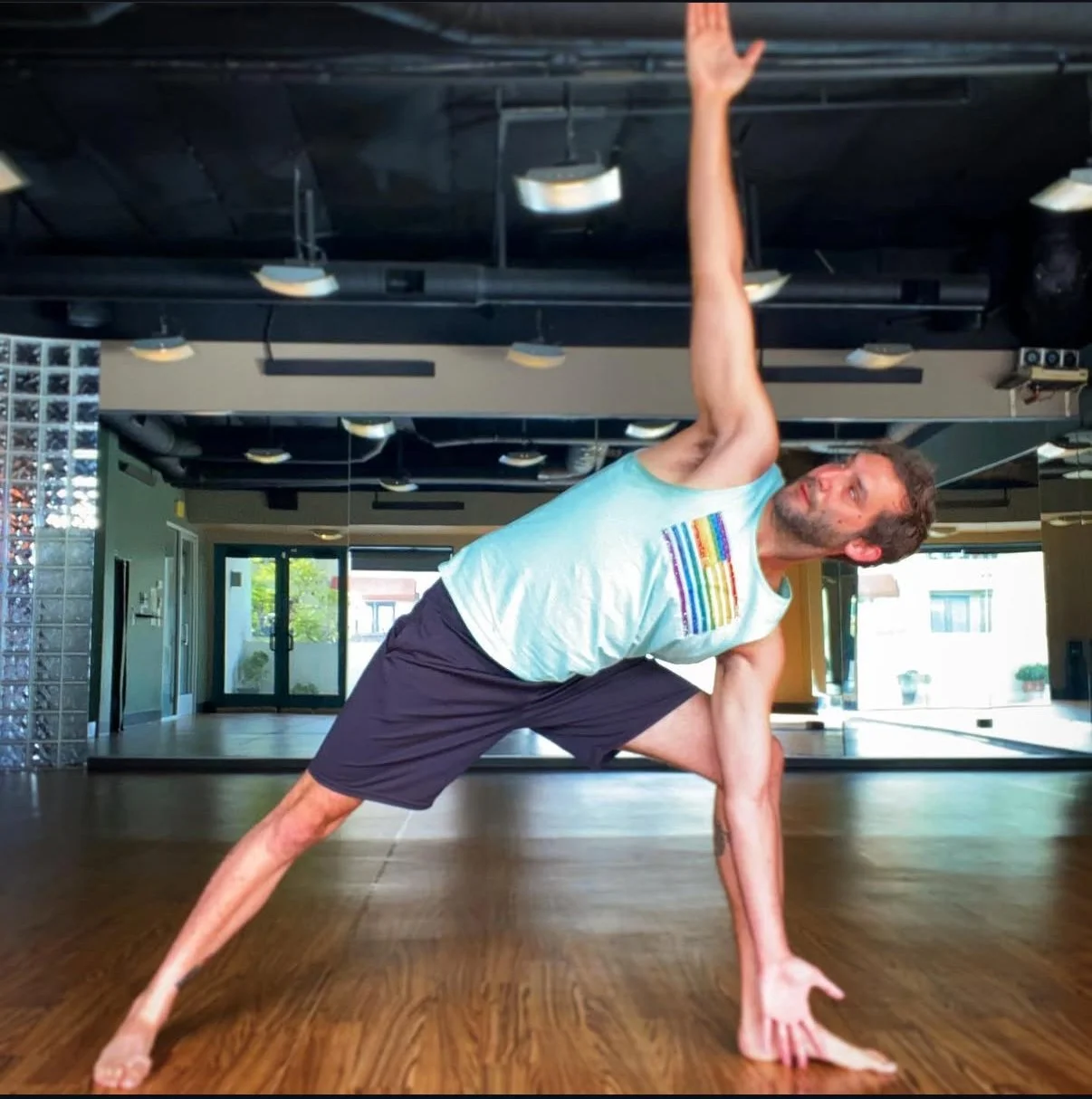
Join me on the Corepower mat for a strong power flow every Tuesday morning at 8 am.
If you’re in the mood to lift some weights, check out my Glutes & Core Strength X on Thursdays at 3 pm, or my Upper Body Strength X on Fridays at 12:15 pm.
Be sure to check the schedule below for any other sub opportunities I pick up along the way!
-

San Diego Yoga Center
Join me at the San Diego Yoga Center for some invigorating vinyasa on Mondays at 5 pm, then slow things down with me for sweet and supple yin on Wednesday evenings at 6 pm, then take a mix of both in a VinYin on Thursdays at 5 pm.
I also tend to pick up classes at this studio when I am available, so be sure to check the schedule to see if I’ve snuck in!
-

FireSnake Fitness
Electro Muscle Stimulation (EMS) is one of the leading technologies in the fitness world designed to help you tone your body working only your muscles — no joints at all!
Not only is this great for therapy, but it’s also an awesome option people looking to build their overall strength.
Catch me here:
Tuesdays 2:15 p.m.-6 p.m.
Saturdays 10:30 a.m.-12:45 p.m. -

Personal Lessons
Interested in a personal lesson all to yourself?
Whether you’re new to yoga or looking to deepen your practice, check out my availability below and book a one-on-one session. These can be ongoing or as-needed, based on your needs.
Please note, I am also happy to accommodate strength training, but am limited due to not having a space for weights. Please enquire for more information.
I’m Andrew, a yoga teacher, personal trainer, and writer who helps students find strength and ease through movement. At Warrior’s Edge, I blend accessible yoga with strong practices designed for every body—especially tall and unique ones. Learn more about my journey and philosophy.
Learn more about our studio and philosophy around yoga.
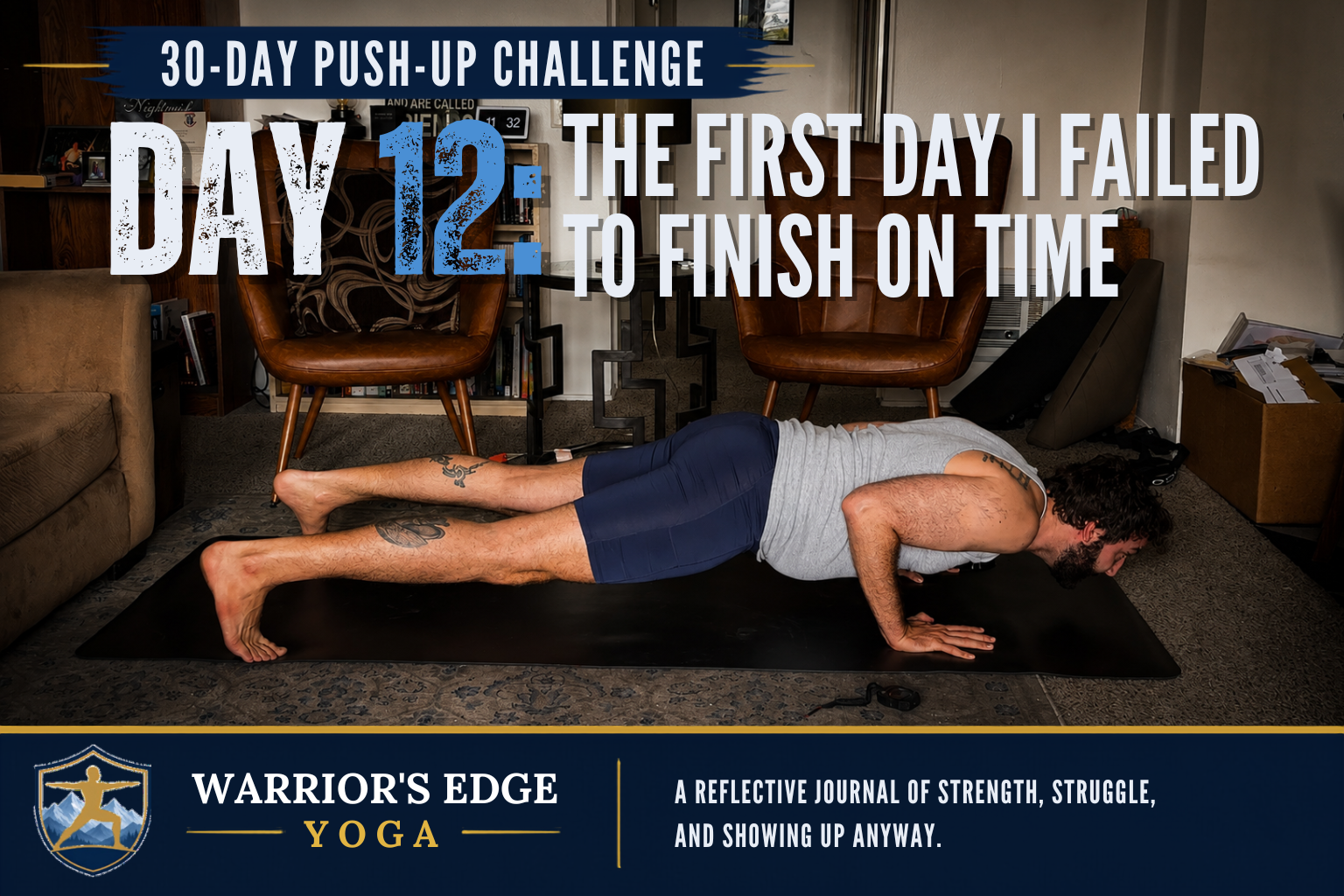
Today was the first day in the 30-Day Push-Up Challenge that I didn’t finish within the allotted time.
When the timer ended, I still had four push-ups left.
Oddly enough, I wasn’t upset. Not because I don’t care about the rules.
But because I’d already decided what the rules were.