
Revolved Side Angle (Parivrtta Parsvakonasana)
Turn Toward the Challenge
Revolved Side Angle builds on the strong foundation of a lunge by introducing rotation. Your legs and your bottom hand ground you. Your spine lengthens. Then your torso turns across your front leg, asking you to maintain everything you have already built while adding another layer of complexity.
This is not a twist you simply fall into. You create space first, then rotate into it.
On the Warrior’s Path, Revolved Side Angle represents the willingness to turn toward challenge. You remain grounded in your foundation while deliberately facing another direction. The pose demands strength, mobility, balance, and focus simultaneously.
Sometimes the path forward requires you to change your perspective without changing your commitment.
The Meaning Behind Revolved Side Angle
In Sanskrit, Parivrtta means “revolved” or “turned around,” Parsva means “side” or “flank,” Kona means “angle,” and Asana means “pose.” Revolved Side Angle takes the long lines of Extended Side Angle and rotates them.
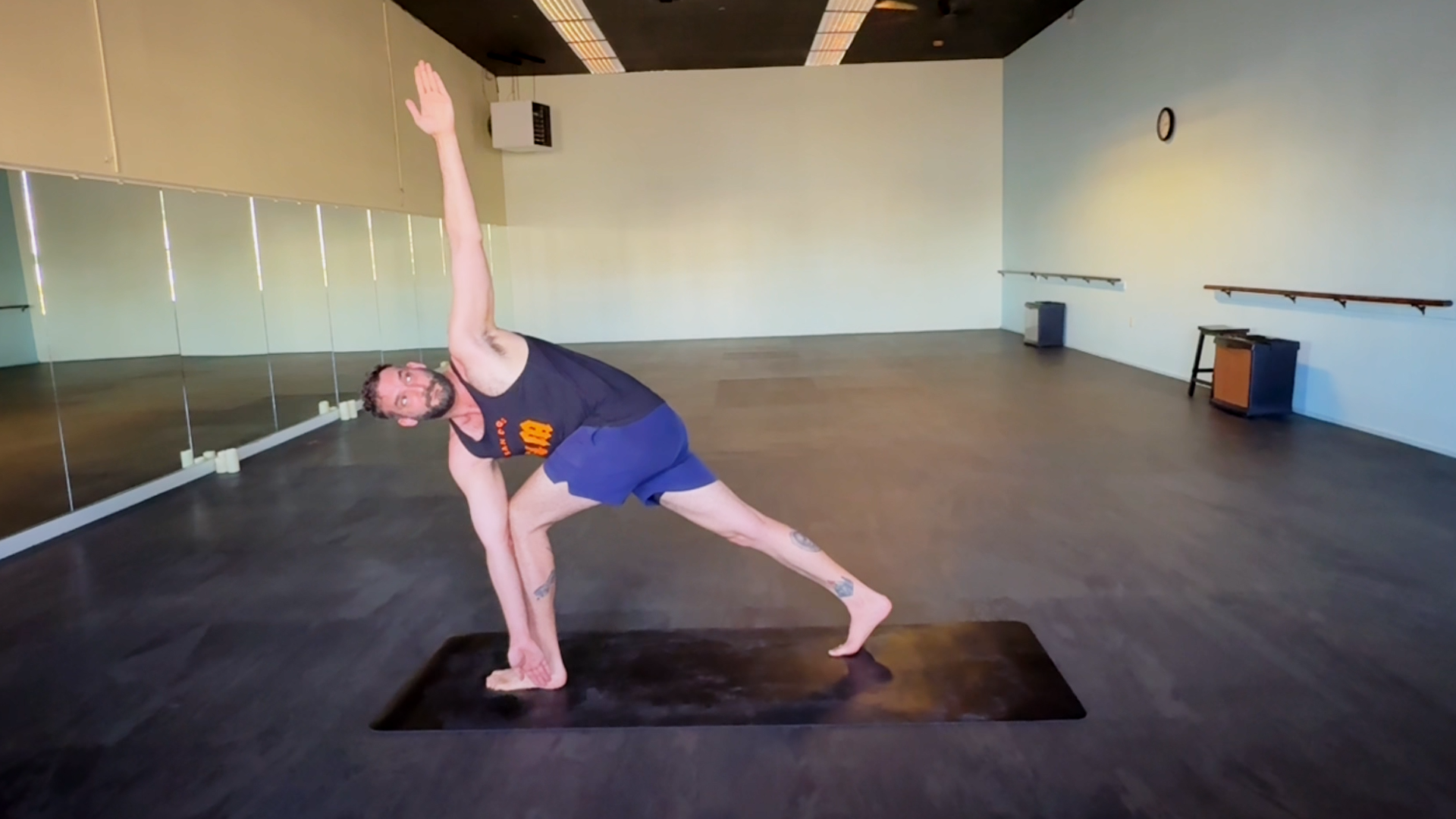
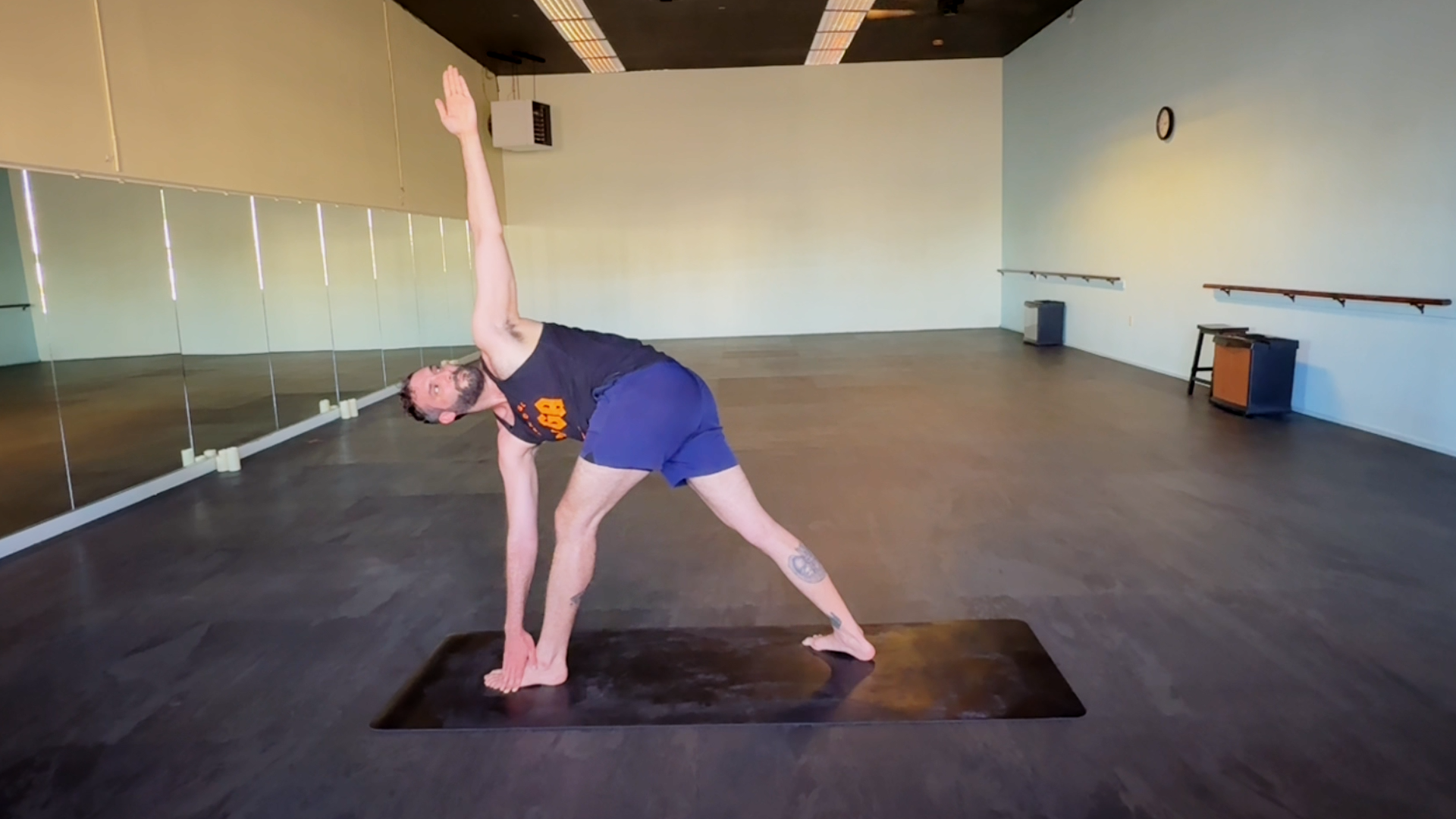
The relationship between the two poses, however, is important. Extended Side Angle teaches you to expand outward from a strong foundation. Revolved Side Angle asks you to maintain that foundation while crossing your body and turning in the opposite direction.
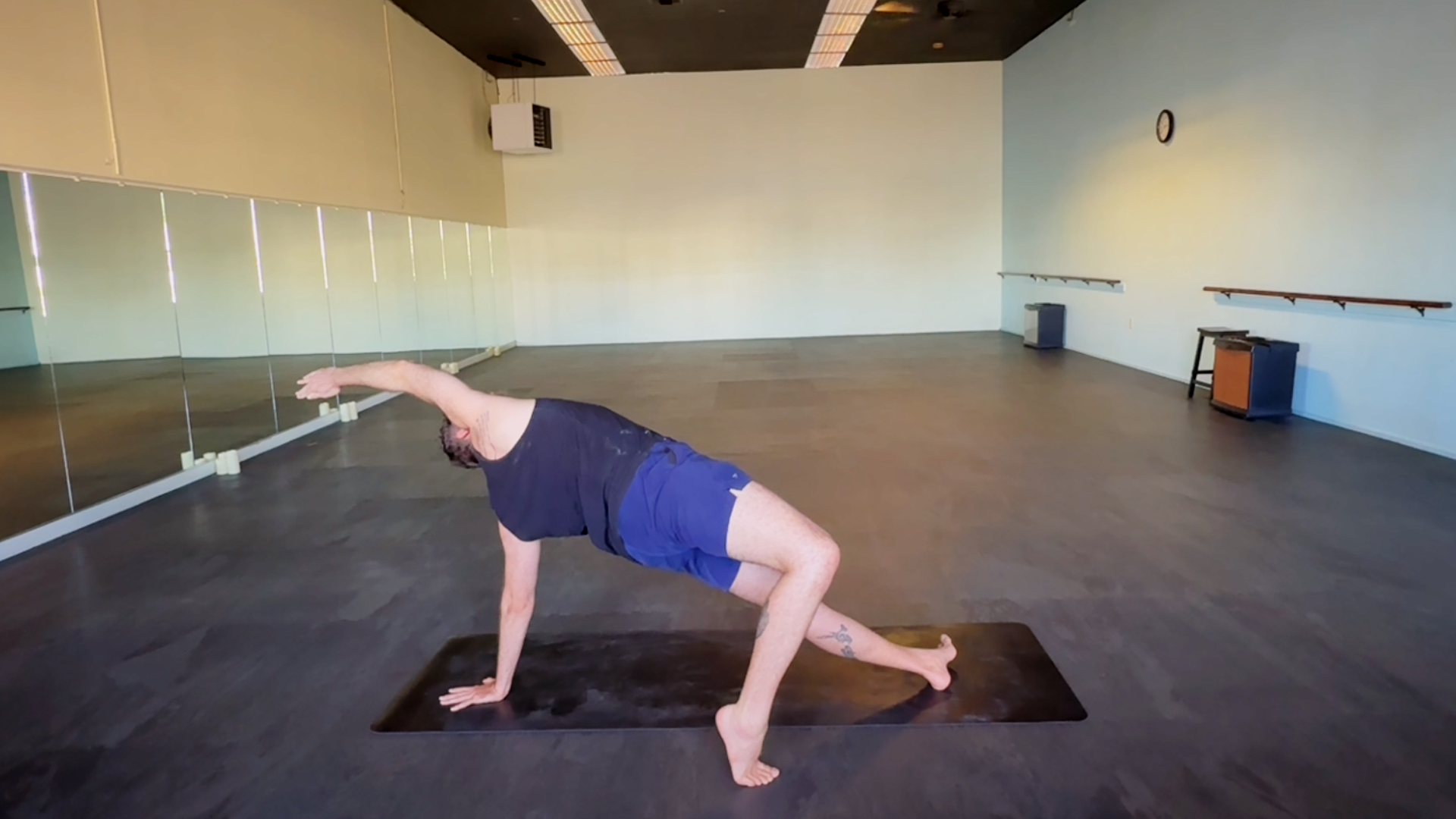
That crossing action is what distinguishes the pose’s full expression. If your right leg is forward, your left arm moves across your right leg. Your left elbow can connect to the outside of your right knee, and your bottom hand can eventually reach toward the floor outside your right foot.
Symbolically, Revolved Side Angle represents transformation through perspective. You do not need to abandon where you stand in order to see something differently. Sometimes you simply need enough space to turn.
How to Practice Revolved Side Angle
1. Begin in a Crescent Lunge
Step your right foot forward and extend your left leg behind you, lifting your heel. Bend your right knee and keep it tracking in the same general direction as your toes. Reach your arms overhead.
2. Start With a Prayer Twist
Bring your hands to prayer. Inhale to lengthen your spine, then exhale to hook your left elbow outside of your right knee.
3. Extend Your Arms
Your inhales find length in your spine, and your exhales deepen the twist. Once the twist feels stable, reach your left hand toward the floor outside your right foot. Extend your right arm overhead alongside your ear to create one long diagonal line from your back heel through your fingertips. Draw your top shoulder back while continuing to lengthen through your spine.
4. Press Your Elbow Into Your Knee
Actively press your left elbow into the back of your knee to rotate your spine even further open. Place your left hand on a block for more support.
5. Set Your Gaze
Look toward the floor, straight ahead, or toward your top hand depending on your balance and neck comfort. Stay for 5 to 10 breaths. Continue creating length with each inhale and exploring rotation with each exhale. Repeat on the opposite side.
Props and Modifications
Stay in a prayer twist rather than extending your arms.
Lower your back knee to the mat to reduce the balance and strength demands while you explore the twist.
Place a block by your front foot beneath your bottom hand to bring the floor closer to you.
Keep your top hand on your hip instead of extending it overhead if you want to focus primarily on rotation.
For a more supported variation, bring your opposite hand to the floor inside your front foot. If your right foot is forward, for example, your left hand can remain inside the foot. This creates less rotation but provides more stability and can create a smoother transition into poses such as Side Plank.
Common Misconceptions and Misalignments
Keeping your bottom arm inside your front leg and treating it as the final expression. This is a useful modification, but the full twist comes from crossing your opposite arm over your front leg.
Trying to reach the floor before establishing the twist. Connect your opposite elbow outside your knee first and prioritize rotation over depth.
Rounding your spine to twist farther. Lengthen before you rotate.
Letting your front knee collapse inward. Keep it tracking comfortably with your toes.
Losing strength through your back leg. Continue reaching through your back heel and pressing through the ball of your foot, or set your knee down.
Using your arm to wrench yourself into the twist. The connection between your elbow and knee provides leverage, but your core and torso should create the rotation.
Benefits of Revolved Side Angle
Physical
Strengthens your legs, glutes, and core.
Builds balance and full-body stability.
Encourages mobility through your thoracic spine.
Stretches your hips and hip flexors.
Creates length through your side body in the extended variation.
Mental and Emotional
Builds concentration through a complex combination of actions.
Encourages patience and deliberate movement.
Develops adaptability when your orientation changes.
Cultivates composure while navigating challenge.
Cautions and Considerations
Lower your back knee or shorten your stance if maintaining balance compromises your alignment.
Use a block rather than forcing your bottom hand to reach the floor.
Approach the twist gradually if you have spinal or low back sensitivity.
Keep your gaze neutral if looking upward creates neck discomfort or affects your balance.
Avoid using your elbow as aggressive leverage against your knee. Create length through your spine before exploring more rotation.
The Edge Connection
Your edge in Revolved Side Angle is finding space within complexity.
There is a lot happening. Your legs are working. Your balance is being tested. Your torso is rotating in one direction while your back leg reaches strongly in the opposite direction. It can be tempting to chase the most dramatic version of the twist and lose everything supporting it.
But rotation needs space.
Can you lengthen before you turn? Can you establish your foundation before reaching for the floor? Can you recognize that a deeper twist means very little if you have to sacrifice the rest of the pose to get there?
Even the supported variation teaches something valuable. Sometimes placing your hand inside your foot gives you the stability you need for where you are going next. Other times, crossing your arm outside your leg asks you to move deeper into unfamiliar territory.
On the Warrior’s Path, knowing your edge means understanding both.
Warrior’s Edge Takeaway
In Revolved Side Angle, you embody the warrior willing to turn toward what challenges you.
Your foundation remains strong, but your perspective changes. You cross your centerline, rotate into unfamiliar space, and discover that stability does not require facing only one direction.
On the Warrior’s Path, this pose reminds you that perspective is something you actively create.
Find your foundation. Create space. Turn toward what comes next.

Half Moon Pose builds from the foundation of Triangle and shifts it into balance. You are no longer supported by both feet. One leg roots down while the other lifts. Your body opens wide into space. This is where structure meets instability.