
Side Plank (Vasisthasana)
Find Strength on a Narrower Foundation
Side Plank takes the stability of Plank Pose and turns it sideways.
Instead of distributing your weight between two hands and two feet, you narrow your foundation. One hand supports you. One side of your body faces the floor. Your hips lift while the rest of you expands outward.
Suddenly, strength alone is not enough. You need balance, coordination, and full-body integration to keep yourself lifted.
On the Warrior’s Path, Side Plank represents self-reliance. Your foundation becomes smaller, but your presence does not. You learn that having less beneath you does not mean you have less strength to draw from.
The Meaning Behind Side Plank
In Sanskrit, Side Plank is known as Vasisthasana, named for the sage Vasistha, an important figure in Hindu and yogic traditions whose name is often translated as “excellent,” “richest,” or “most accomplished.”
Vasistha appears throughout ancient Indian literature and is traditionally regarded as one of the great sages, or rishis. He is also associated with the Yoga Vasistha, a philosophical text centered around conversations between Vasistha and Prince Rama about the nature of the mind, reality, liberation, and self-knowledge.
That connection gives Side Plank a richer meaning than its English name suggests.
The pose requires strength, but brute force will only take you so far. You must organize yourself. Your supporting hand, shoulder, core, hips, legs, and feet all work together to create one stable structure.
Symbolically, Vasisthasana becomes a practice of inner steadiness. When your external foundation becomes smaller, you discover how much support can come from within.
How to Practice Side Plank
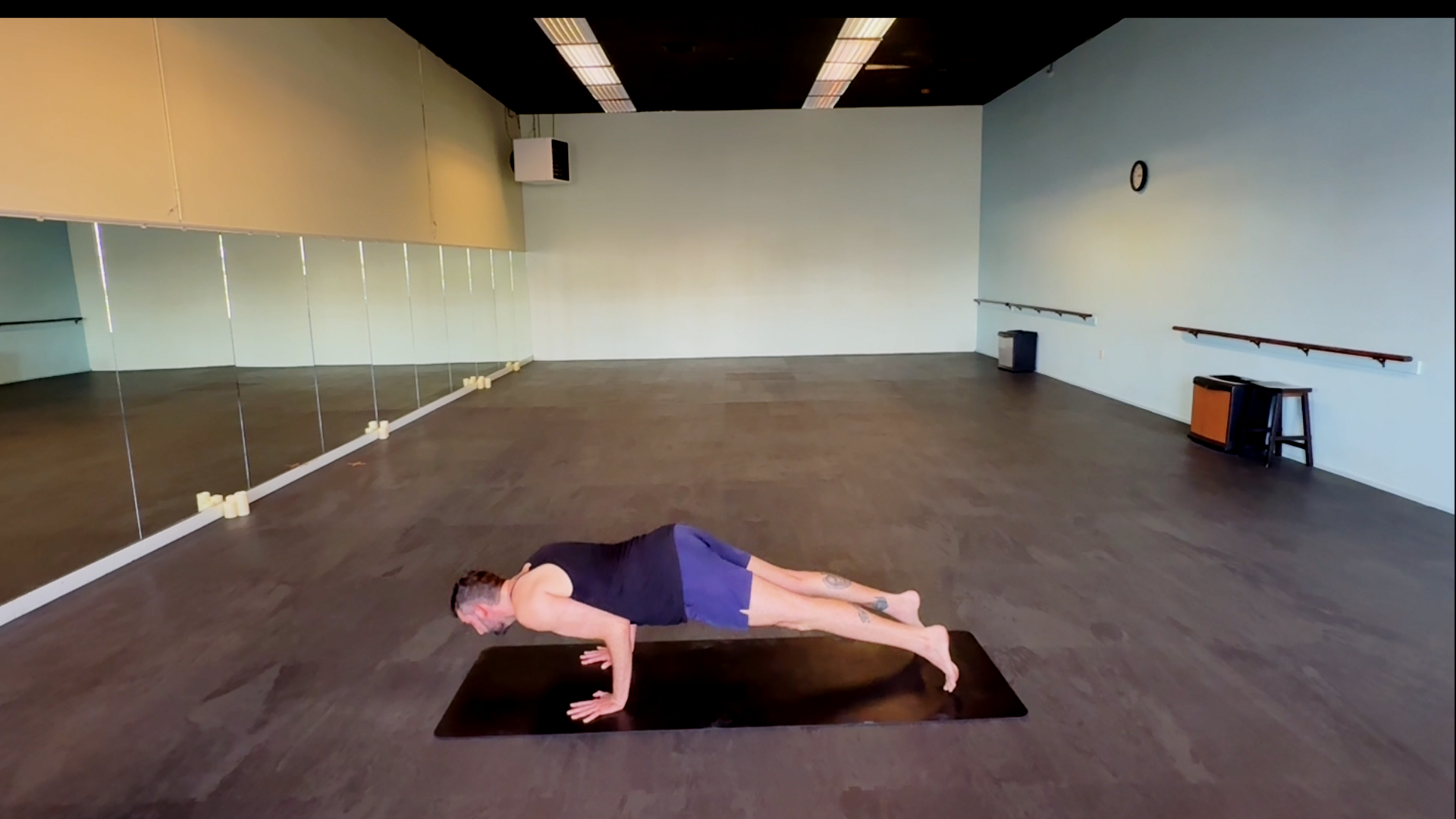
1. Begin in Plank Pose
Plant your hands beneath your shoulders and extend your legs behind you. Engage your core and create one long line through your body. Push the ground away.
2. Shift Your Weight
Transfer your weight into your right hand. Press firmly through your palm and spread your fingers wide.
3. Rotate to the Side
Turn your torso toward the left side of your mat. Roll onto the outer edge of your right foot and stack your left foot on top.
4. Lift Your Hips
Engage your core and side body to keep your hips lifted. Avoid allowing your waist to collapse toward the floor.
5. Extend Your Top Arm
Reach your left arm toward the ceiling. Your left wrist, left shoulder, right shoulder, and right wrist should all be in one line. Continue pushing the floor away with your bottom hand.
6. Energize Your Legs
Flex your feet and reach actively through your heels. Let your legs contribute to the pose instead of relying entirely on your supporting arm. Look toward the floor, straight ahead, or toward your top hand depending on your balance and neck comfort. Stay for 5 to 10 breaths. Keep pressing through your foundation while creating length through the rest of your body. Return to Plank and repeat on the opposite side.
Props and Modifications
Lower your bottom knee to the mat while keeping your top leg extended for additional support.
Stagger your feet instead of stacking them. Place your top foot slightly in front of your bottom foot to create a wider base.
Keep your top hand on your hip while you establish your balance.
Practice with your back against a wall to help you feel the stacking of your shoulders, hips, and legs.
Common Misconceptions and Misalignments
Dumping all your weight into your supporting wrist. Press actively through your entire hand and engage your shoulder.
Allowing your bottom shoulder to collapse. Push the floor away and create space between your shoulder and ear.
Letting your hips sag. Engage your core, glutes, and side body to maintain lift.
Relying only on your upper body. Side Plank requires active engagement of the legs and feet as much as it requires arm strength.
Trying to stack your feet before you are ready. A staggered stance is still Side Plank and may help you achieve better alignment.
Holding your breath. The more challenging the balance becomes, the more important steady breathing becomes.
Benefits of Side Plank
Physical
Strengthens your arms, shoulders, and wrists.
Builds strength through your obliques and entire core.
Strengthens your glutes and legs.
Improves balance and coordination.
Develops shoulder stability and full-body integration.
Mental and Emotional
Builds concentration under physical demand.
Develops confidence as your foundation becomes smaller.
Encourages adaptability and body awareness.
Cultivates trust in your own ability to support yourself.
Cautions and Considerations
Modify or avoid the full expression if you have wrist, elbow, or shoulder injuries.
Lower your bottom knee or stagger your feet if balance becomes unstable.
Keep your supporting shoulder active rather than sinking into the joint.
Choose a neutral gaze if looking upward affects your balance or causes neck discomfort.
Build duration gradually. Maintaining strong alignment for fewer breaths is more valuable than holding longer while collapsing.
The Edge Connection
Your edge in Side Plank appears when your foundation gets smaller.
In Plank, four points help support you. Turn sideways and suddenly much of that familiar stability disappears. Your body may shake. Your balance may shift. Your instinct may be to grip harder through the hand holding you up.
But Side Plank teaches you to distribute the work.
Can your core support your arm? Can your legs support your core? Can your breath remain steady while your balance changes beneath you? Can every part of your body contribute instead of demanding that one part carry everything?
There is another lesson here, too. Modification does not mean failure. Lowering a knee or staggering your feet gives you a larger foundation while you develop the strength to make it smaller.
On the Warrior’s Path, independence does not mean refusing support. It means knowing how to use the support available to you while developing the strength to stand with less of it.
Warrior’s Edge Takeaway
In Side Plank, you embody the self-reliant warrior.
Your foundation narrows, but you do not make yourself smaller. You organize your strength, lift your center, and continue expanding into the space around you.
On the Warrior’s Path, this pose reminds you that stability is not determined by how much support you have. It is shaped by how intentionally you use what remains.
Press down. Lift your center. Trust your strength.
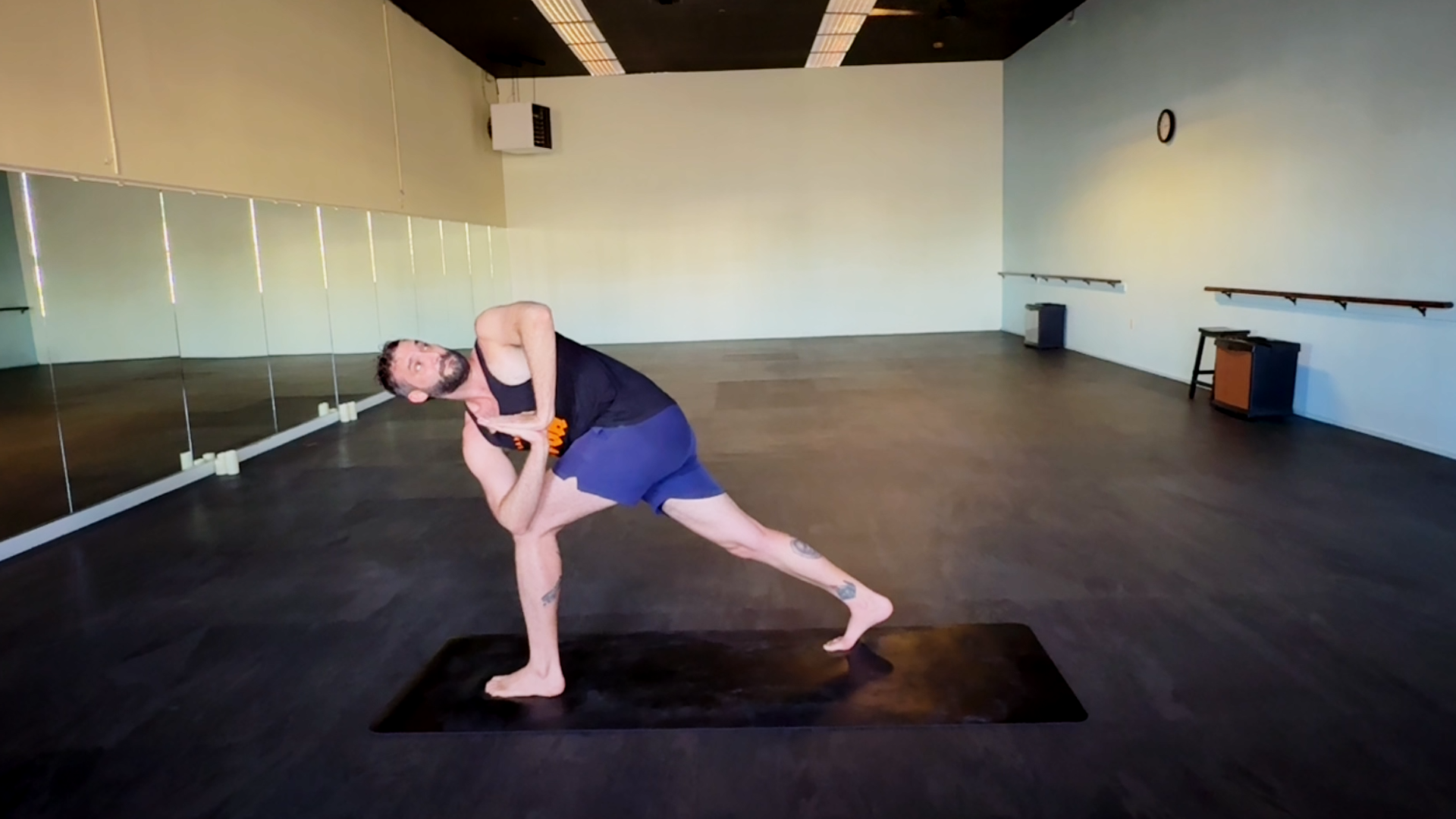
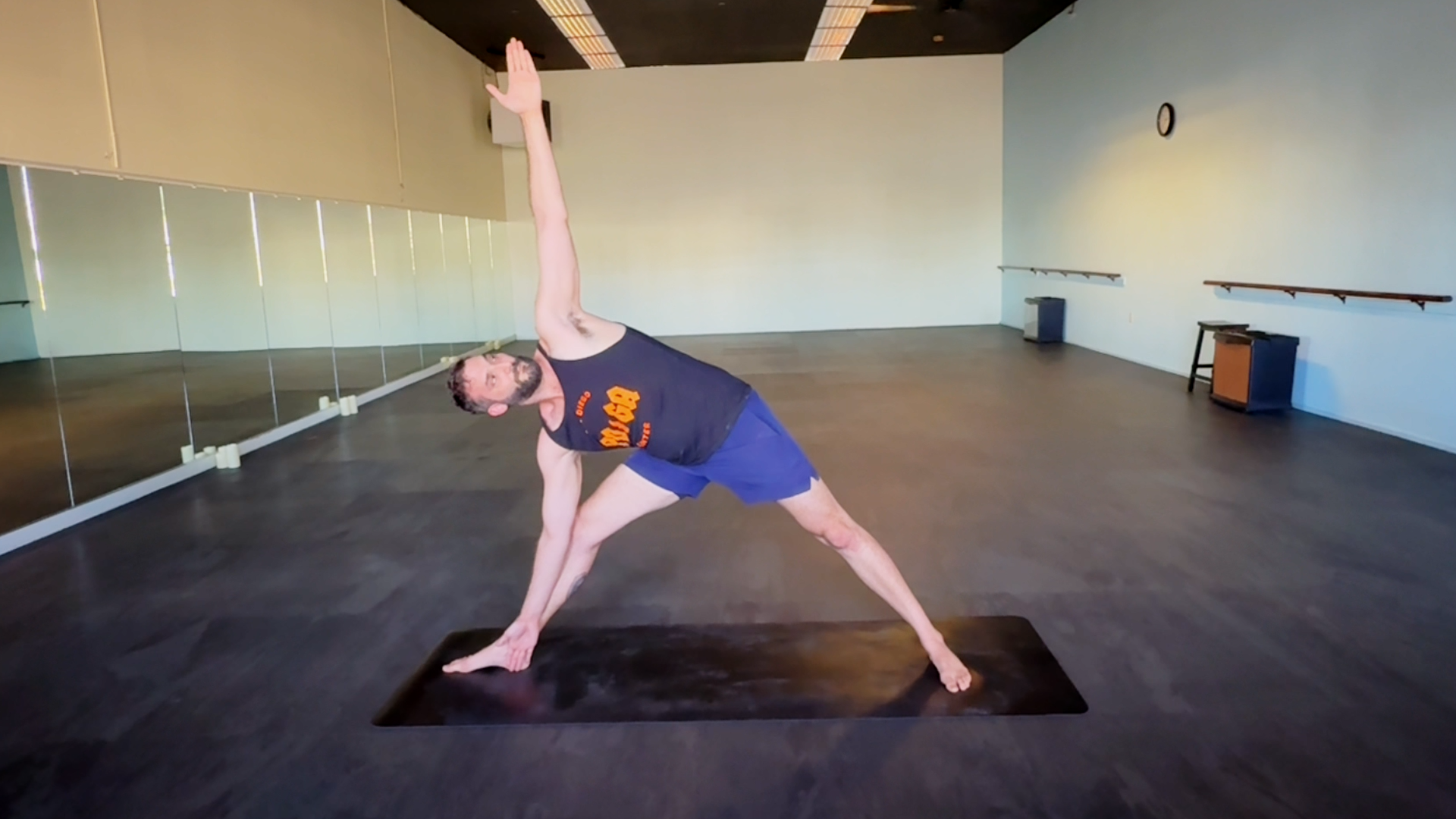
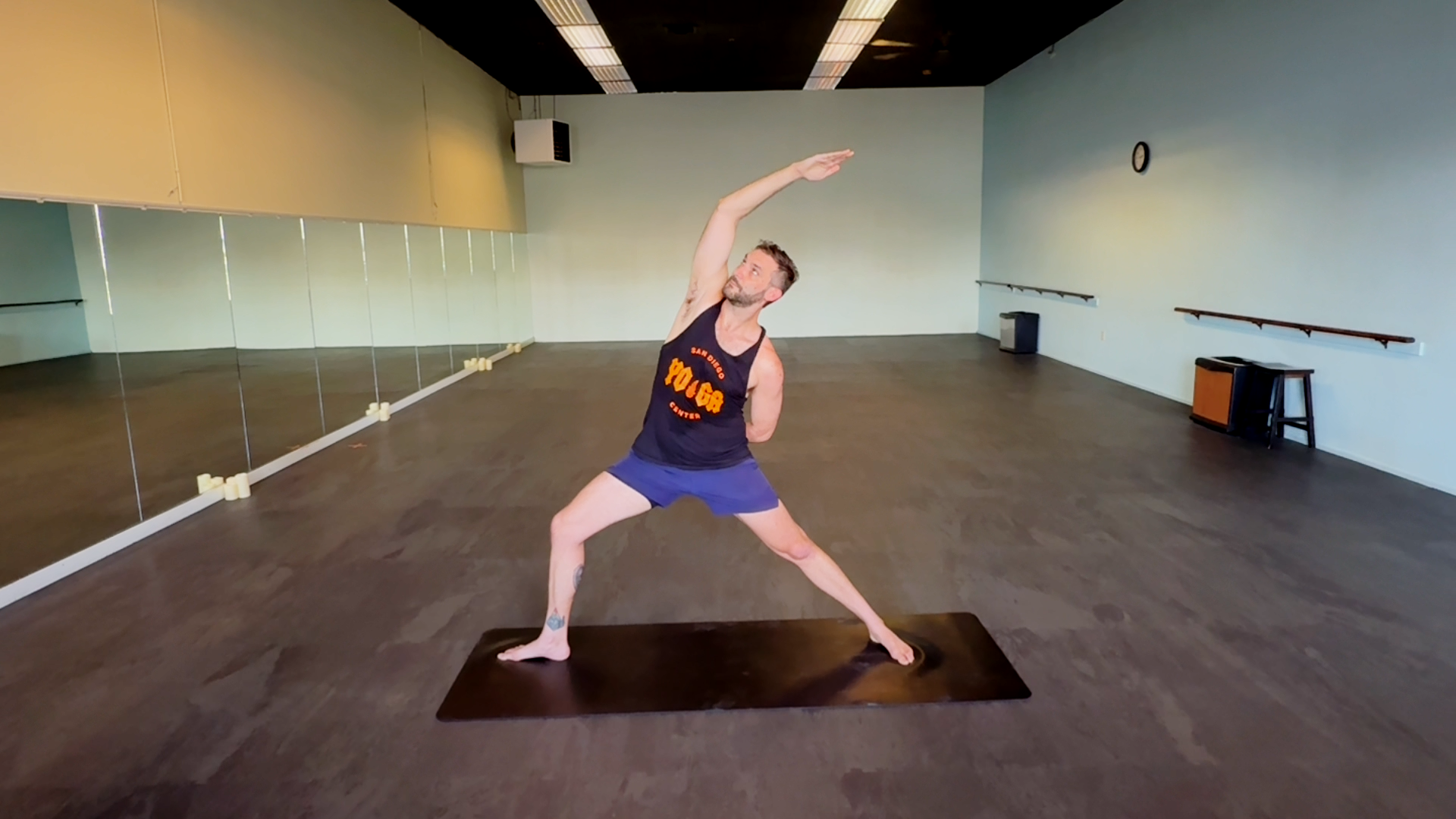
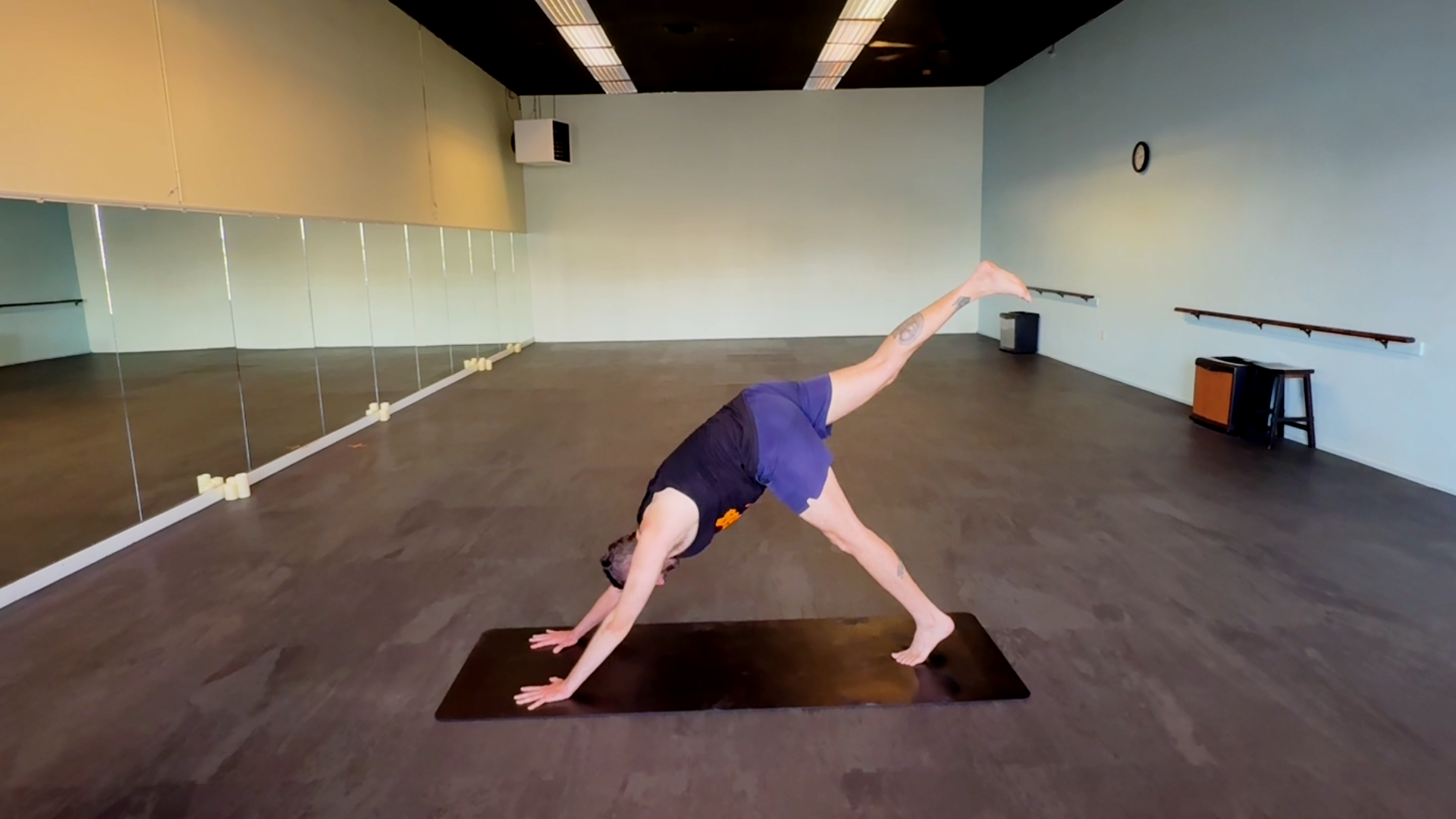
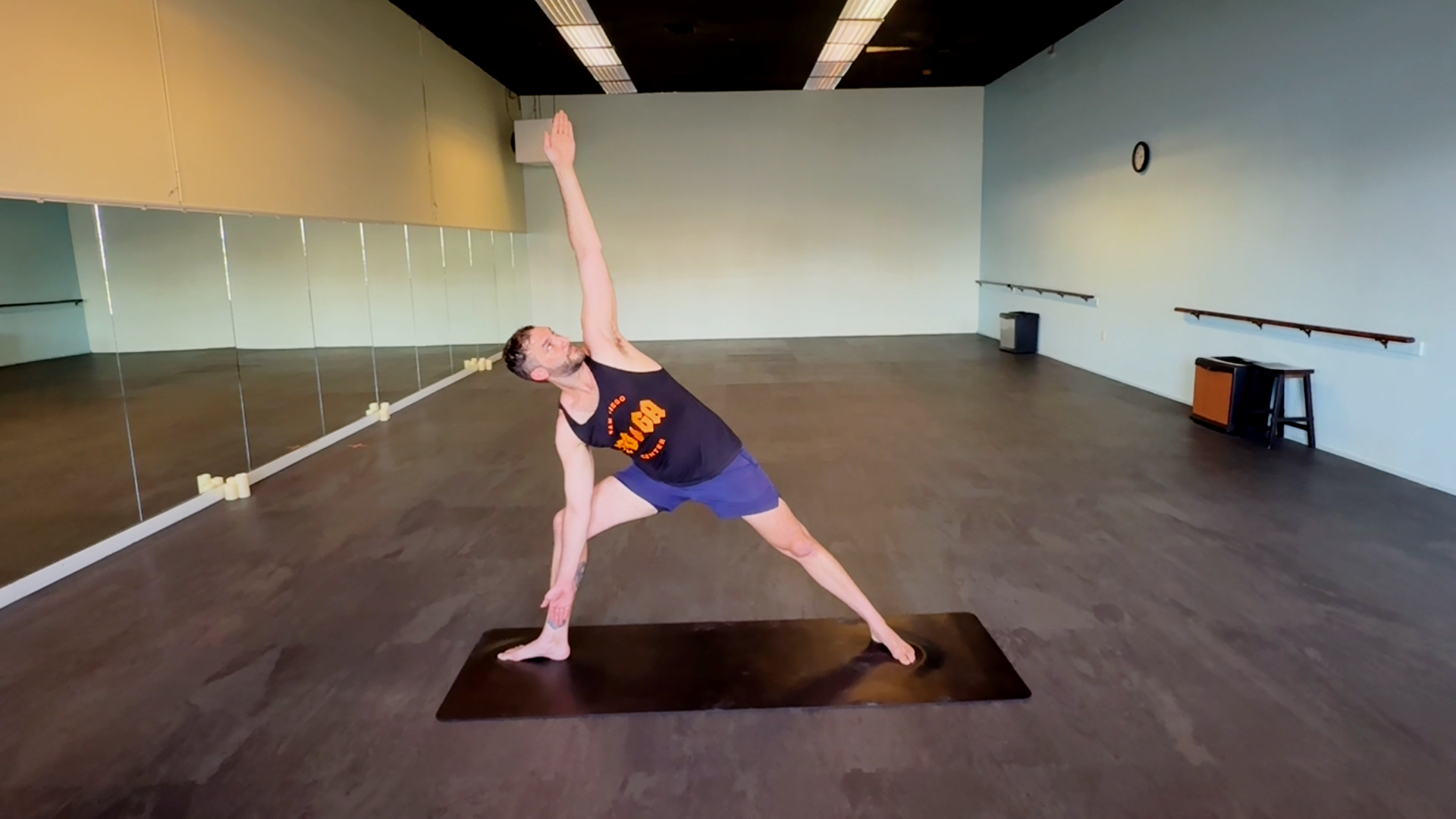
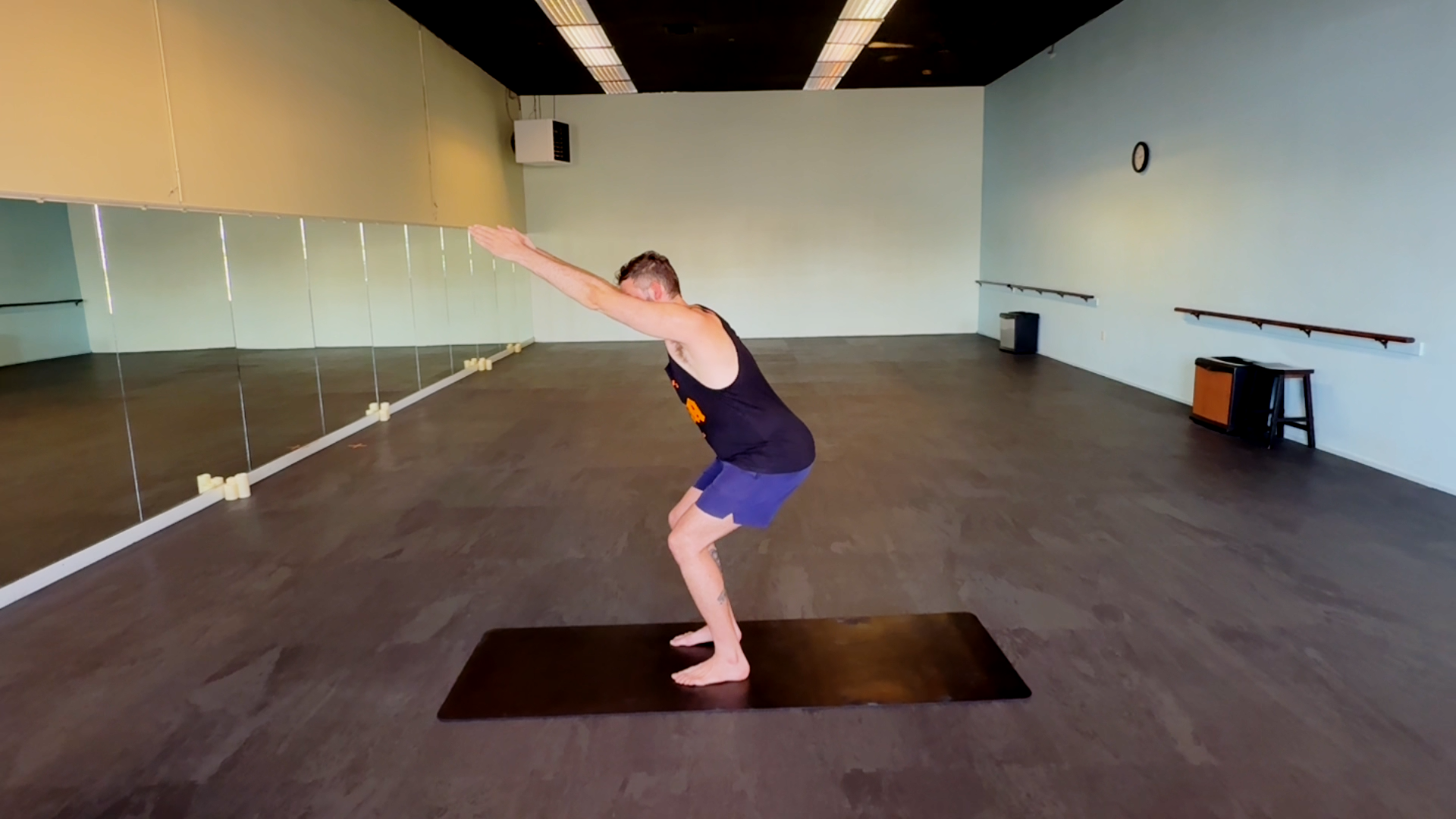
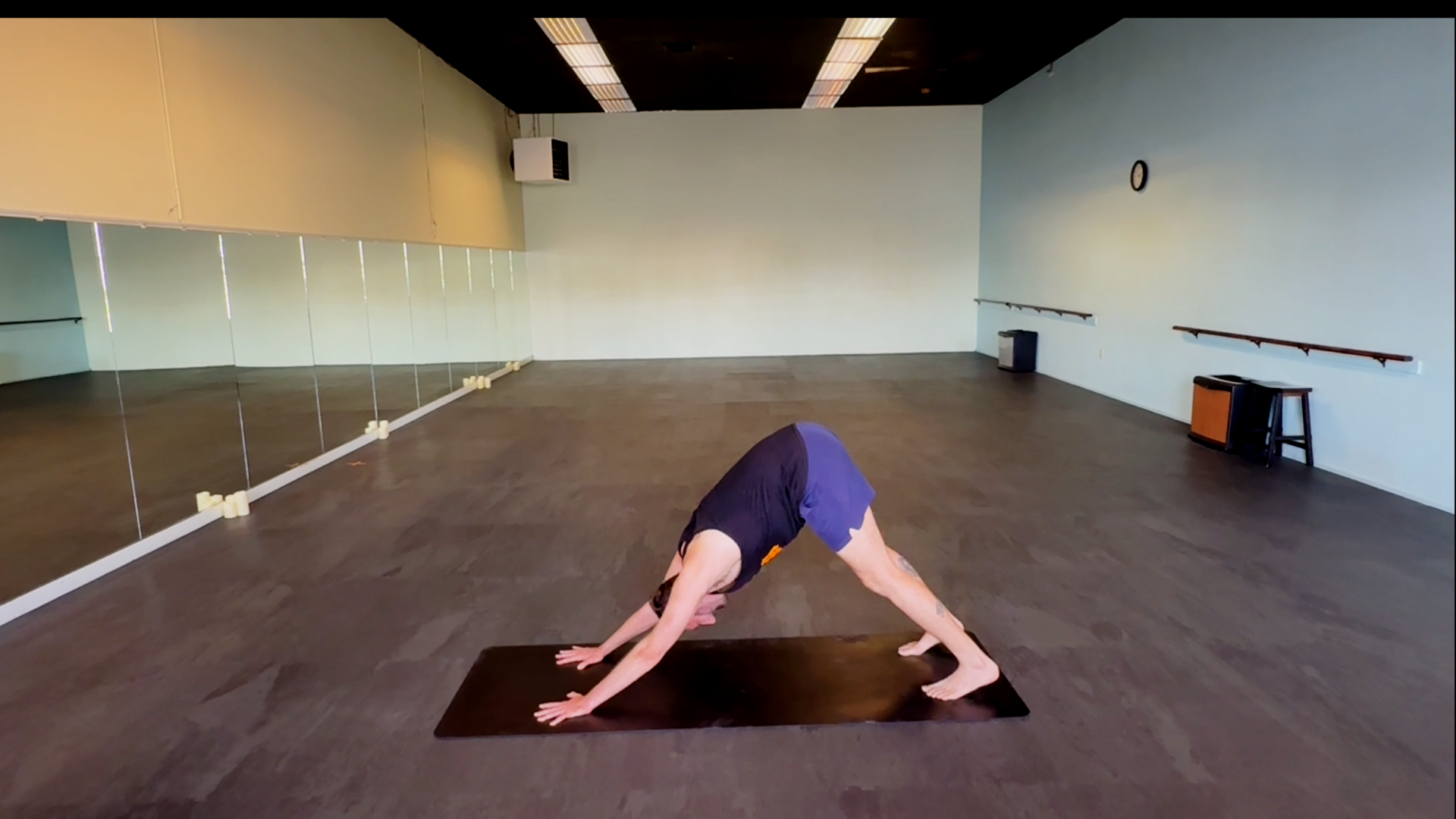

Crescent Pose is where grounding meets elevation. Unlike Warrior 1, your back heel is lifted, which immediately demands more balance and engagement from your toes. You are not anchored through two flat feet. You are rising from a narrower base.