
Chaturanga Dandasana
Lowering with Control
Chaturanga is not just a transition. It is a test.
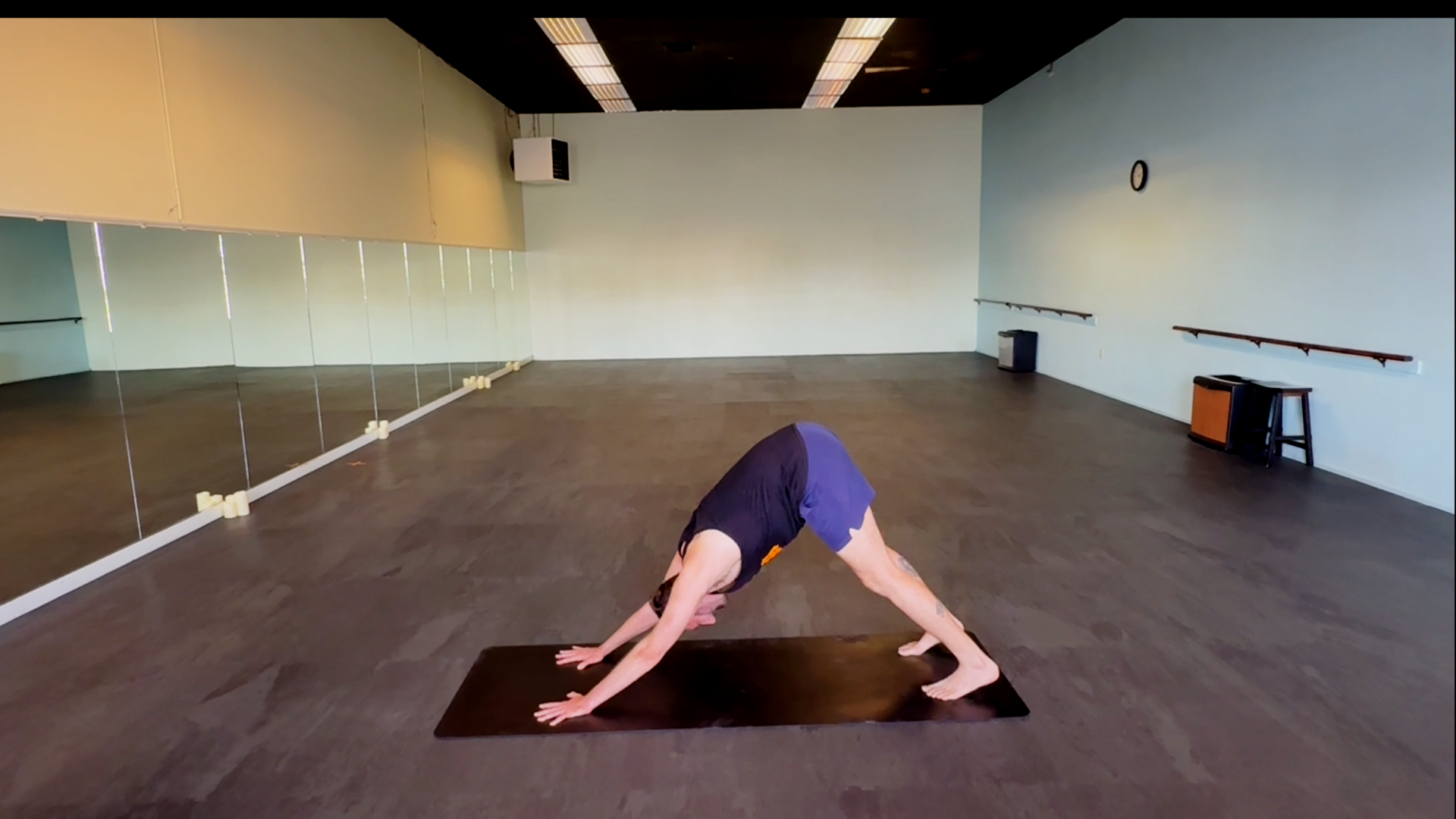
In most vinyasa practices, it appears between Plank and Upward Dog, but when rushed, it becomes sloppy and disconnected. When practiced with intention, it becomes one of the strongest expressions of disciplined strength in yoga.
On the Warrior’s Path, Chaturanga represents controlled descent. It is the warrior lowering into challenge without collapsing.
The Meaning Behind Chaturanga
In Sanskrit, Chaturanga Dandasana translates to “Four-Limbed Staff Pose.” Four-limbed refers to your two arms and two legs working together. Staff refers to the straight, strong line of your body.
The symbolism is clear. This is not scattered strength. It is unified effort. Every limb participates. Every muscle supports the line.
Chaturanga teaches integrity. You cannot fake your way through it. Your body will tell the truth.
How to Practice Chaturanga
1. Begin in Plank Pose
Place your hands directly under your shoulders. Spread your fingers wide and press evenly through your palms.
2. Shift Forward
Rock slightly onto your toes so your shoulders move just past your wrists. This prepares your alignment.
3. Lower with Control
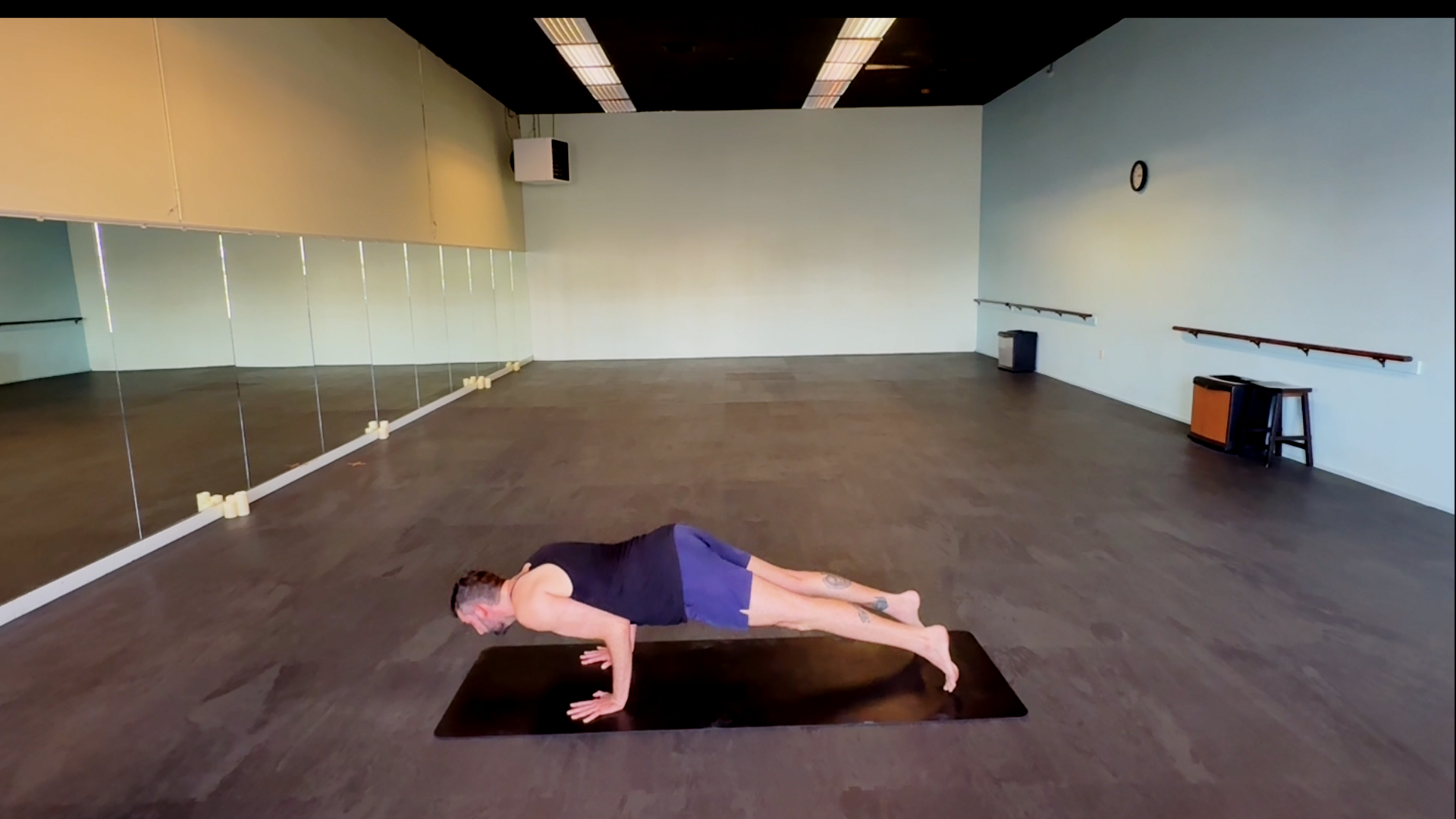
Bend your elbows straight back alongside your ribs. Lower halfway down, keeping your elbows at about 90 degrees. Do not let your shoulders lower beneath your elbows.
4. Maintain Your Line
Keep your body in one straight line from heels to crown. Avoid letting your hips drop or lift.
5. Engage Everything
Draw your core inward and squeeze (retract) your shoulder blades together. Stay high on the tip of your toes. Keep your neck neutral.
6. Transition or Hold
Either lower fully to the mat with control or press into Upward Dog. You may also hold briefly to build strength. If you lower all the way to the mat, ensure your shoulders, elbows, hips, and knees all lower at the same time.
Props and Modifications
Lower your knees to the mat before bending your elbows.
Practice at the wall to learn proper elbow tracking.
Use a strap around your arms to maintain alignment and prevent you from lowering too far.
Use blocks under your shoulders to help you “rest” in the pose longer, allowing you to work into the deeper mechanics of the pose with more support.
Common Misconceptions and Misalignments
Mistaking this for a push-up. They are not one and the same. A push-up is meant to build strength through quick resistance in full-range motion. Chaturanga is a pose meant to be held for an extended period.
Elbows winging out wide. Hug them closer to your ribs.
Dropping your chest too low. Stop at 90 degrees. Full range is for push-ups. Chaturanga is about the line.
Letting your hips sag. Engage your core to maintain alignment.
Rushing through the movement. Control is the work. If you can’t hold the pose for more than 5 seconds, you’re not in alignment.
Benefits of Chaturanga
Physical
Strengthens your shoulders, chest, triceps, and core.
Builds wrist stability and upper body endurance.
Improves alignment awareness in arm balances.
Mental and Emotional
Develops discipline under pressure.
Builds patience and control.
Encourages precision over speed.
Cautions and Considerations
Be mindful of shoulder or wrist injuries.
Avoid collapsing into your lower back.
If you cannot maintain alignment, lower your knees and rebuild strength.
Prioritize form over repetition.
The Edge Connection
Your edge in Chaturanga is restraint. It is tempting to drop quickly or muscle through. The challenge is to lower slowly, steadily, and with intention.
This pose reveals where you compensate and where you rush. It teaches you that strength is not only about pushing up, but also about controlling your descent.
On the Warrior’s Path, Chaturanga reminds you that how you lower matters just as much as how you rise.
Warrior’s Edge Takeaway
In Chaturanga, you embody disciplined strength. You do not collapse under pressure. You lower with awareness. You hold integrity in motion.
Each time you practice, you reinforce the truth that resilience is built not just through action but through control. The warrior does not fall into challenge. The warrior meets it with steady resolve.
Related Posts

Crescent Pose is where grounding meets elevation. Unlike Warrior 1, your back heel is lifted, which immediately demands more balance and engagement from your toes. You are not anchored through two flat feet. You are rising from a narrower base.