
Eagle Pose (Garudasana)
Find Freedom Within the Bind
Eagle Pose wraps your body around itself.
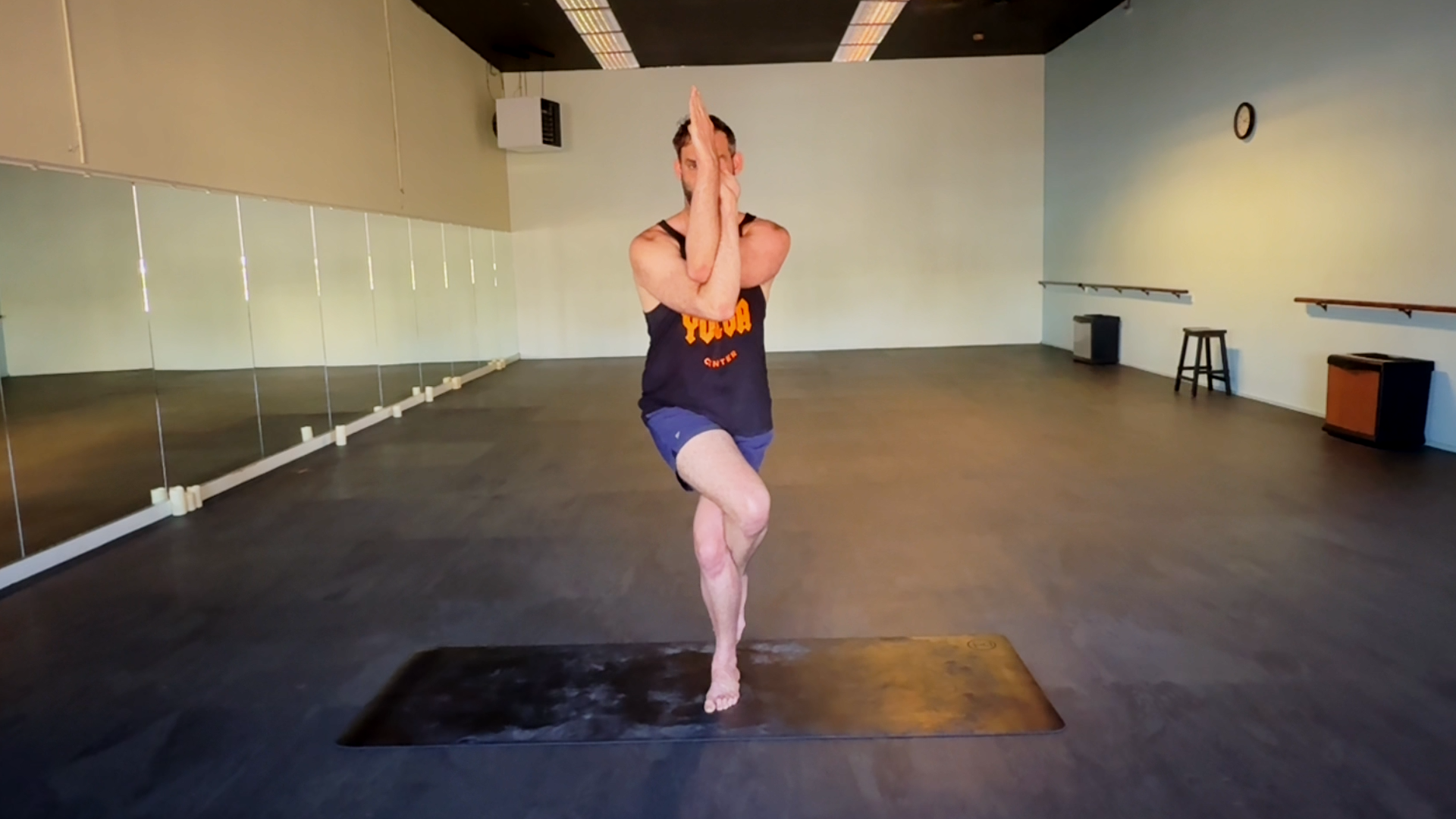
One leg crosses over the other. One arm wraps beneath the opposite arm. Your knees bend, your center of gravity lowers, and the space your body occupies becomes smaller. Yet the challenge is to create length and stability within that compression.
On the Warrior’s Path, Eagle Pose represents focus. When movement becomes restricted and your balance becomes uncertain, you learn to direct your attention toward what matters and find space within limitation.
The Meaning Behind Eagle Pose
Garudasana is commonly translated as “Eagle Pose,” but Garuda is much more than an eagle. In Hindu mythology, Garuda is a powerful divine being and the vahana, or vehicle, of Vishnu. He is often depicted as part human and part bird, associated with strength, speed, protection, and the ability to move freely through the sky.
That makes the contrast within Garudasana especially interesting.
Your body is tightly bound, yet the pose is named for a being associated with flight and freedom. You wrap inward while lifting through your spine. Your limbs intertwine as your attention sharpens.
Symbolically, Eagle Pose reminds you that freedom does not always require unlimited space. Sometimes it comes from learning how to move intelligently within the circumstances you have.
How to Practice Eagle Pose
1. Begin in Mountain Pose
Stand tall and establish an even foundation through both feet.
2. Bend Your Knees
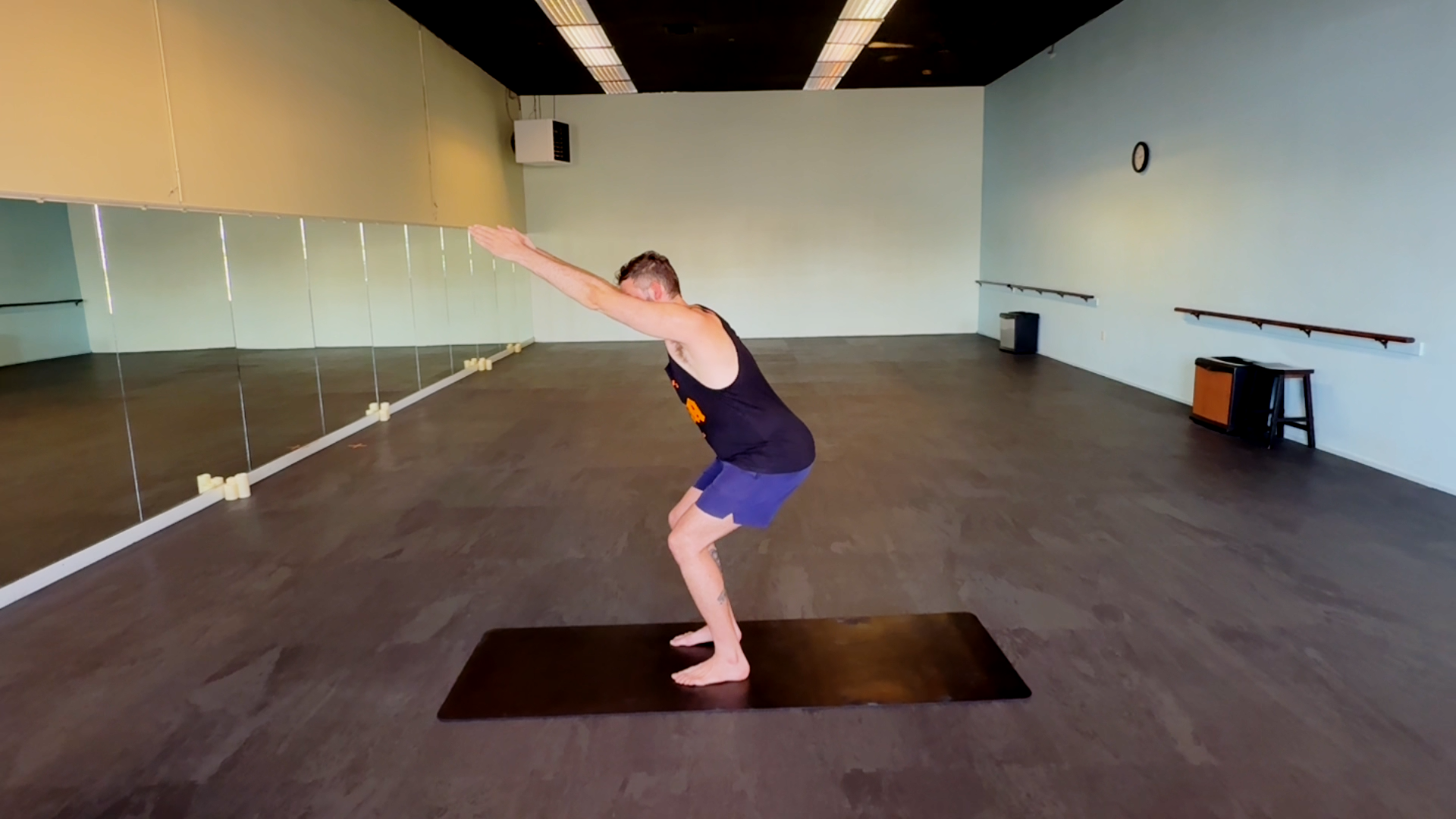
Lower your hips slightly as though beginning Chair Pose. Shift your weight into your left foot.
3. Wrap Your Legs
Lift your right leg and cross your right thigh over your left. Keep your right toes on the floor or a block for support, or wrap your right foot behind your left calf if accessible.
4. Wrap Your Arms
Extend your arms forward and cross your right arm under your left. Bend your elbows and bring the backs of your hands or your palms toward each other.
5. Find Your Center
Draw your elbows slightly upward while softening your shoulders down. Keep your spine long and your hips moving gently back.
6. Set Your Gaze
Choose one steady point in front of you and focus your eyes there. Unwind slowly to release, return to Mountain Pose, and repeat on the opposite side.
Props and Modifications
Keep the toes of your crossed leg on the floor for additional balance.
Take a Standing Pigeon variation with your legs.
If your palms do not meet, press the backs of your hands together or give yourself a hug.
Practice near a wall for balance support.
Sit less deeply if your standing leg begins to fatigue.
Common Misconceptions and Misalignments
Forcing your foot behind your calf. The leg wrap is optional, not the goal of the pose.
Trying to force your palms together. Use the arm position your shoulders comfortably allow.
Leaning your torso dramatically forward. Keep your spine long as you sit your hips back.
Allowing your standing foot to collapse inward. Maintain an active foundation through the entire foot.
Holding your breath because the shape feels compressed. Create space through your breath even when your body feels bound.
Benefits of Eagle Pose
Physical
Strengthens your legs, ankles, and core.
Improves balance and coordination.
Stretches your upper back and shoulders.
Encourages mobility through your hips.
Develops proprioception and full-body awareness.
Mental and Emotional
Builds concentration and focus.
Develops patience within a complex shape.
Encourages adaptability when movement feels restricted.
Cultivates calm while balancing under tension.
Teaches you how to breathe through twisted sensations.
Cautions and Considerations
Use a wall or keep your toes grounded if balance is challenging.
Avoid forcing the leg wrap if you have knee discomfort.
Modify your arms if you have shoulder limitations.
Keep your standing knee soft rather than locked.
Come out of the pose if the wraps create sharp or joint-related pain.
The Edge Connection
Your edge in Eagle Pose is finding space where there appears to be little.
Your limbs are wrapped. Your standing leg is working. Your balance may shift beneath you. The instinct can be to grip harder, but excessive tension usually makes the pose feel even smaller.
Can you stay strong without becoming rigid? Can you breathe into your upper back while your arms are bound? Can you remain focused when your body begins to shake?
Garuda offers an interesting lesson here. A pose named for a being associated with flight places you in one of yoga's most tightly wrapped shapes.
On the Warrior’s Path, freedom is not always found by escaping your limitations. Sometimes it comes from discovering how much space still exists within them.
Warrior’s Edge Takeaway
In Eagle Pose, you embody the focused warrior.
Your body draws inward while your awareness becomes sharper. You remain grounded through one foot even as the rest of you twists, wraps, and adjusts. This pose reminds you that restriction does not eliminate possibility. Even within the bind, there is room to rise.
Wrap inward. Focus your gaze. Find your freedom.
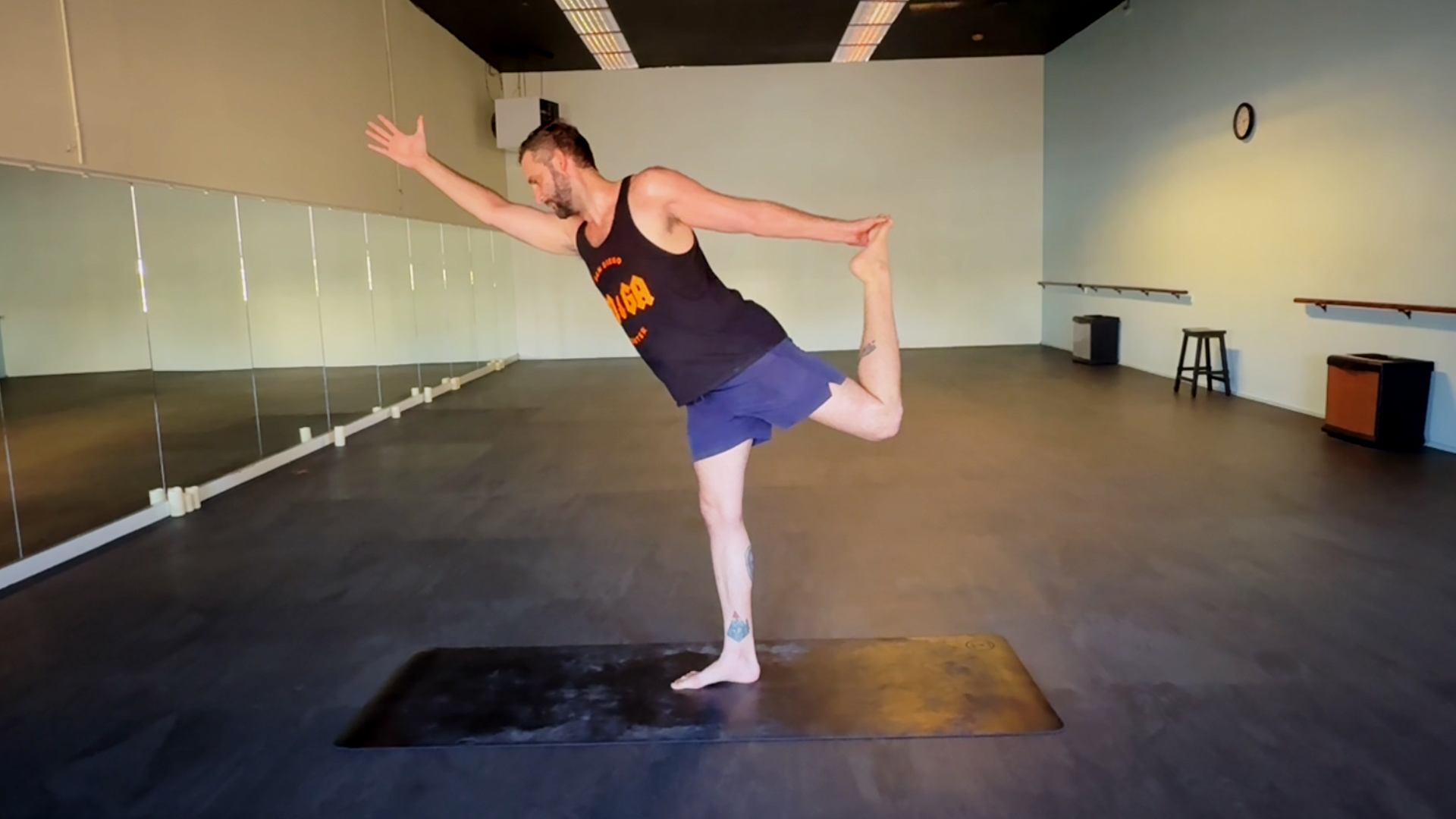
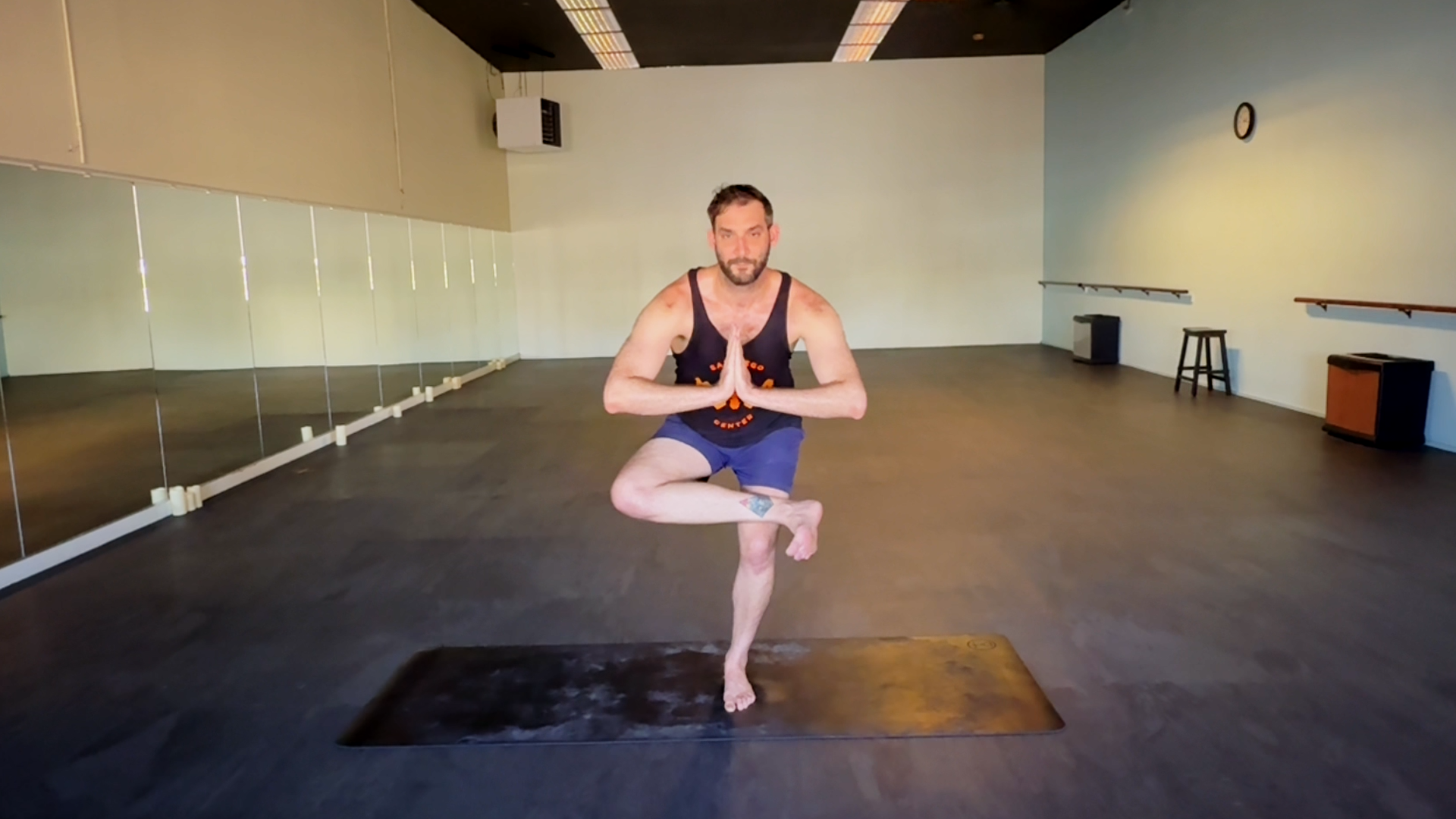
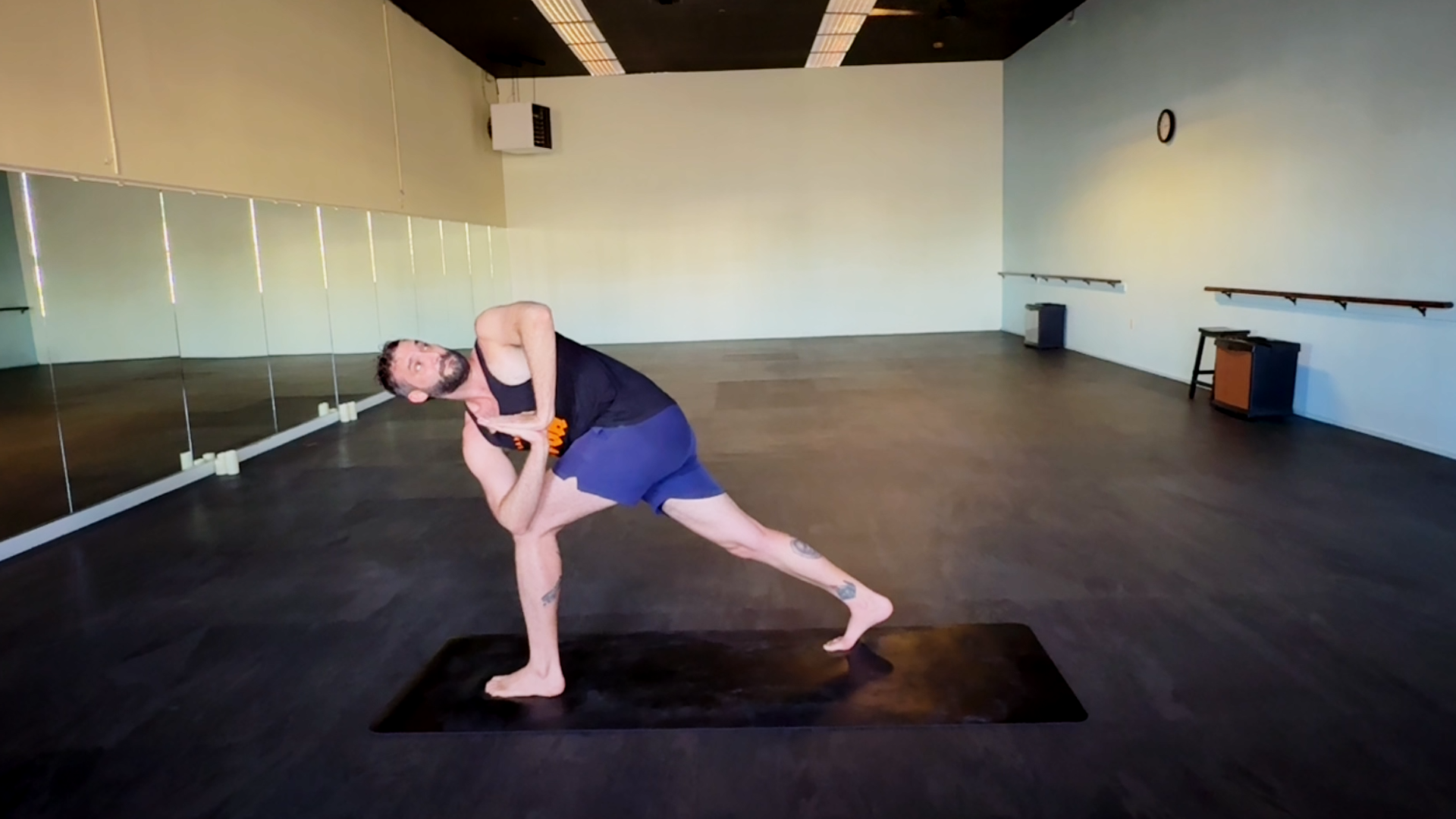
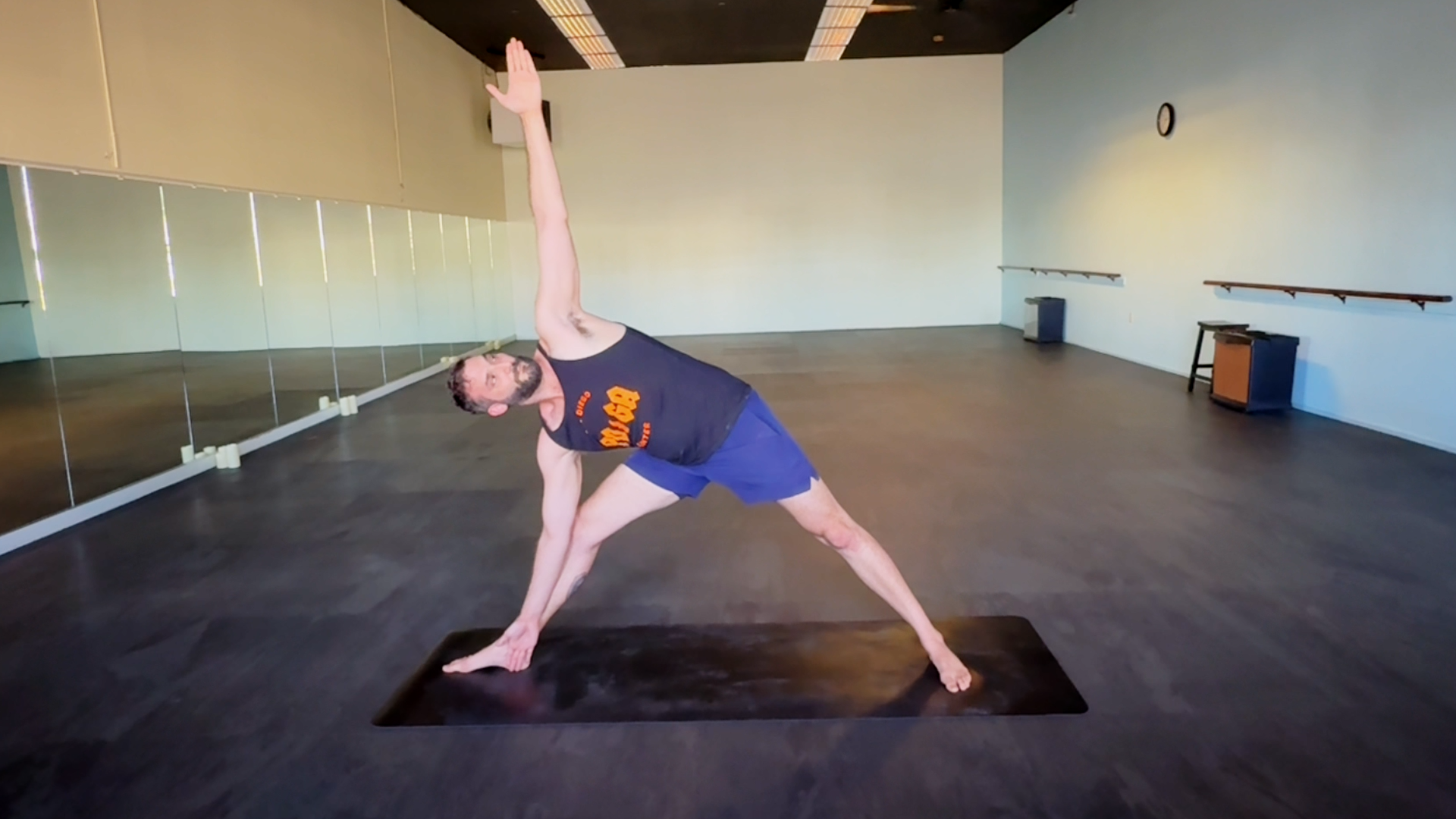
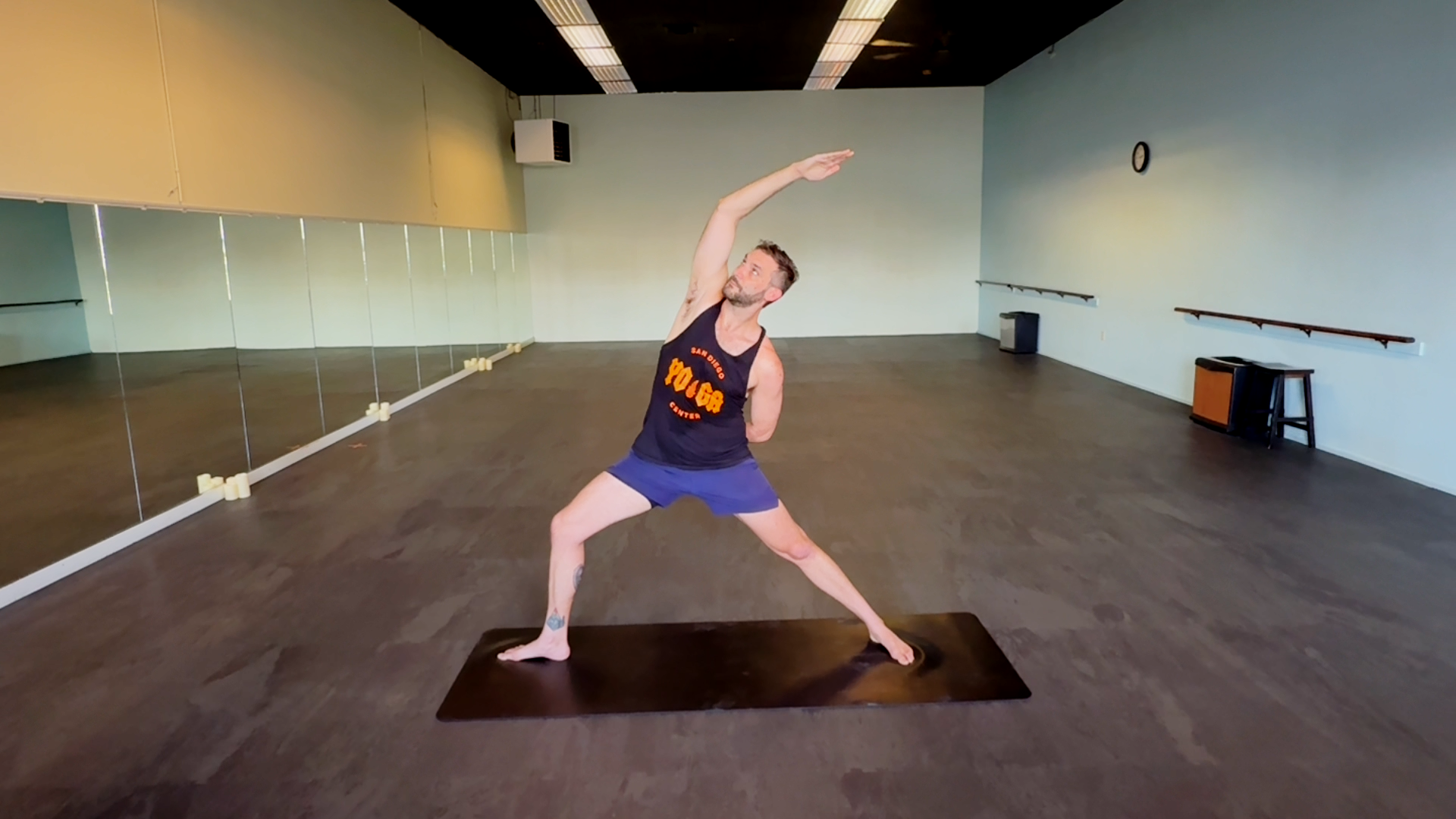
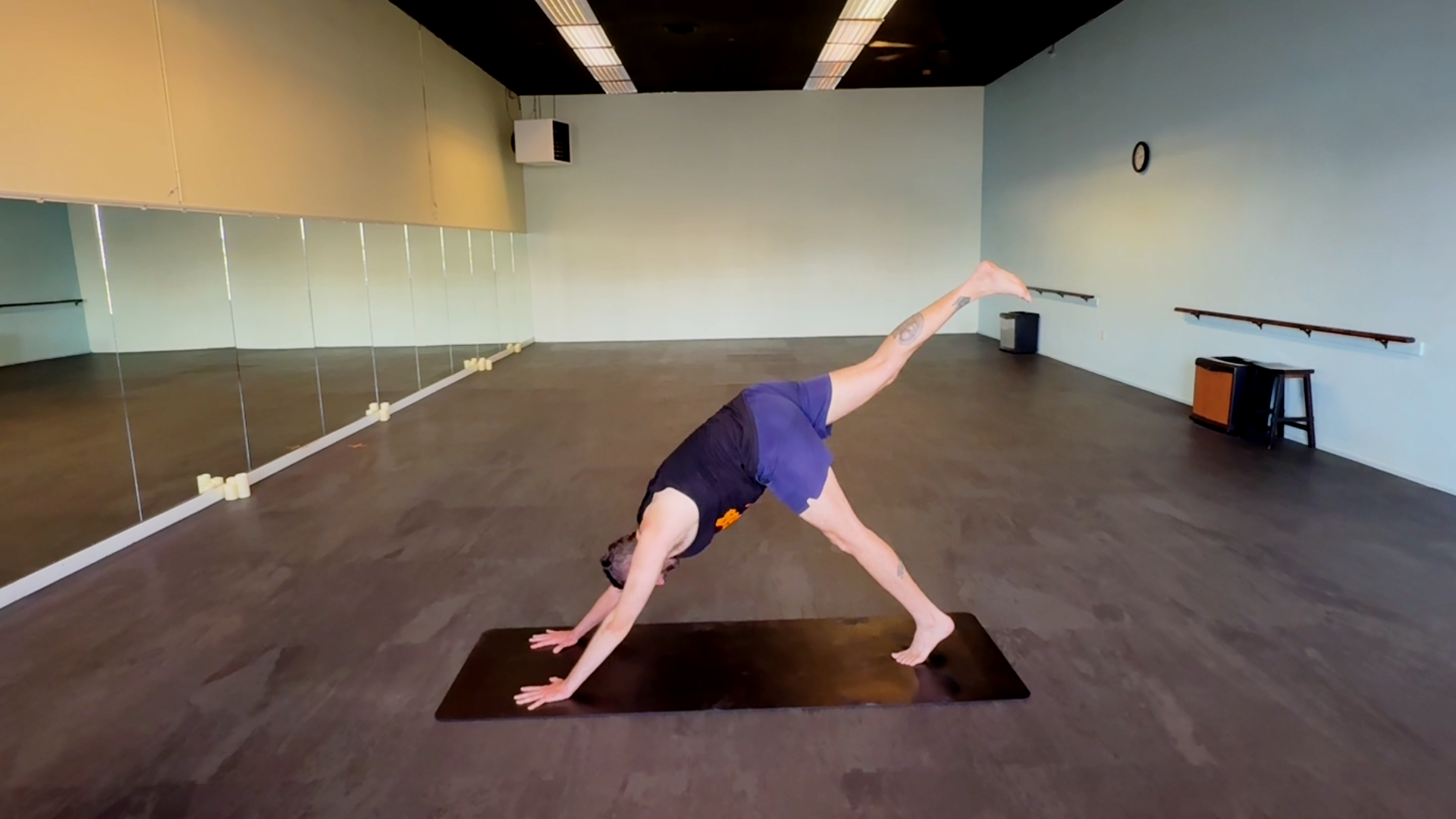
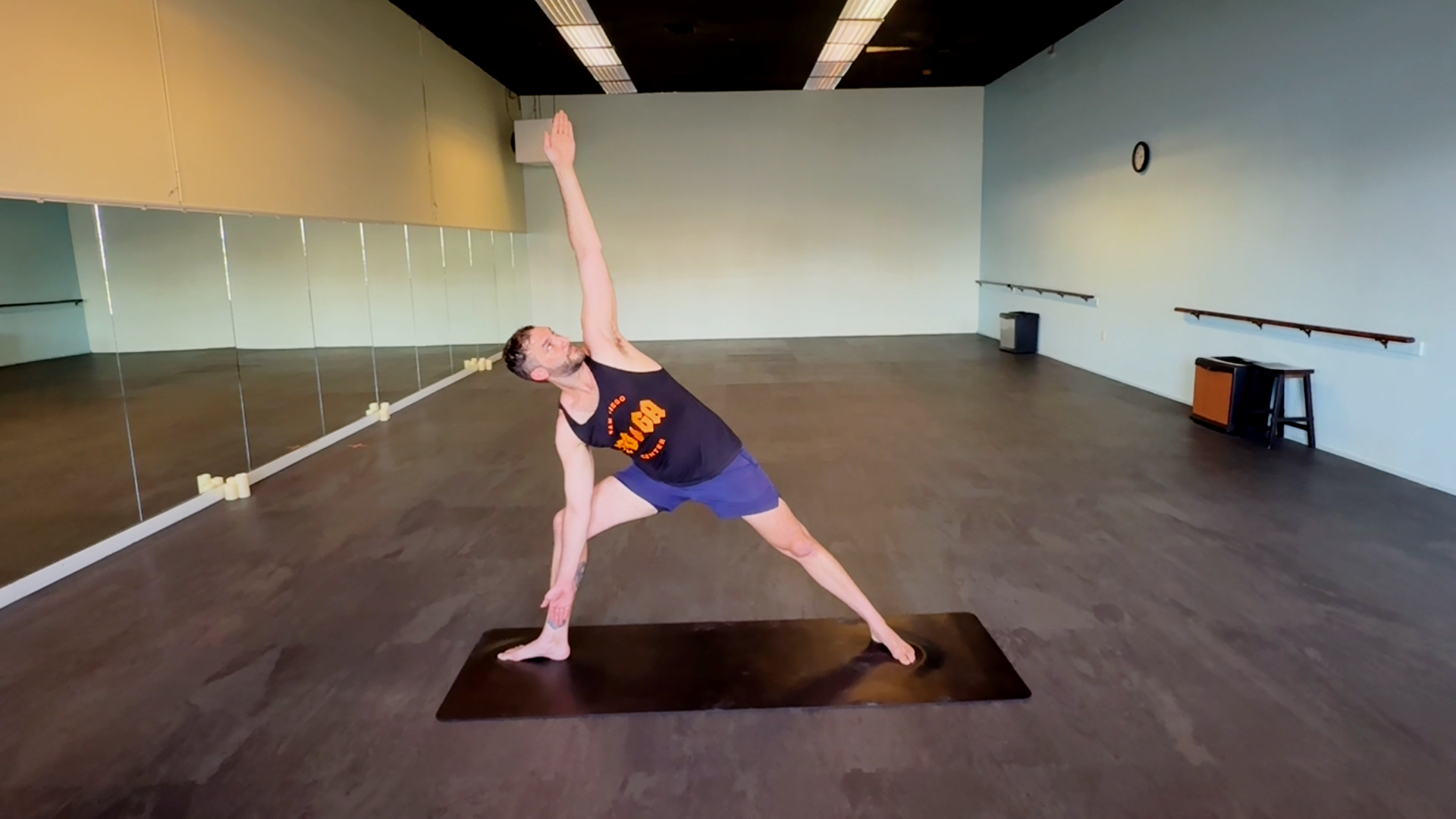

Crescent Pose is where grounding meets elevation. Unlike Warrior 1, your back heel is lifted, which immediately demands more balance and engagement from your toes. You are not anchored through two flat feet. You are rising from a narrower base.