
Downward Dog (Adho Mukha Svanasana)
Returning to Your Foundation
Downward Dog is one of the most recognizable shapes in yoga, yet it is far more than a transition pose. It is a reset point, a recalibration, and a place where strength meets length.
In almost every class, you return to Downward Dog again and again. It becomes your home base. On the Warrior’s Path, it represents the discipline of returning to your foundation no matter how far you’ve moved.
The Symbolism of the Dog
In Sanskrit, Adho Mukha Svanasana means “Downward-Facing Dog”. The pose draws its inspiration from the way a dog naturally stretches after rest, bowing its chest forward to stretch its shoulders and spine. There is instinct in this movement. It is intuitive, embodied, and unforced.
Unlike the mountain that stands still or the warrior who steps forward, the dog stretches with awareness of its own body. It lengthens without ego. It strengthens without strain. When you enter Downward Dog, you reconnect to that instinctive intelligence within yourself.
This pose teaches you to return to what feels natural, steady, and strong.
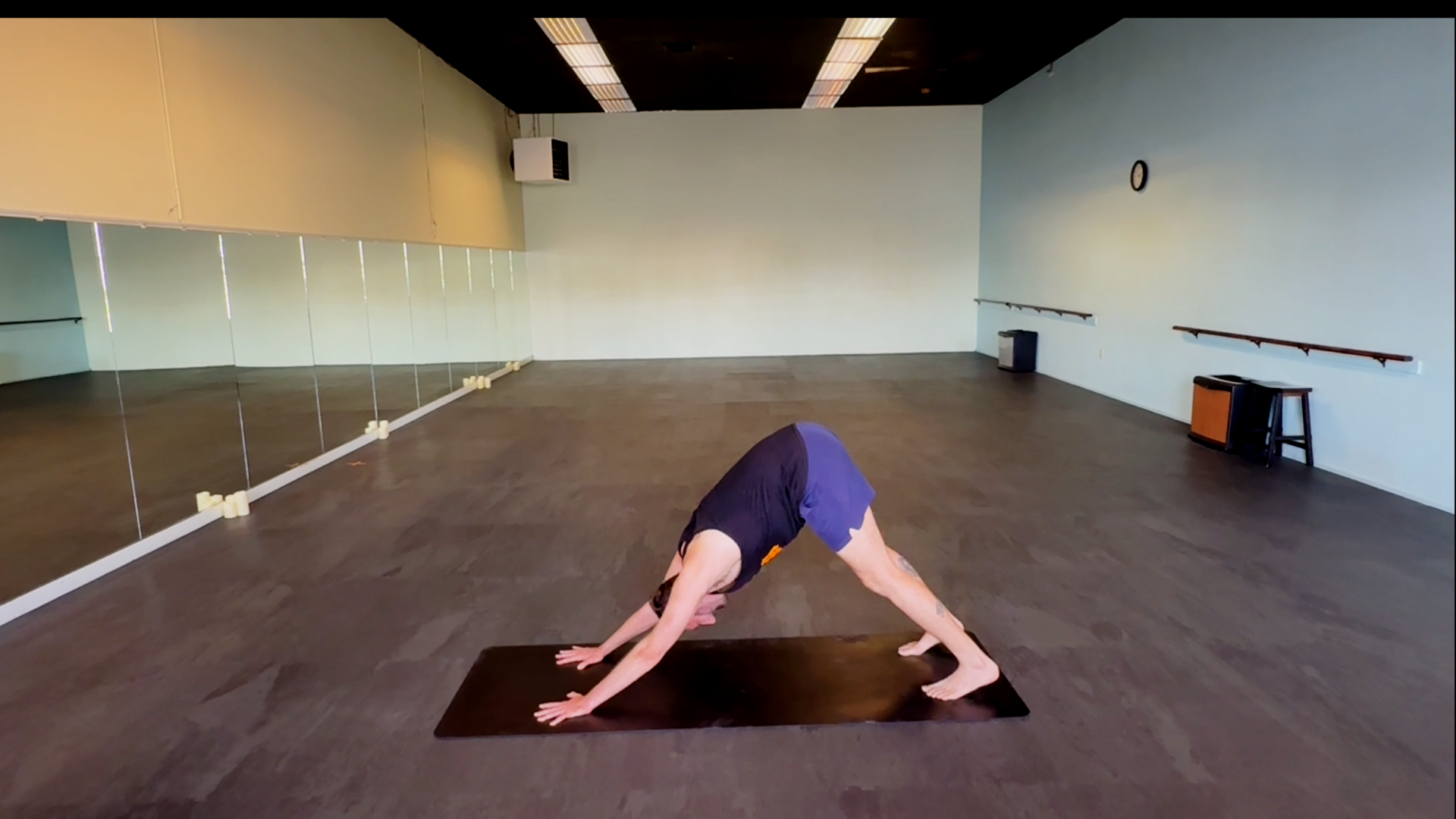
How to Practice Downward Facing Dog
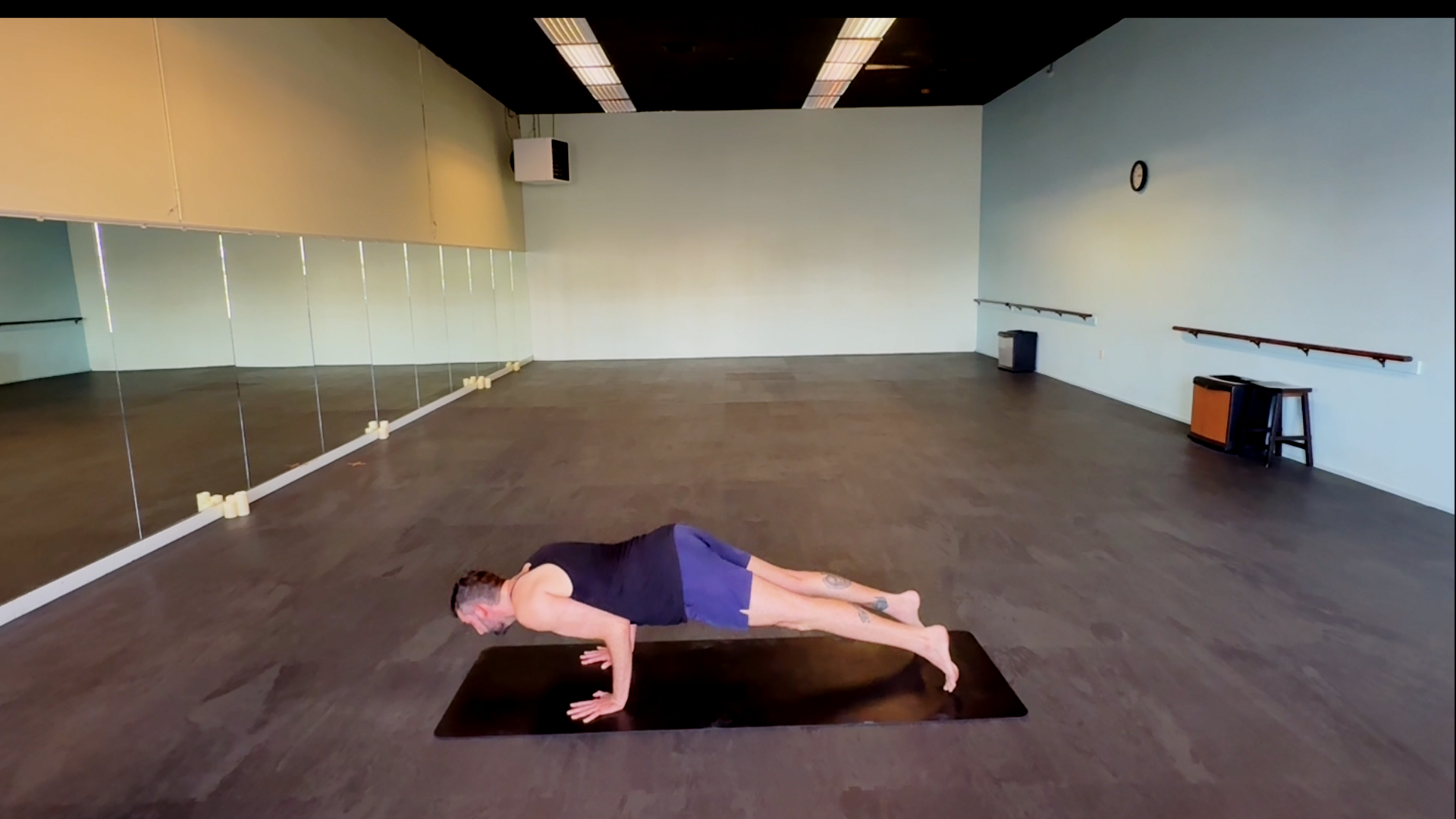
1. Start in Plank Pose
Place your hands shoulder-width apart and your knees hip-width apart. Spread your fingers wide and press evenly through your palms.
2. Lift Your Hips
Send your hips up and back without adjusting your hands or feet. Remember, the purpose of this pose is to stretch and strengthen your shoulders and spine, rather than the focus coming to your heels landing on the ground or not.
3. Lengthen Your Spine
Push the ground away and settle your shoulders into their sockets. Lift your hips higher and draw your chest gently toward your thighs, almost as though you were to put the crown of your head on the earth.
4. Adjust Your Legs
Keep your knees bent at first if needed, or “take your dog for a walk” and gently bend one knee at a time. Gradually straighten them only as much as your hamstrings allow. Your heels do not need to touch the floor.
5. Engage and Breathe
Press firmly through your hands and root through the full surface of your feet. Let your head hang naturally between your arms. Stay for 5 to 10 breaths.
Props and Modifications
Bend your knees generously to prioritize length in your spine.
Practice with your heels against a wall to build awareness in your legs.
Rest in Child’s Pose if your shoulders or wrists fatigue.
Common Misconceptions and Misalignments
Forcing your heels to the floor. The goal is length in your spine, not flat heels.
Collapsing into your shoulders. Press actively through your hands and rotate your upper arms outward.
Rounding your back. Bend your knees if needed to create more space in your spine.
Holding your breath. Downward Dog should feel steady and rhythmic.
Benefits of Downward Dog
Physical
Strengthens your shoulders, arms, and legs.
Stretches your hamstrings, calves, and spine.
Builds full-body integration and endurance.
Mental and Emotional
Resets your nervous system.
Improves focus and clarity.
Teaches resilience through repetition.
Cautions and Considerations
Be mindful with wrist injuries. Use blocks or lower to forearms if needed.
Avoid locking your elbows. Keep a micro bend to protect your joints.
If you experience high blood pressure or dizziness, move slowly in and out of the pose.
The Edge Connection
Your edge in Downward Dog is finding the balance between effort and release. Your arms are strong. Your legs are active. Yet your neck softens, and your breath stays steady. This pose teaches you how to work without gripping and how to lengthen without forcing.
Every time you return to Downward Dog, you return to discipline. Not dramatic effort, but consistent engagement. It is the warrior’s reminder that strength is built through repetition and awareness.
Warrior’s Edge Takeaway
In Downward Dog, you learn the power of returning. No matter how intense the sequence becomes, you always have a place to reset and rebuild. This is not retreat. It is refinement. Each time you press the floor away and lift your hips high, you remind yourself that resilience comes from returning to your foundation again and again.

Crescent Pose is where grounding meets elevation. Unlike Warrior 1, your back heel is lifted, which immediately demands more balance and engagement from your toes. You are not anchored through two flat feet. You are rising from a narrower base.