
Upward Dog (Urdhva Mukha Svanasana)
Rising with Courage
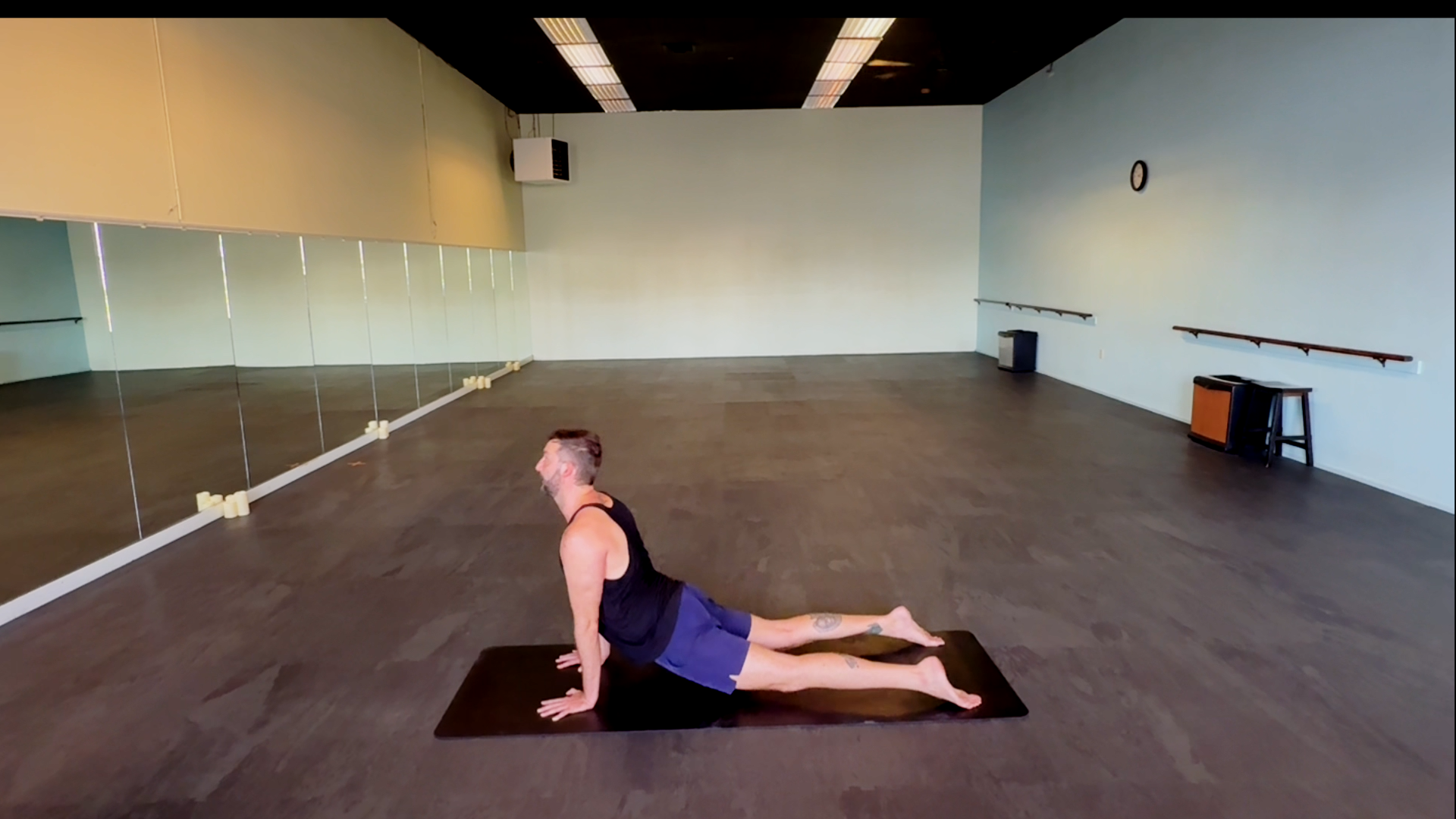
Upward Dog is a pose of lift and expansion. After the strength of Plank and the effort of Chaturanga, this posture asks you to press into the earth and rise.
It is not passive. It is not collapsed. It is active, strong, and deliberate. On the Warrior’s Path, Upward Dog represents the courage to open your heart even after effort. It is the moment where you choose to rise instead of retreat.
The Meaning Behind Upward Dog
In Sanskrit, Urdhva Mukha Svanasana translates to “Upward-Facing Dog”. Like its downward counterpart, this pose mirrors a natural stretch you might see in a dog waking from rest, though this time when they dip their hips to the ground to stretch their hind legs. There is instinct here. There is also renewal.
Symbolically, Upward Dog represents openness and readiness. Your chest broadens. Your gaze lifts. Your legs stay strong. You are supported by your foundation, yet unafraid to open forward.
This pose teaches you that vulnerability and strength can exist together.
How to Practice Upward Facing Dog
1. Begin Prone (On Your Belly)
Lie on your stomach with your legs extended behind you. Place your hands beside your lower ribs.
2. Press Into Your Hands
Inhale, press firmly through your palms, and begin to lift your chest.
3. Straighten Your Arms
Fully extend your arms without locking your elbows. Lift your thighs and knees off the mat so only the tops of your feet and your hands remain grounded.
4. Engage Your Legs
Press through the tops of your feet. Keep your thighs active and lifted. Squeeze your glutes to protect your lower back
5. Open Your Chest
Draw your shoulders back and down. Keep a small gap between your chin and your chest. Broaden across your collarbones. Keep your gaze forward or slightly upward without compressing your neck.
6. Breathe and Hold
Stay for several steady breaths before transitioning to Downward Dog or lowering down.
Props and Modifications
Keep your thighs on the mat and practice Cobra Pose if lifting feels too intense.
Place a folded blanket under your pelvis for support.
Bend your elbows slightly if straight arms strain your shoulders.
Widen your hands slightly if your chest feels restricted.
Common Misconceptions and Misalignments
Collapsing into your lower back. Focus on lifting your chest forward rather than pushing straight up.
Shrugging your shoulders toward your ears. Draw them down your back.
Letting your thighs rest on the mat unintentionally. Engage your legs to lift fully if practicing full Upward Dog.
Forcing a deep backbend. Prioritize length and strength over height.
Benefits of Upward Facing Dog
Physical
Strengthens your arms, shoulders, and back.
Opens your chest and hip flexors.
Improves spinal mobility and posture.
Mental and Emotional
Builds confidence and heart-centered openness.
Encourages resilience after effort.
Cultivates courage to expand forward.
Cautions and Considerations
Be mindful with lower back injuries. Keep your core engaged and avoid overextension.
If you have wrist or shoulder sensitivity, modify with Cobra.
Avoid collapsing into your lumbar spine. Maintain active engagement through your legs and abdomen.
Move slowly in and out if you experience dizziness.
The Edge Connection
Your edge in Upward Dog is controlled expansion. It is easy to throw yourself into a backbend. It is harder to lift with integrity. Can you rise without collapsing? Can you open without forcing?
Upward Dog teaches you that expansion must be supported by strength. The deeper the lift, the more grounded your foundation must be.
Warrior’s Edge Takeaway
In Upward Dog, you embody the courageous warrior. You press down to rise up. You engage fully and open boldly.
On the Warrior’s Path, this pose reminds you that resilience is not only about endurance. It is also about your willingness to lift your heart after challenge and face forward with strength.

Plank Pose is one of the clearest expressions of strength in yoga. There is nowhere to hide. No dramatic shape. No deep fold. Just a straight line of effort from your heels through the crown of your head.
On the Warrior’s Path, Plank represents discipline. It is the moment where you hold steady under pressure. You do not collapse. You do not rush. You stay.