
Halfway Lift (Ardha Uttanasa)
Creating Space Before You Move
Halfway Lift is easy to rush past. In a Sun Salutation or vinyasa flow, you may only spend a single inhale here before moving into the next pose. But that brief moment carries an important lesson.
You have folded forward, and now you lift just enough to find length again. Your spine extends. Your chest reaches forward. Your legs remain grounded beneath you.
On the Warrior’s Path, Halfway Lift represents recalibration. You do not always need to return to the beginning to reset your direction. Sometimes you simply need enough space to realign before continuing forward.
The Meaning Behind Halfway Lift
In Sanskrit, Ardha means “half,” and Uttanasana refers to the “intense forward stretch” of Forward Fold. Ardha Uttanasana is therefore the halfway expression of Uttanasana.
That relationship is what makes this pose so interesting.
You are neither fully folded nor fully standing. You occupy the space between the two. Your body moves away from surrender and back toward engagement without completely leaving the fold.
Halfway Lift is also an important part of the traditional Sun Salutation pattern. The movement is usually paired with an inhale, creating expansion through your chest and spine before you transition onward.
Symbolically, Halfway Lift represents the value of the in-between. Not every important moment happens at the beginning or the destination. Sometimes, the adjustment you make halfway through determines everything that follows.
How to Practice Halfway Lift
1. Begin in a Forward Fold
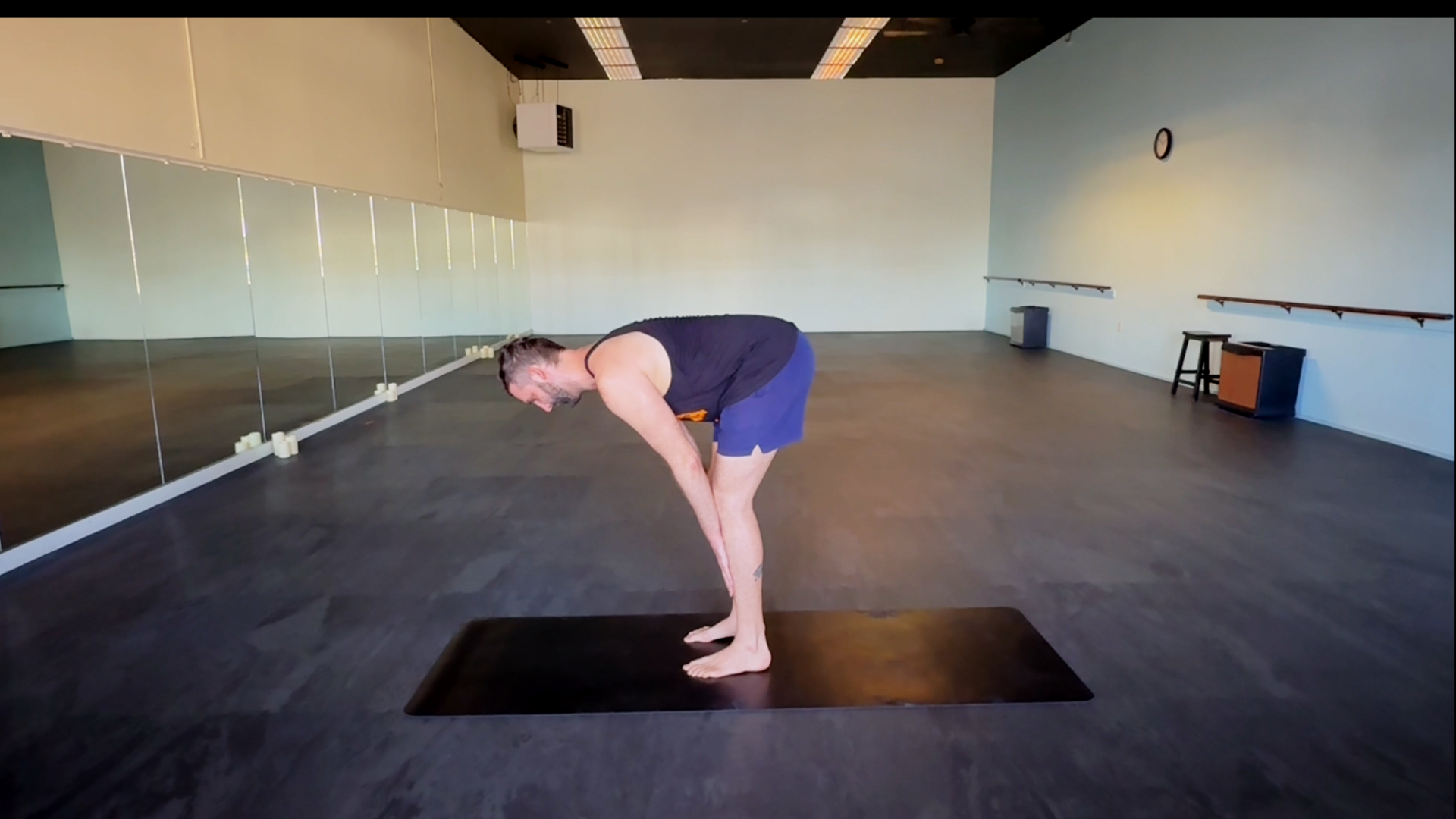
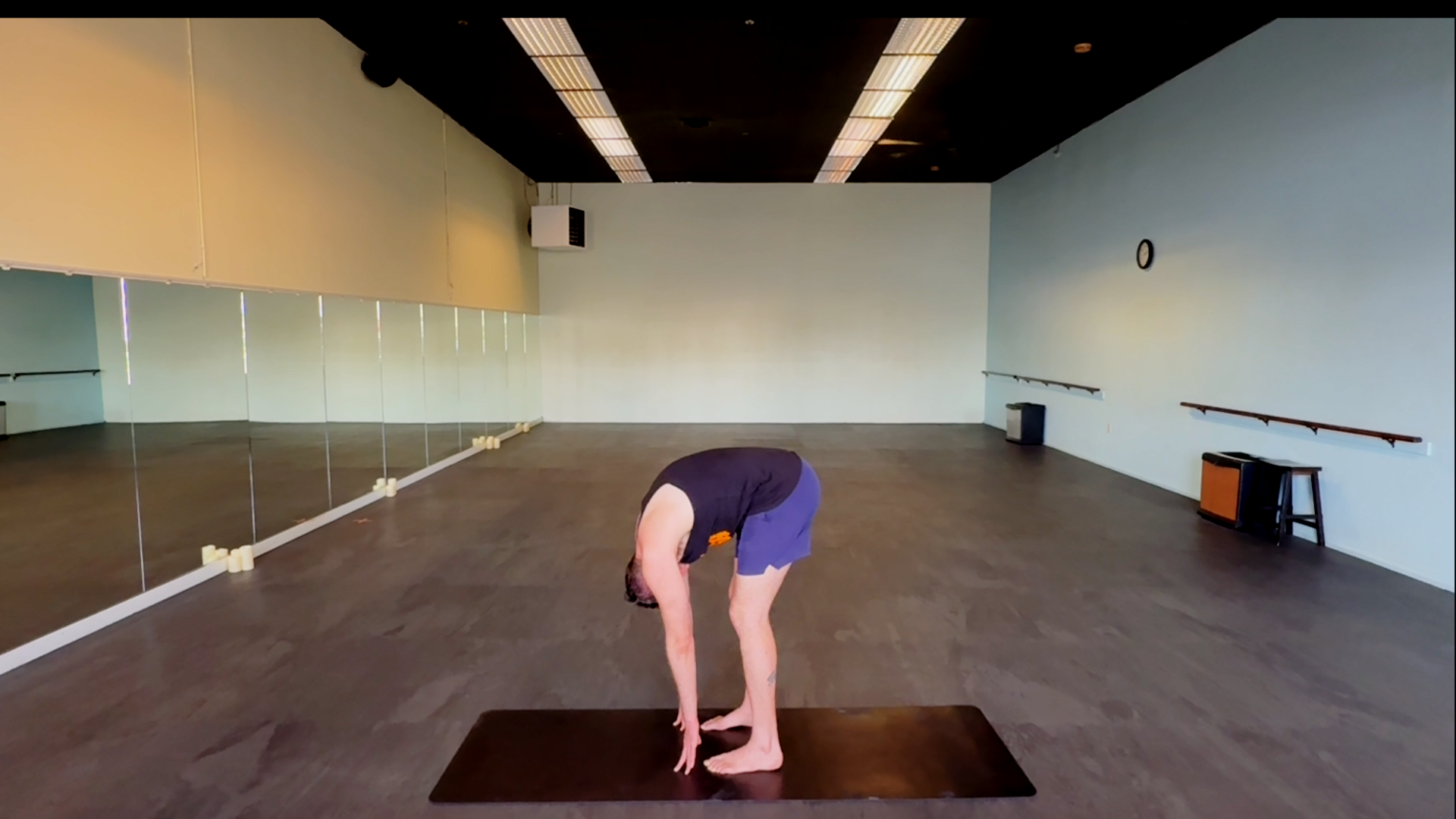
From Forward Fold, keep your feet grounded and allow your knees to bend as much as needed.
2. Place Your Hands
Bring your fingertips to the floor or blocks, or place your hands lightly on your shins or thighs. Wherever they land, press into them to help with the expansion in your back.
3. Lengthen Your Spine
On an inhale, lift your torso until your spine becomes long. Reach the crown of your head forward while sending your tailbone back. Keep your back completely flat here. If you go to the gym, think of a Deadlift or a Narrow Row stance.
4. Draw Your Shoulders Back
Broaden across your collarbones and gently draw your shoulder blades down your back. Keep your neck in line with your spine.
5. Engage Your Core
Draw your lower belly inward slightly to support the length of your spine.
6. Set Your Gaze
Look toward the floor slightly ahead of your feet. Avoid lifting your chin and compressing the back of your neck.
7. Breathe or Transition
Stay for several breaths if practicing the pose independently. In a flow, use your inhale to create length before exhaling into your next transition.
Props and Modifications
Place blocks beneath your hands if reaching the floor causes your spine to round.
Keep a generous bend in your knees if your hamstrings feel tight.
Place your hands higher on your thighs if you need additional support.
Practice against a wall to explore the feeling of sending your hips back while reaching your chest forward.
Common Misconceptions and Misalignments
Lifting your head instead of your spine. The movement should create length through your entire back rather than simply bringing your gaze forward.
Rounding your upper back. Bend your knees or elevate your hands until you can lengthen your spine.
Pressing heavily into your legs. Your hands provide support, but your core and back muscles should participate in the lift.
Locking your knees. Keep your legs active without forcing them straight.
Treating the pose only as a transition. Even one breath in Halfway Lift deserves intentional alignment.
Benefits of Halfway Lift
Physical
Lengthens and strengthens your spine.
Engages your core and back muscles.
Stretches your hamstrings and calves.
Encourages awareness of spinal alignment.
Mental and Emotional
Builds attention during transitions.
Encourages intentional movement rather than rushing.
Creates a brief moment of clarity and recalibration.
Develops awareness of the spaces between larger actions.
Cautions and Considerations
Keep your knees bent if you experience hamstring tension.
Use blocks or your thighs for support if you have low back sensitivity.
Avoid lifting your chin excessively.
Move slowly if transitioning between forward folds causes dizziness.
The Edge Connection
Your edge in Halfway Lift is precision.
This pose often lasts only as long as an inhale, which makes it tempting to treat it as nothing more than the space between two more important shapes. But the Warrior’s Path is built just as much through transitions as destinations.
Can you create length even when you only have one breath? Can you find alignment without needing more time? Can you resist rushing simply because you know where you are going next?
Halfway Lift teaches you that refinement does not always require stopping. Sometimes it happens in motion.
Warrior’s Edge Takeaway
In Halfway Lift, you embody the warrior who knows how to recalibrate.
You have folded, but you are not yet rising. You pause in the space between surrender and action long enough to find your direction again.
On the Warrior’s Path, this pose reminds you that being halfway there does not mean being incomplete. The middle of the journey is where you adjust, realign, and prepare yourself for whatever comes next.
Find your length. Set your direction. Keep moving.


Plank Pose is one of the clearest expressions of strength in yoga. There is nowhere to hide. No dramatic shape. No deep fold. Just a straight line of effort from your heels through the crown of your head.
On the Warrior’s Path, Plank represents discipline. It is the moment where you hold steady under pressure. You do not collapse. You do not rush. You stay.