
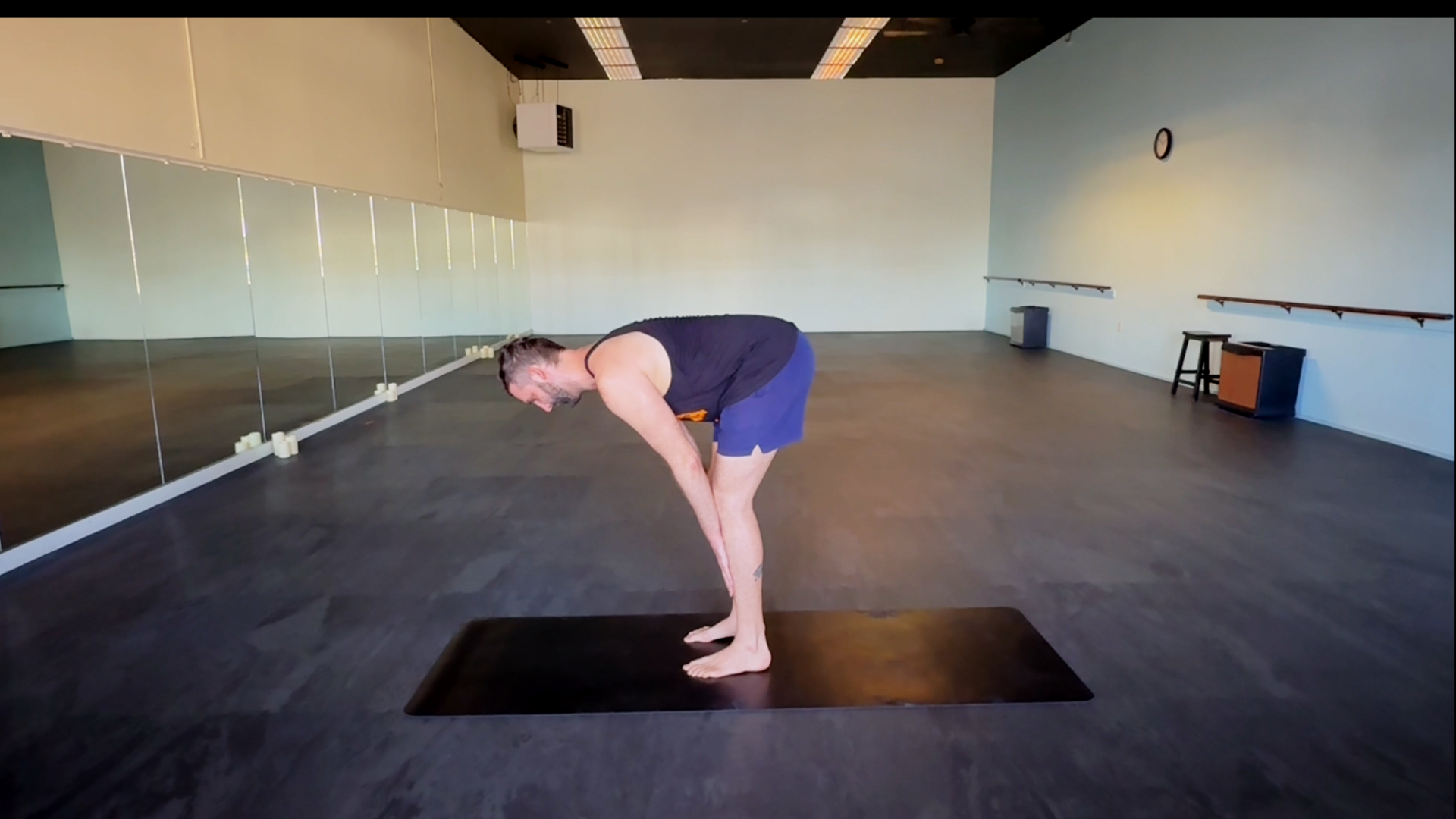
Halfway Lift (Ardha Uttanasa)
Halfway Lift is easy to rush past. In a Sun Salutation or vinyasa flow, you may only spend a single inhale here before moving into the next pose. But that brief moment carries an important lesson.
You have folded forward, and now you lift just enough to find length again. Your spine extends. Your chest reaches forward. Your legs remain grounded beneath you.
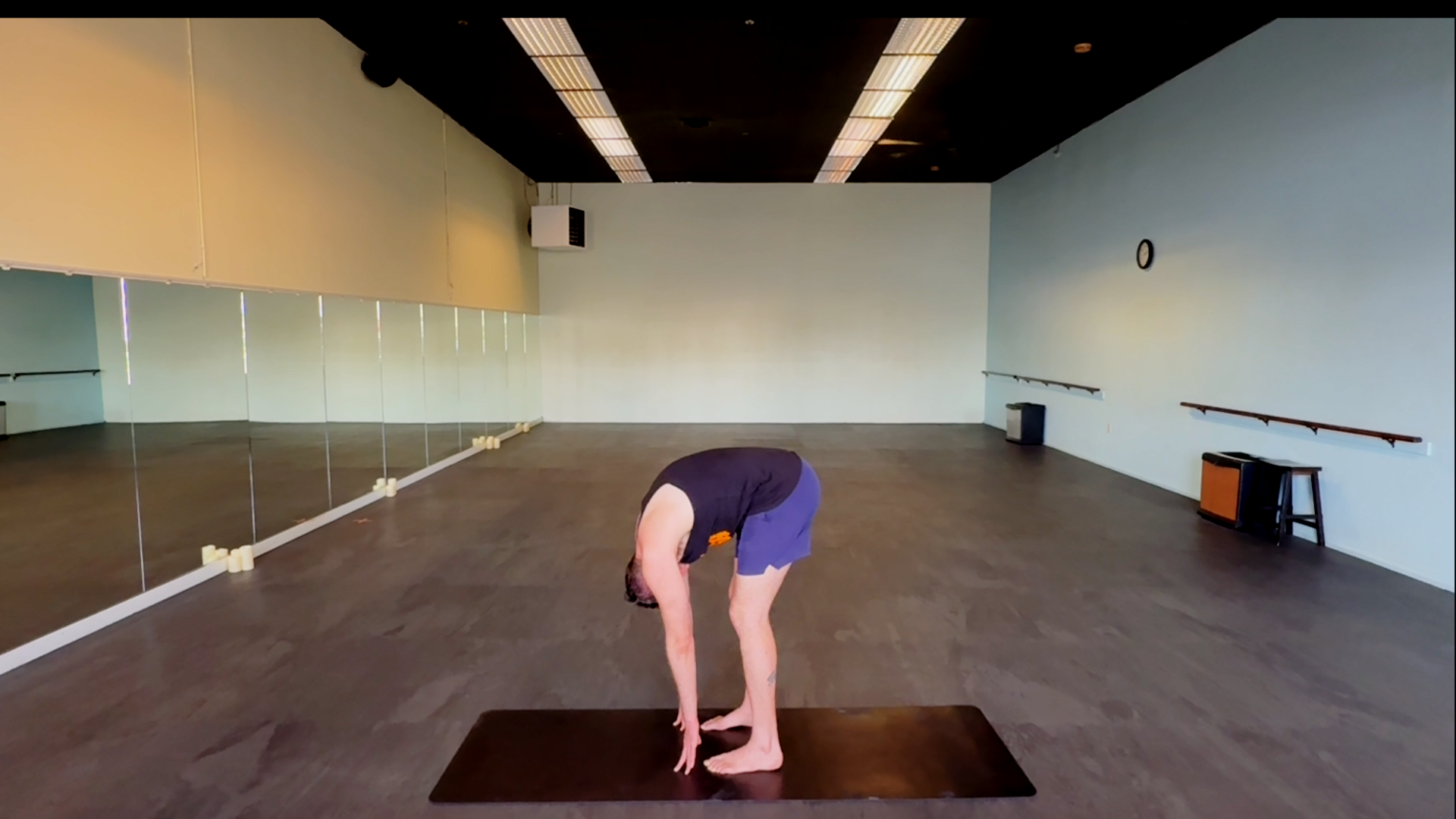
Forward Fold (Uttanasana)
Forward Fold appears everywhere in yoga. You meet it in Sun Salutations, between standing sequences, as a transition, and as a posture in its own right. Because it is so familiar, it can be easy to mistake simplicity for insignificance.
From standing, you fold toward the earth. Your upper body descends while your legs remain rooted beneath you. The shape asks for both release and support.
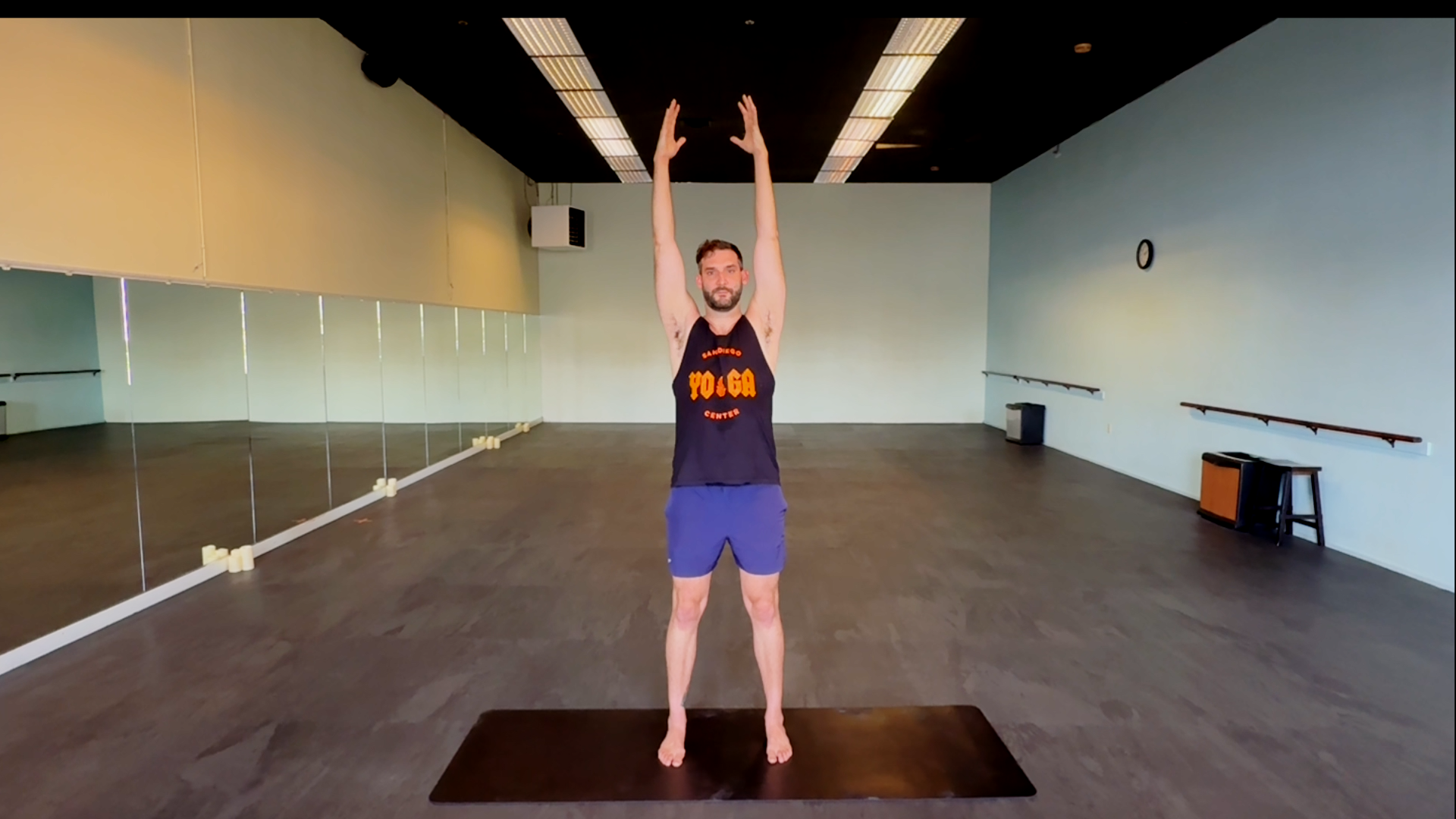
Upward Salute (Urdhva Hastasana)
Upward Salute begins with one of the simplest actions in yoga. You stand tall and reach your arms overhead.
But the pose is more than lifting your arms. Your feet remain grounded while everything above them reaches upward. Your legs engage. Your spine lengthens. Your chest expands. You create space without abandoning your foundation.
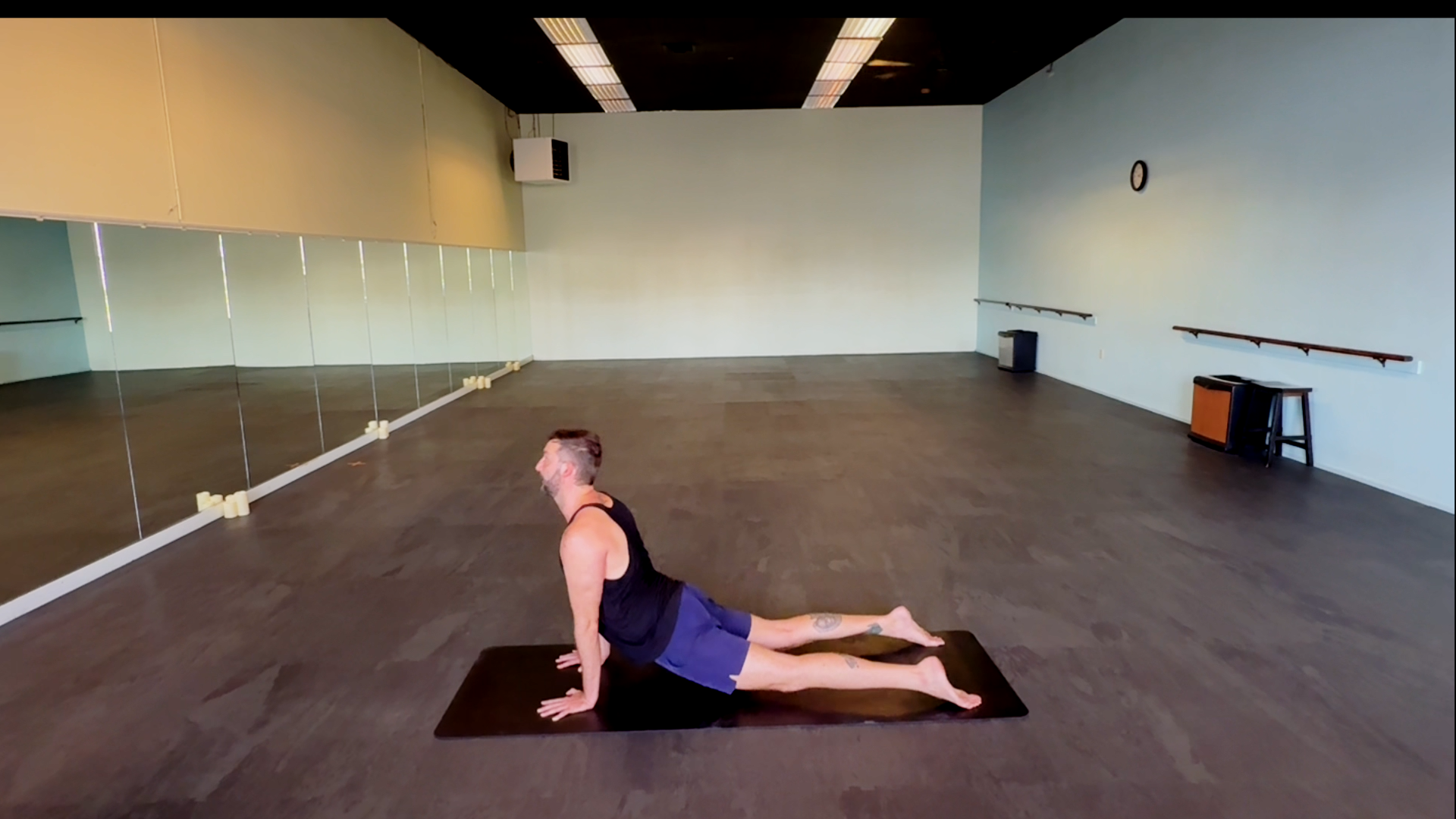
Upward Dog (Urdhva Mukha Svanasana)
Upward Dog is a pose of lift and expansion. After the strength of Plank and the effort of Chaturanga, this posture asks you to press into the earth and rise.
It is not passive. It is not collapsed. It is active, strong, and deliberate. On the Warrior’s Path, Upward Dog represents the courage to open your heart even after effort. It is the moment where you choose to rise instead of retreat.
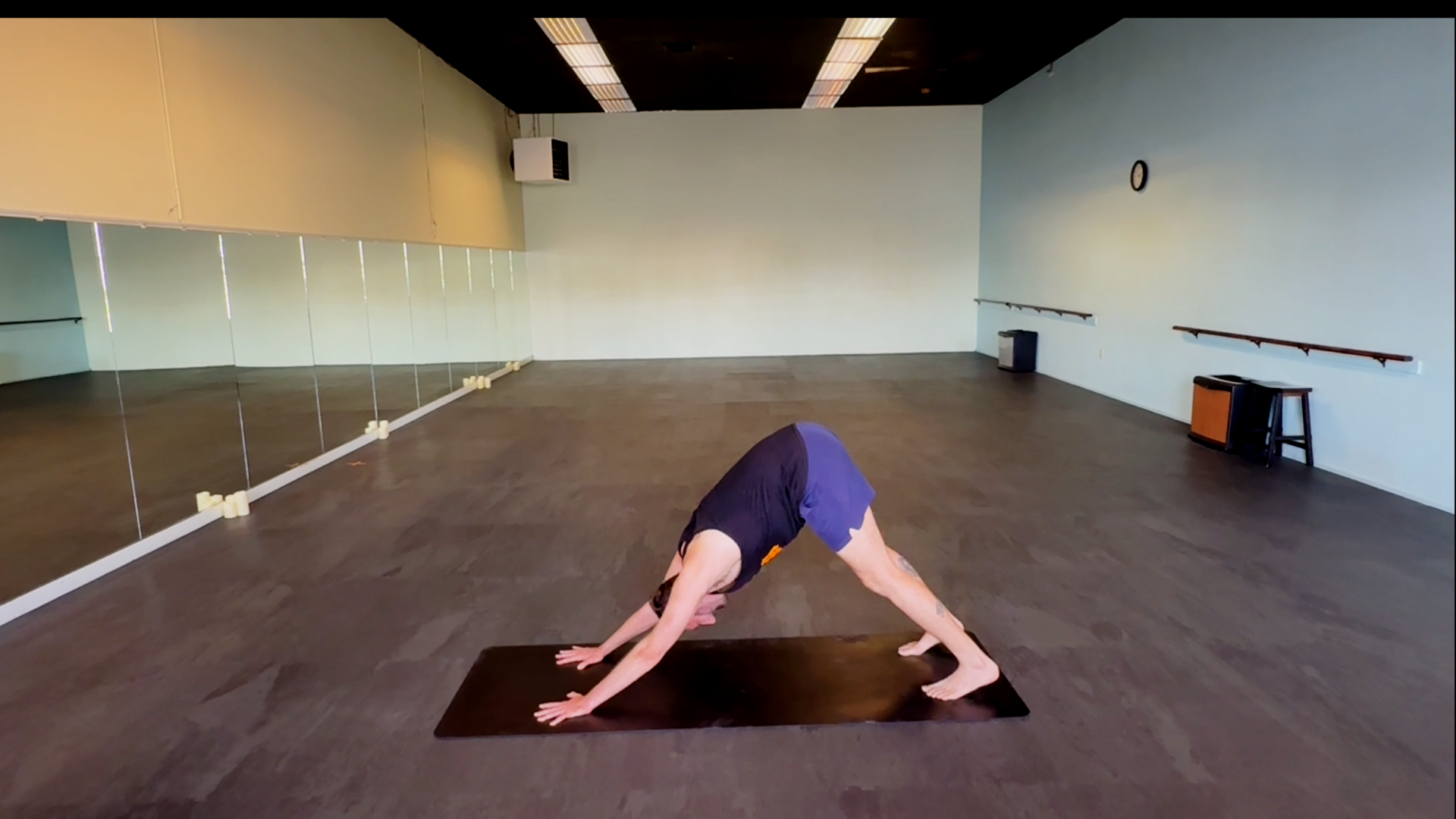
Downward Dog (Adho Mukha Svanasana)
Downward Dog is one of the most recognizable shapes in yoga, yet it is far more than a transition pose. It is a reset point, a recalibration, and a place where strength meets length.
In almost every class, you return to Downward Dog again and again. It becomes your home base. On the Warrior’s Path, it represents the discipline of returning to your foundation no matter how far you’ve moved.
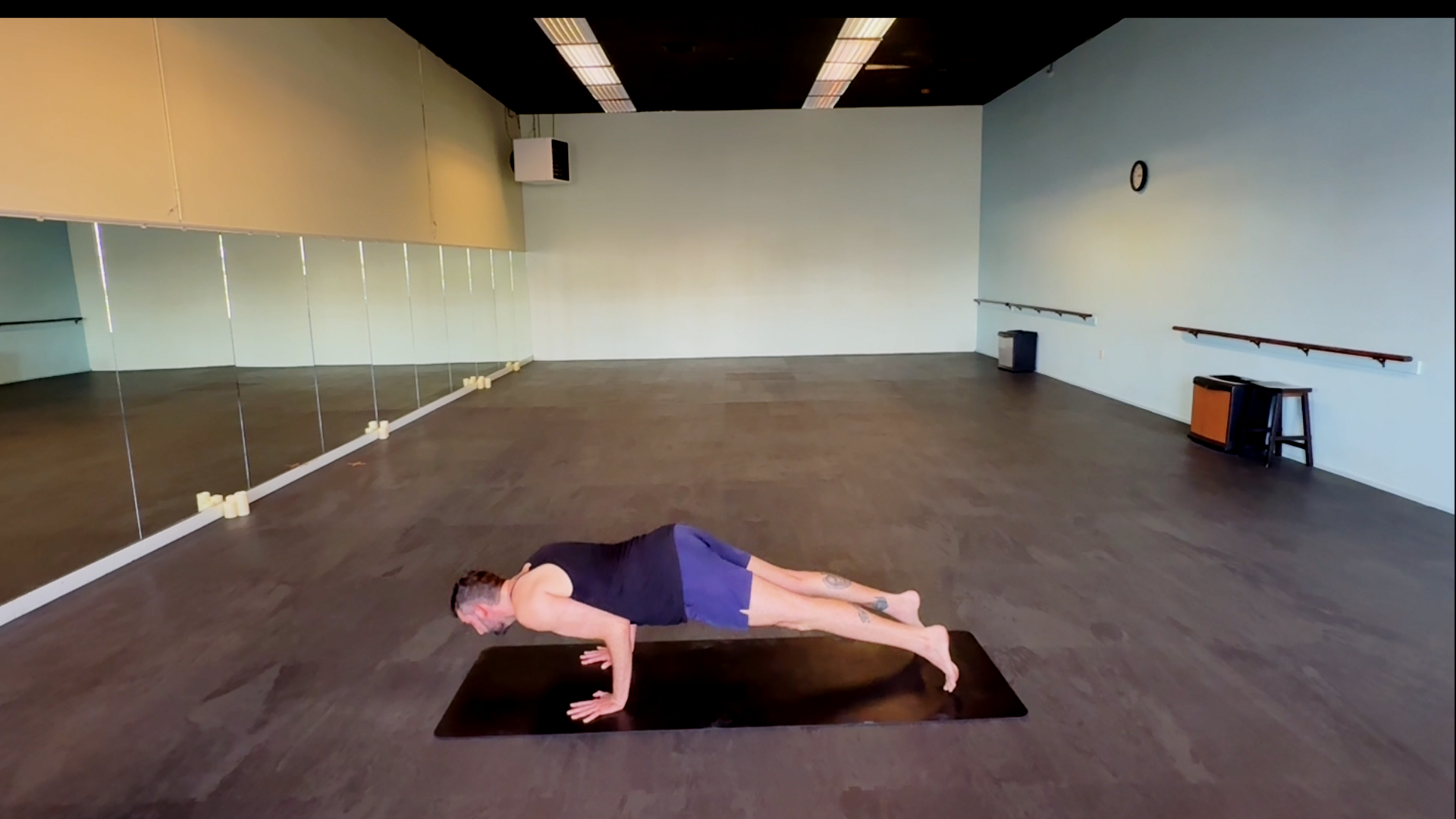
Chaturanga Dandasana
Chaturanga is not just a transition. It is a test.
In most vinyasa practices, it appears between Plank and Upward Dog, but when rushed, it becomes sloppy and disconnected. When practiced with intention, it becomes one of the strongest expressions of disciplined strength in yoga.
On the Warrior’s Path, Chaturanga represents controlled descent. It is the warrior lowering into challenge without collapsing.
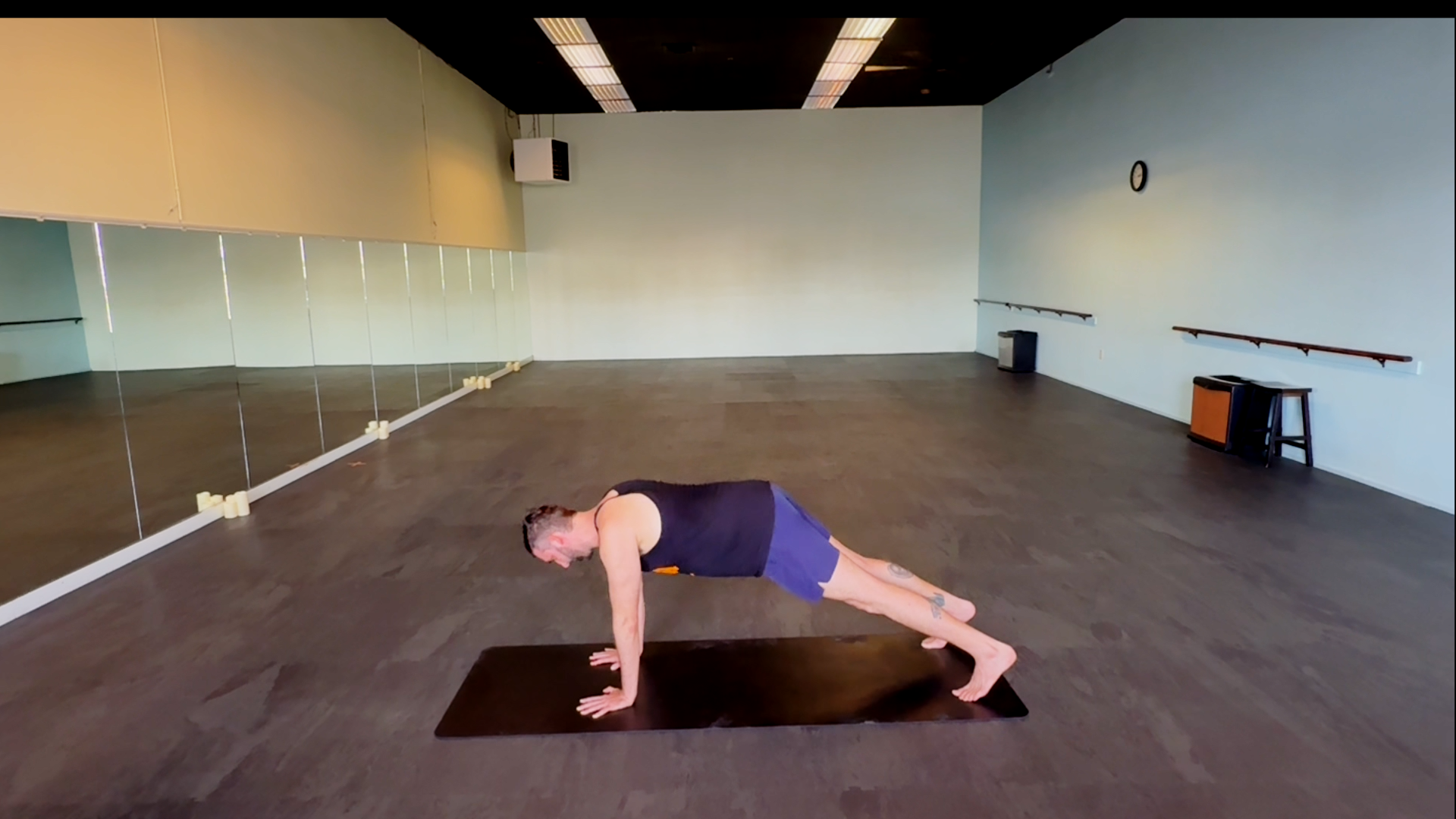
Plank Pose (Phalakasana)
Plank Pose is one of the clearest expressions of strength in yoga. There is nowhere to hide. No dramatic shape. No deep fold. Just a straight line of effort from your heels through the crown of your head.
On the Warrior’s Path, Plank represents discipline. It is the moment where you hold steady under pressure. You do not collapse. You do not rush. You stay.
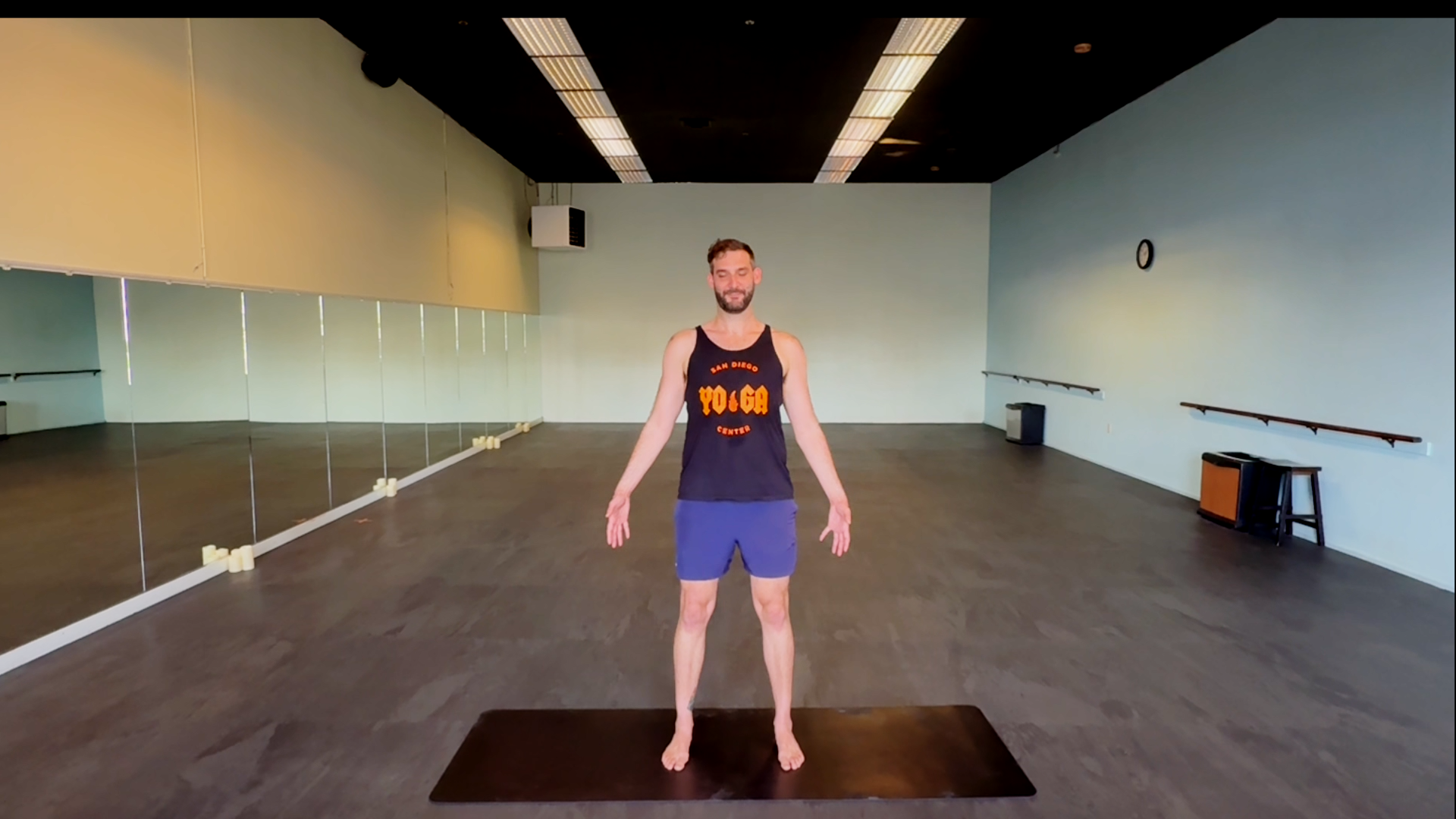
Mountain Pose (Tadasana)
Mountain Pose looks simple. You’re just standing. But in yoga, “just standing” is never just anything. Tadasana is the blueprint for every standing posture that follows. It is the foundation beneath Warrior 1, Warrior 2, and every lunge, balance, and transition you will ever take.
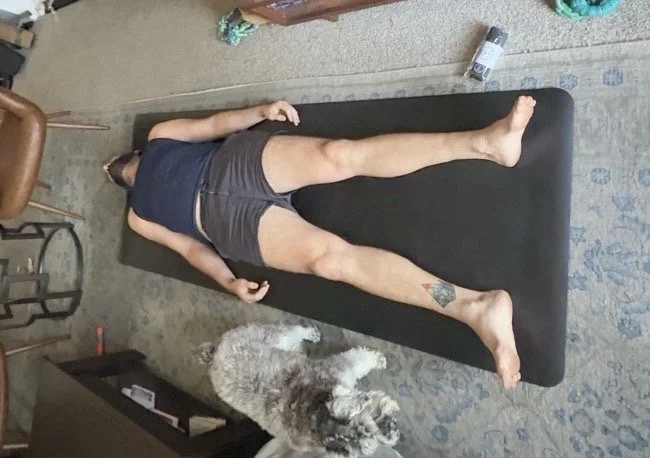
Corpse Pose (Savasana)
Savasana is often treated as the reward at the end of practice, but in many ways, it is the practice.
After the strength of Plank, the discipline of Warrior, the fire of Dragon, and the balance of Half Moon, Savasana asks you to stop doing anything and just receive.
This is where effort becomes wisdom.
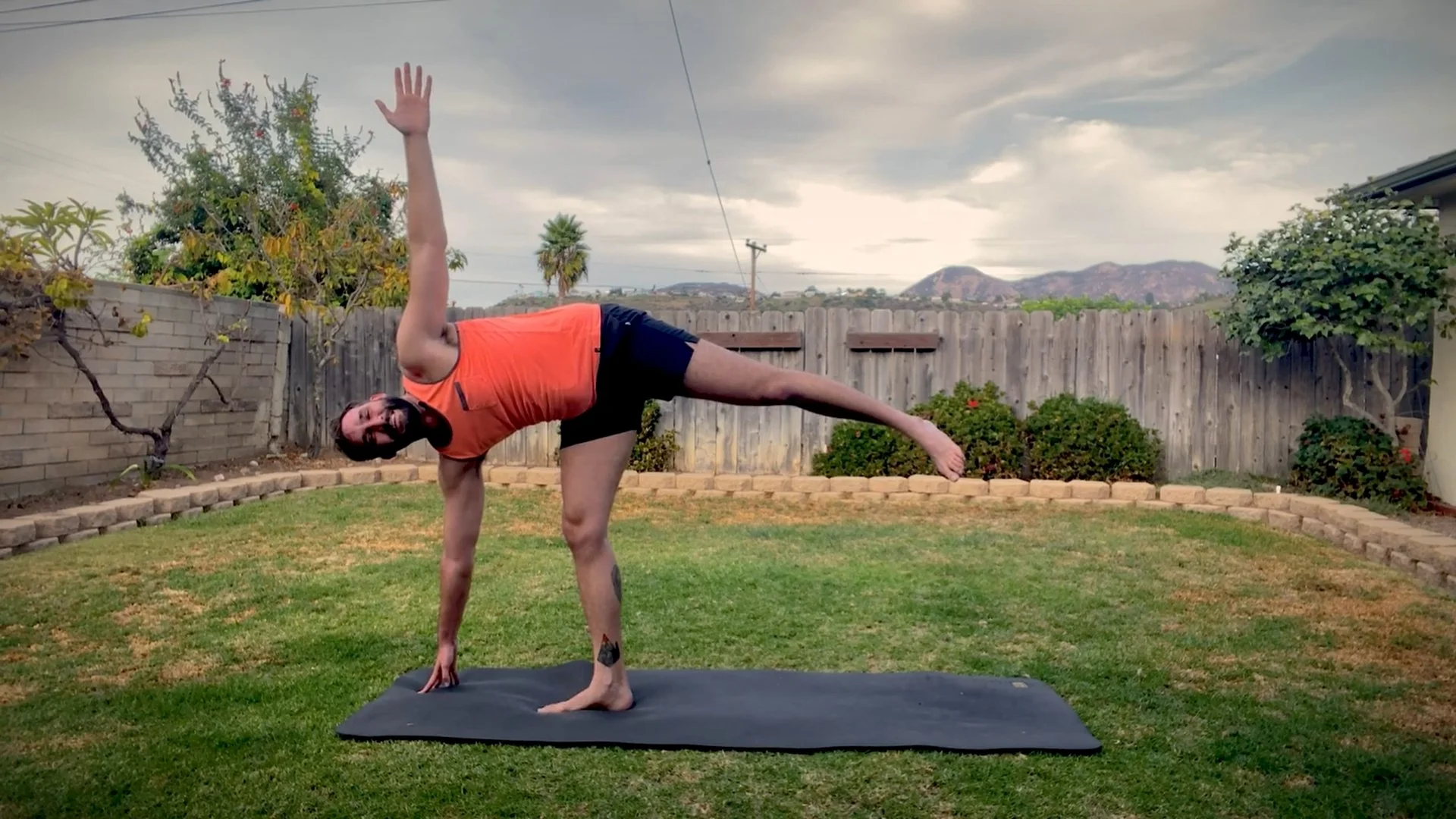
Half Moon (Ardha Chandrasana)
Half Moon Pose builds from the foundation of Triangle and shifts it into balance. You are no longer supported by both feet. One leg roots down while the other lifts. Your body opens wide into space. This is where structure meets instability.
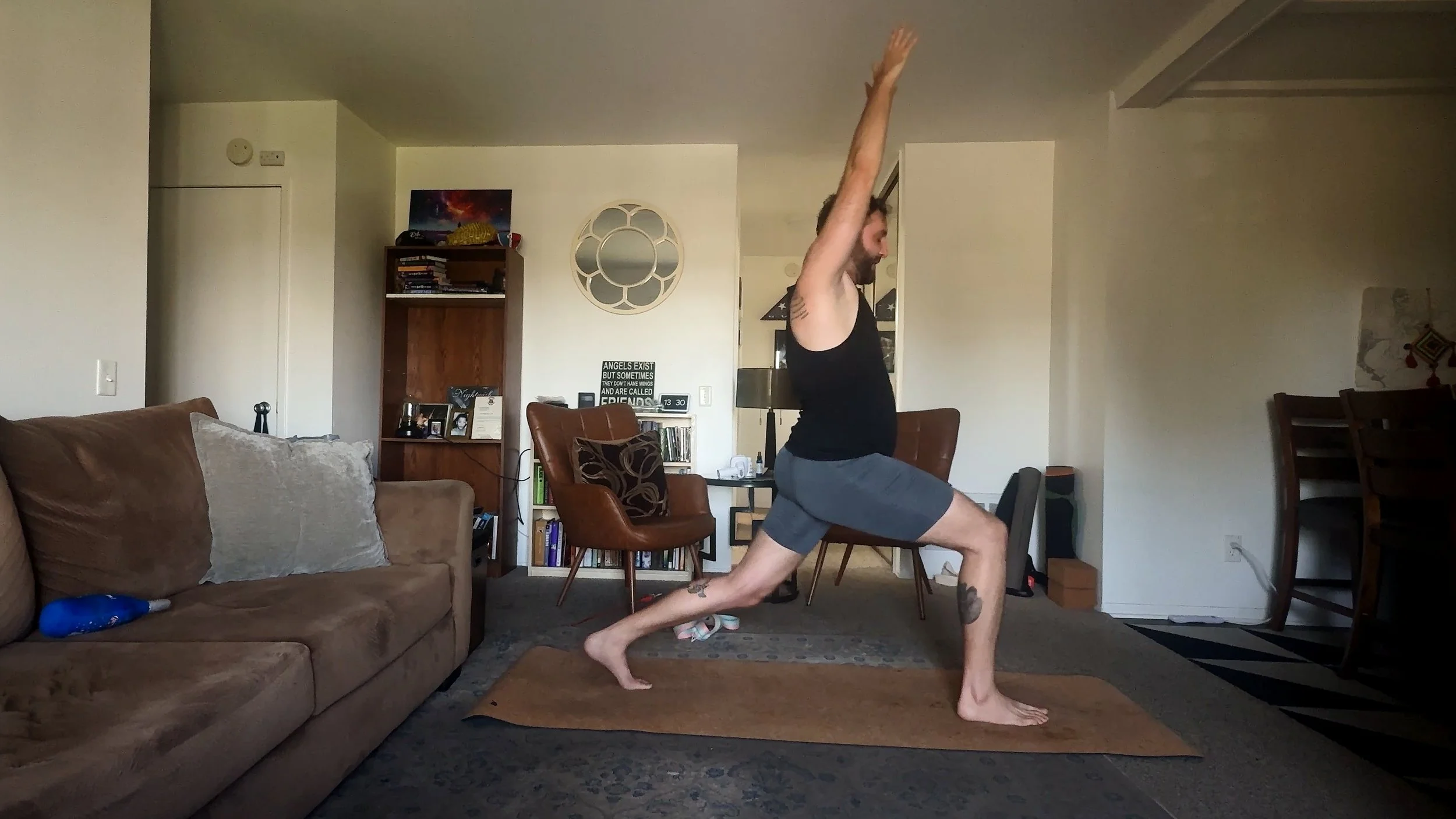
Crescent Pose (Ashta Chandrasana)
Crescent Pose is where grounding meets elevation. Unlike Warrior 1, your back heel is lifted, which immediately demands more balance and engagement from your toes. You are not anchored through two flat feet. You are rising from a narrower base.
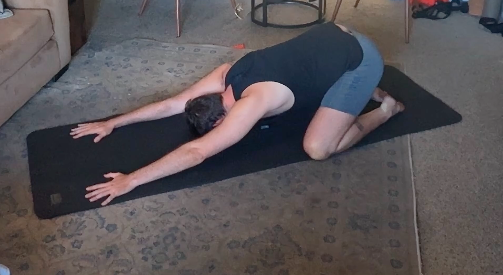
Child’s Pose (Balasana)
Child’s Pose is the place you return to when you need to rest, reflect, or reset. It’s a posture of surrender and grounding. It invites you to fold inward and find safety in stillness. Though often offered as a “break” in active classes, Child’s Pose is far from passive: it teaches you to listen, to breathe, and to reconnect to your center.

Butterfly Pose (Baddha Konasana)
Butterfly is one of those poses that looks simple on the outside, but reveals endless depth the longer you sit with it. In yin yoga, it’s often a baseline posture — accessible, grounding, and quietly powerful. In a more active practice, it becomes a forward fold that targets the hips and spine. Either way, Butterfly is a reminder that strength isn’t always about force; sometimes it’s about surrender.

Warrior 2 (Virabhadrasana II)
Warrior II expands on what Warrior I began. If Warrior I is the first step forward, Warrior II is the widening of your stance — the moment where you claim more space and ground yourself in unwavering presence. This pose teaches you to open in two directions at once, stretching your awareness and balance across a wider field.

Warrior 1 (Virabhadrasana I)
Warrior I is the entry point to the entire Warrior’s Path. When you step into this pose, you’re not just lunging — you’re declaring your presence. This is the stance of focus, of intention, of stepping forward even when the ground beneath you feels uncertain. Warrior I trains you to meet resistance head-on and teaches you that balance doesn’t come from rigidity, but from alignment and breath.

Warrior 3 (Virabhadrasana III)
Warrior III is the leap — the transformation of grounding into flight. If Warrior I is the step and Warrior II is the stance, Warrior III is the soaring strike forward. This pose challenges you to balance strength and surrender, stability and expansion. It strips away the extra, leaving only precision, focus, and trust in your own edge.