
Prayer Twist
Find Space Before You Turn
Prayer Twist is less a single pose than a movement pattern you will encounter throughout yoga.
You might find it sitting deeply in Chair Pose. You might meet it balancing in Crescent. The legs and foundation can change, but the essential action remains the same. Your hands come together at your heart, your spine lengthens, and your torso rotates across your centerline.
The temptation is to twist as far as possible. The practice is learning to create space first.
On the Warrior’s Path, Prayer Twist represents perspective. You remain grounded in the shape you have already established while learning to view it from another angle.
The Meaning Behind Prayer Twist
Prayer Twist combines two familiar actions in yoga. The first is Anjali Mudra, the gesture formed by bringing your palms together at your heart. The second is spinal rotation.
Anjali Mudra is commonly associated with greeting, reverence, offering, and connection. Bringing your hands together creates a clear center point at your chest.
Then you turn around it.
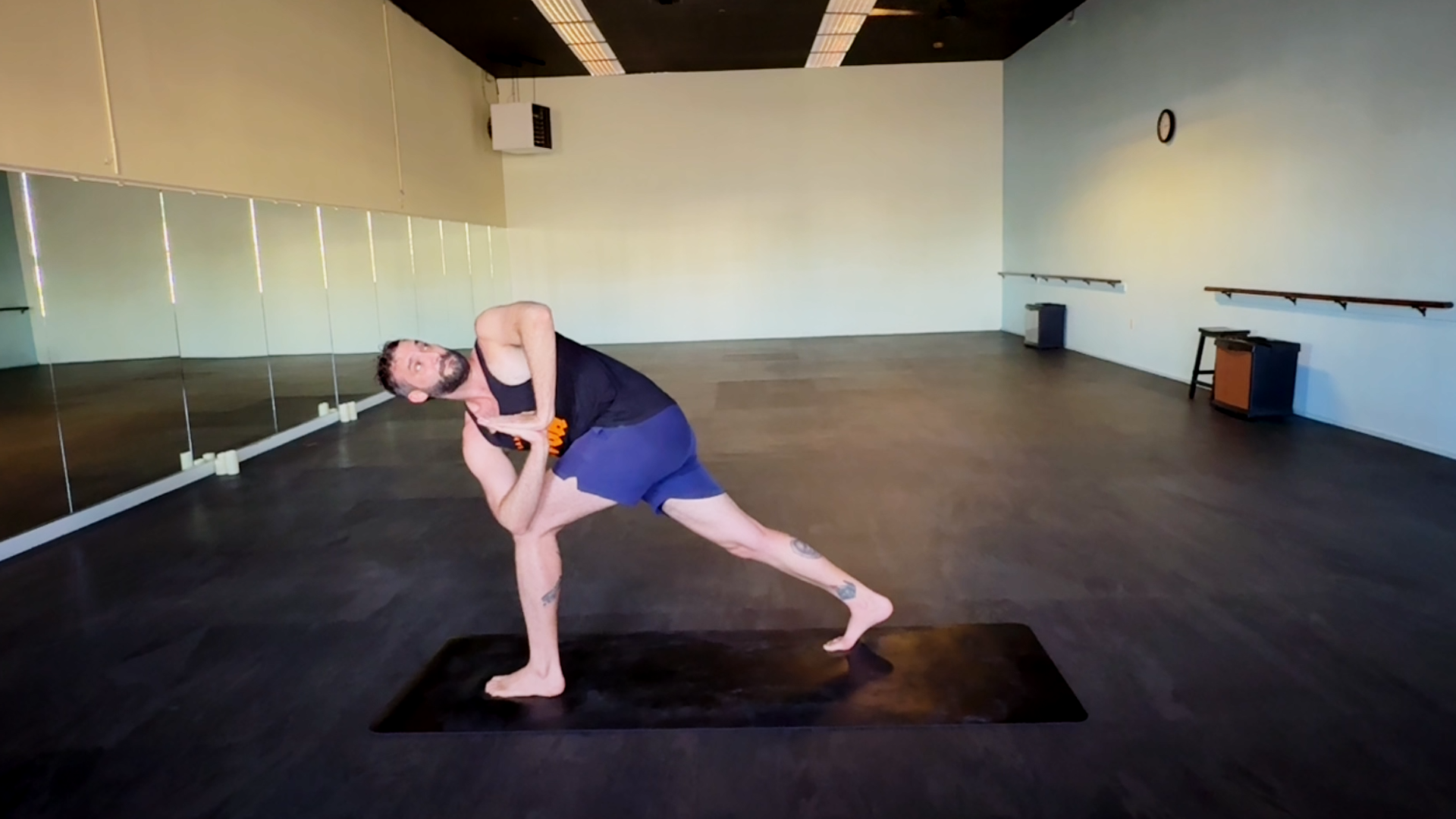
In Chair Pose, your legs remain grounded and powerful while your torso rotates. In Crescent, the narrower foundation adds balance and instability. Elsewhere in practice, the position may change again, but the central lesson remains.
Your hands give you a center. Your breath creates space. Your twist changes your perspective.
Symbolically, Prayer Twist represents centered transformation. You do not twist by abandoning your foundation. You establish your center first and move from there.
How to Practice Prayer Twist
1. Establish Your Foundation
Begin in Chair Pose, Crescent, or another stable position where a Prayer Twist is appropriate.
Before twisting, make sure you can maintain the underlying pose with steady breath.
2. Bring Your Hands to Prayer
Press your palms together at your heart in Anjali Mudra. Keep your elbows extending outward rather than collapsing toward your chest, and maintain alignment with your elbows and the bottom of your wrists.
3. Lengthen Your Spine
On an inhale, lift through the crown of your head and create space through your torso.
Think upward before you think twisted.
4. Begin Your Twist
On an exhale, rotate your torso toward one side.
If you are twisting to the right, bring your left elbow toward the outside of your right thigh or knee.
5. Create the Connection
Hook your opposite elbow outside your leg. Press your palms together while gently using the connection between your arm and leg to support the rotation.
Avoid using your elbow to aggressively force yourself deeper.
6. Open Your Chest
Draw your top shoulder back while keeping your spine long. Try to rotate through your ribcage rather than simply moving your shoulders.
7. Set Your Gaze
Look toward the floor, straight ahead, or over your top shoulder depending on your balance and neck comfort. Stay for 5 to 10 breaths. Use each inhale to create length, and each exhale to explore rotation.
Return to center before repeating on the opposite side.
Props and Modifications
Keep your hands at heart center and twist only as far as you can without connecting your elbow outside your leg.
Place your bottom hand on a block if you eventually transition from Prayer Twist toward Revolved Side Angle.
Lower your back knee when practicing from Crescent to reduce the balance demand.
Take a shallower Chair Pose if maintaining the twist causes you to lose stability through your legs.
Keep your gaze toward the floor if looking sideways or upward disrupts your balance.
Common Misconceptions and Misalignments
Trying to twist before creating length. Lengthen your spine first, then rotate.
Using your elbow to wrench yourself deeper. The arm and leg provide connection, not permission to force your spine.
Allowing your prayer hands to drift away from your chest. Keep your hands centered so the gesture continues supporting the twist.
Rotating only through your shoulders. Let the movement travel through your ribcage and thoracic spine.
Losing the original pose once you begin twisting. In Chair, keep sitting into your legs. In Crescent, maintain the strength and stability of your lunge.
Holding your breath. Rotation can make breathing feel restricted, which makes conscious breath even more important.
Benefits of Prayer Twist
Physical
Encourages mobility through your thoracic spine.
Strengthens your core through rotational control.
Builds body awareness and coordination.
Challenges balance when practiced from standing positions.
Adds complexity and engagement to foundational poses such as Chair and Crescent.
Mental and Emotional
Builds concentration through layered movement.
Encourages patience rather than forcing depth.
Cultivates awareness of your center during change.
Offers a physical practice of shifting perspective.
Develops composure when familiar poses become more complex.
Cautions and Considerations
Forcing the elbow to knee connection. Approach deep twists carefully if you have spinal or low back injuries.
Modify the underlying pose if maintaining the twist compromises your balance or joint alignment.
Keep your gaze neutral if turning your head causes neck discomfort or dizziness.
During pregnancy, deep closed twists are generally modified or avoided. An open twist that creates space in the abdomen may be more appropriate under the guidance of a qualified prenatal yoga or healthcare professional.
The Edge Connection
Your edge in Prayer Twist is not how far you can turn.
It is how much space you can create before you do.
When a twist feels limited, the instinct is often to push harder. Press your elbow deeper. Pull your shoulder farther back. Force another few degrees of rotation.
Prayer Twist asks for something more disciplined.
Can you inhale before you move? Can you create length where you feel compressed? Can you stay connected to the pose beneath the twist rather than sacrificing your foundation for the illusion of greater depth?
And can you recognize that sometimes changing your perspective requires effort, but it should not require force.
On the Warrior’s Path, perspective cannot always change the circumstances beneath you. Chair may still burn. Crescent may still challenge your balance. But learning to turn while remaining centered can change how you experience them.
Warrior’s Edge Takeaway
In Prayer Twist, you embody the centered warrior.
Your surroundings do not have to change for your perspective to shift. You establish your foundation, return to your center, and then allow yourself to see from another direction.
On the Warrior’s Path, this pose reminds you that transformation does not always require moving somewhere new. Sometimes it begins by seeing where you already stand differently.
Find your center. Create space. Turn with intention.
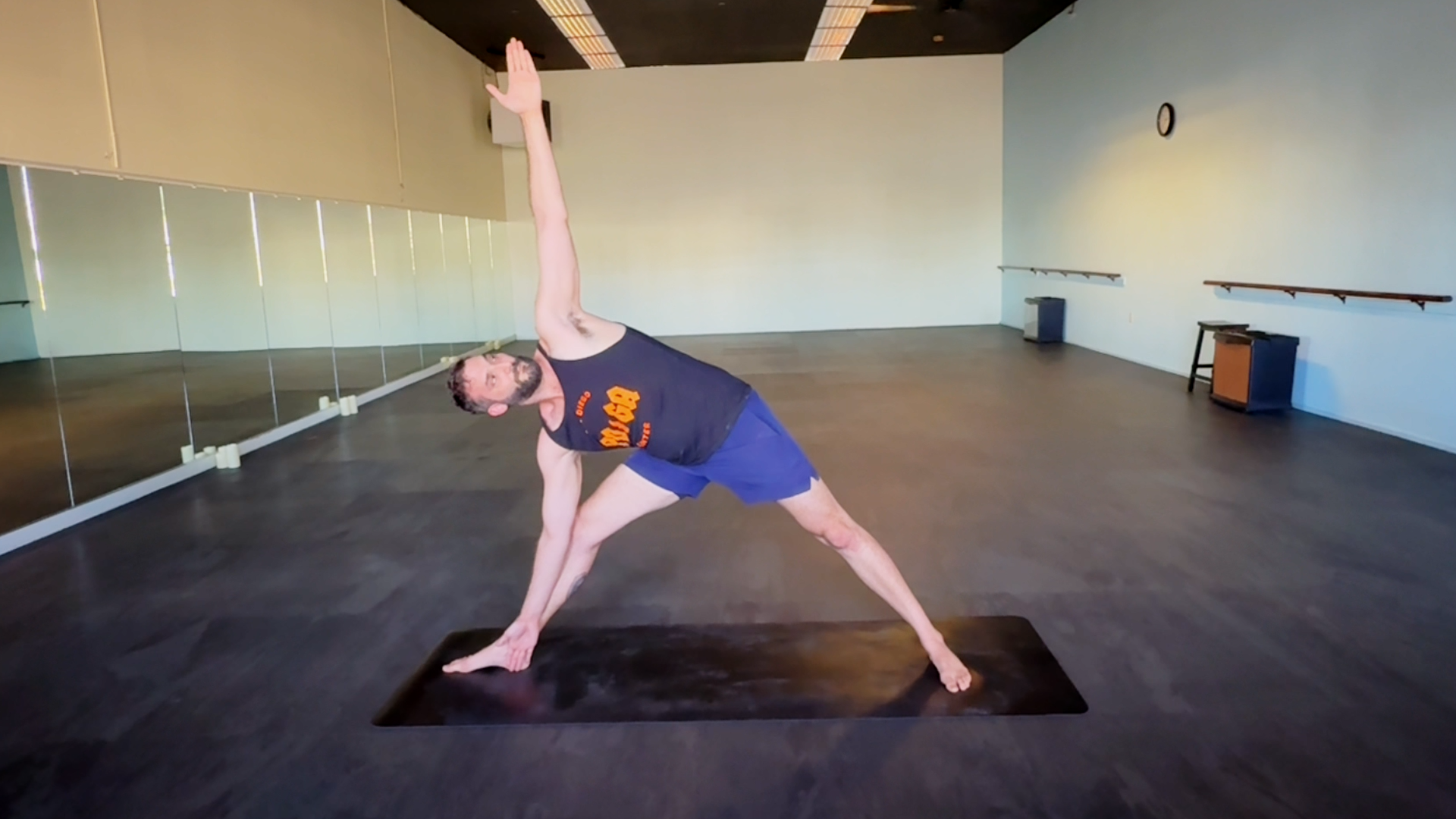
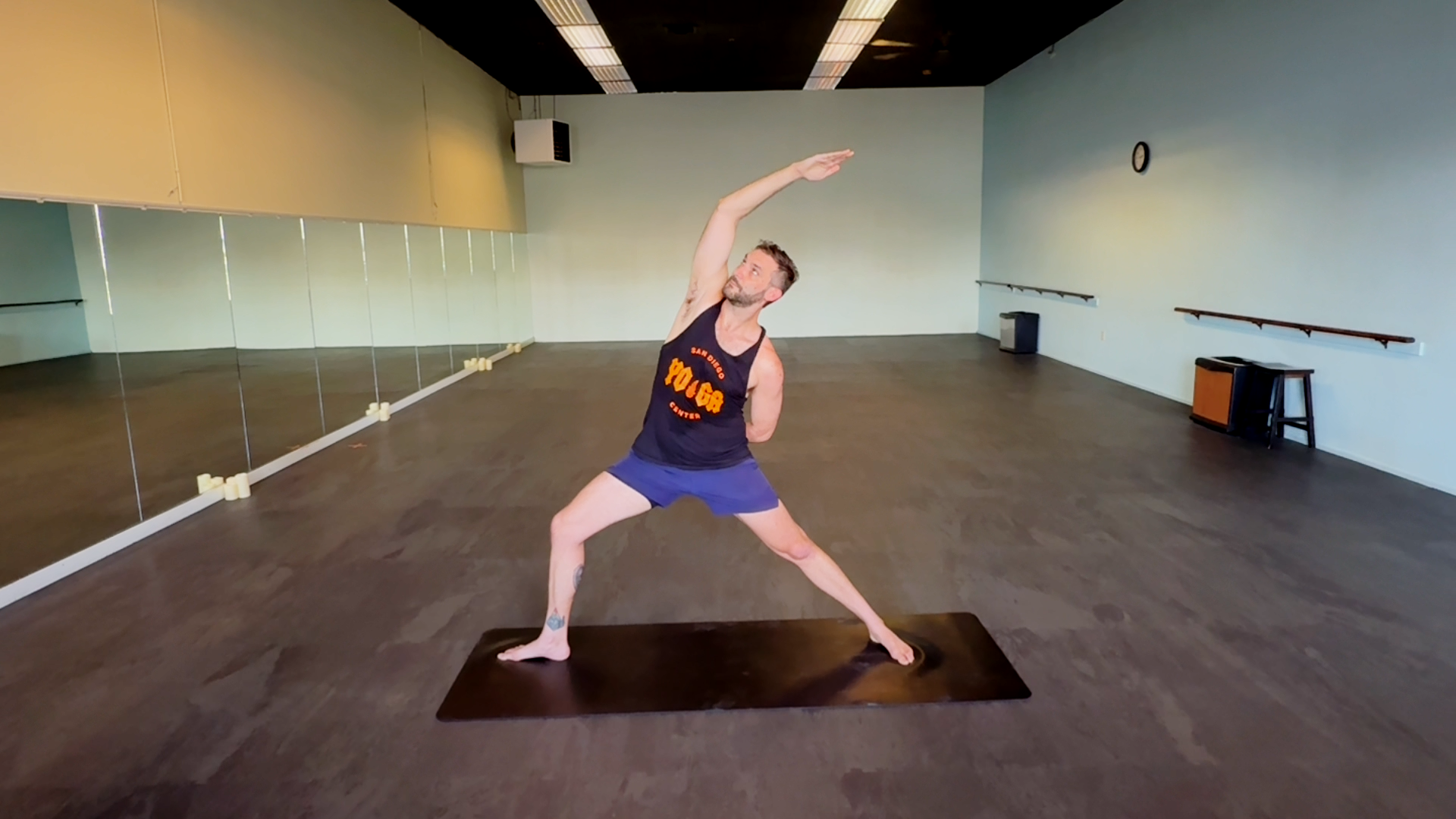
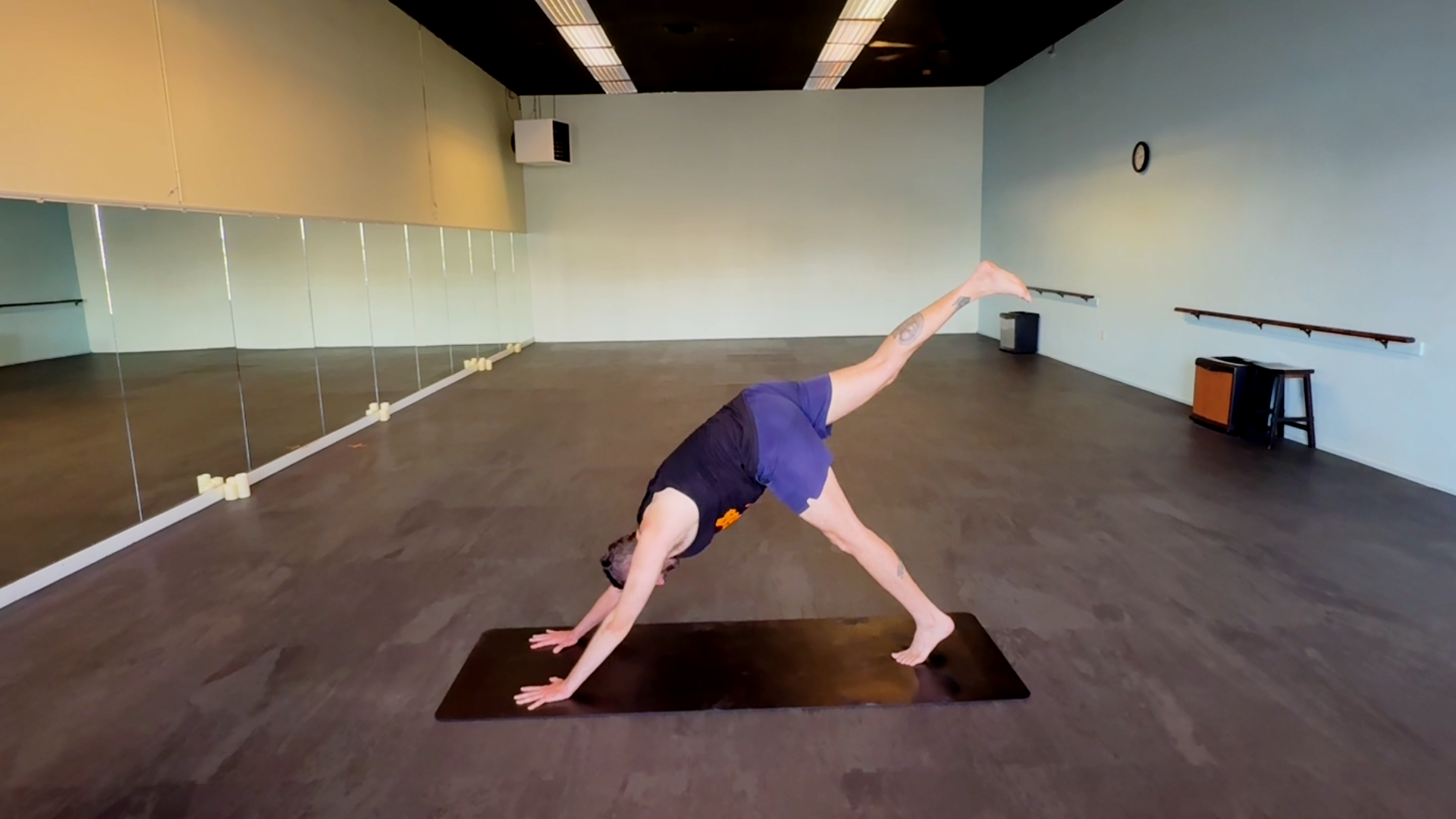
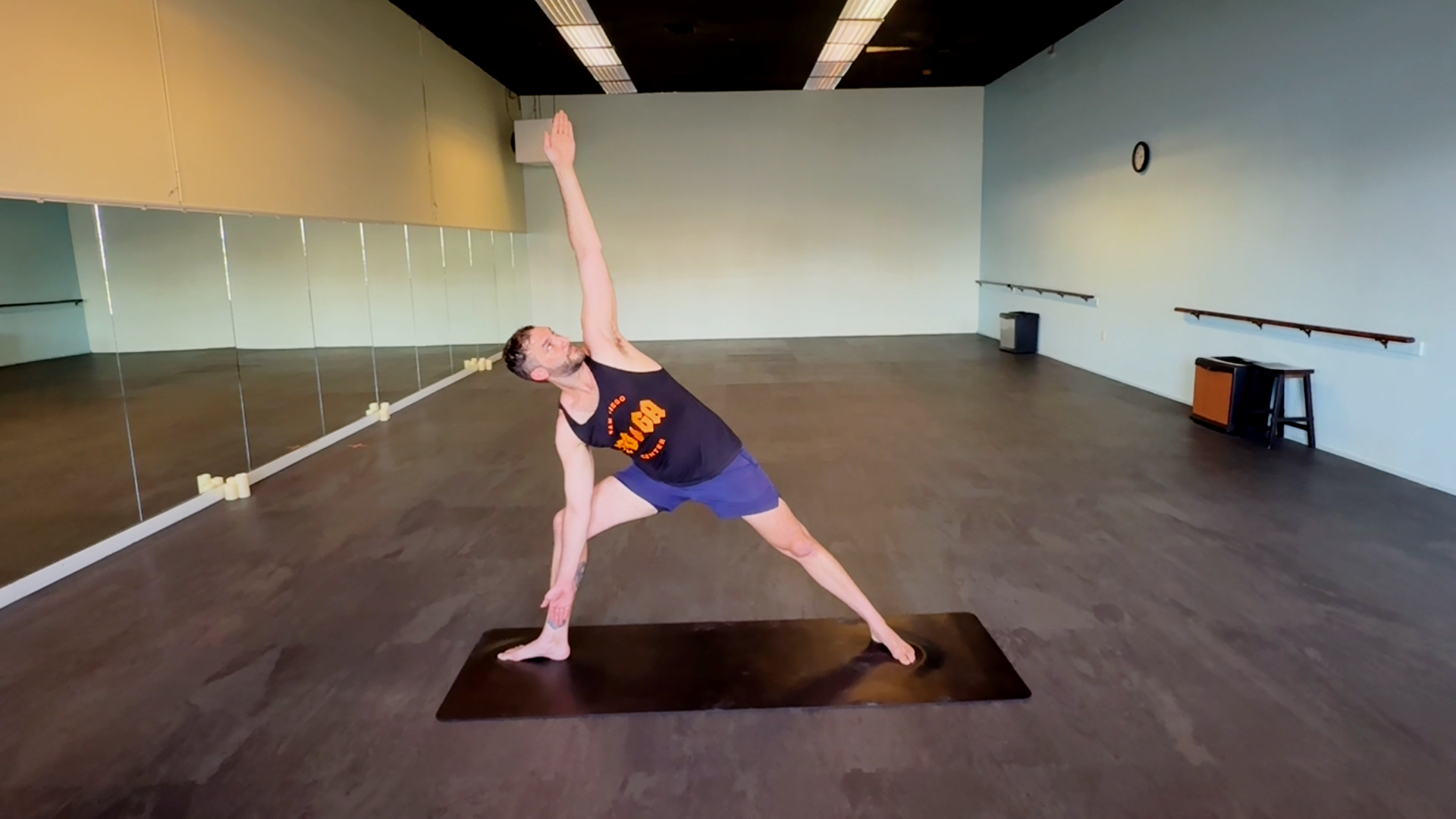
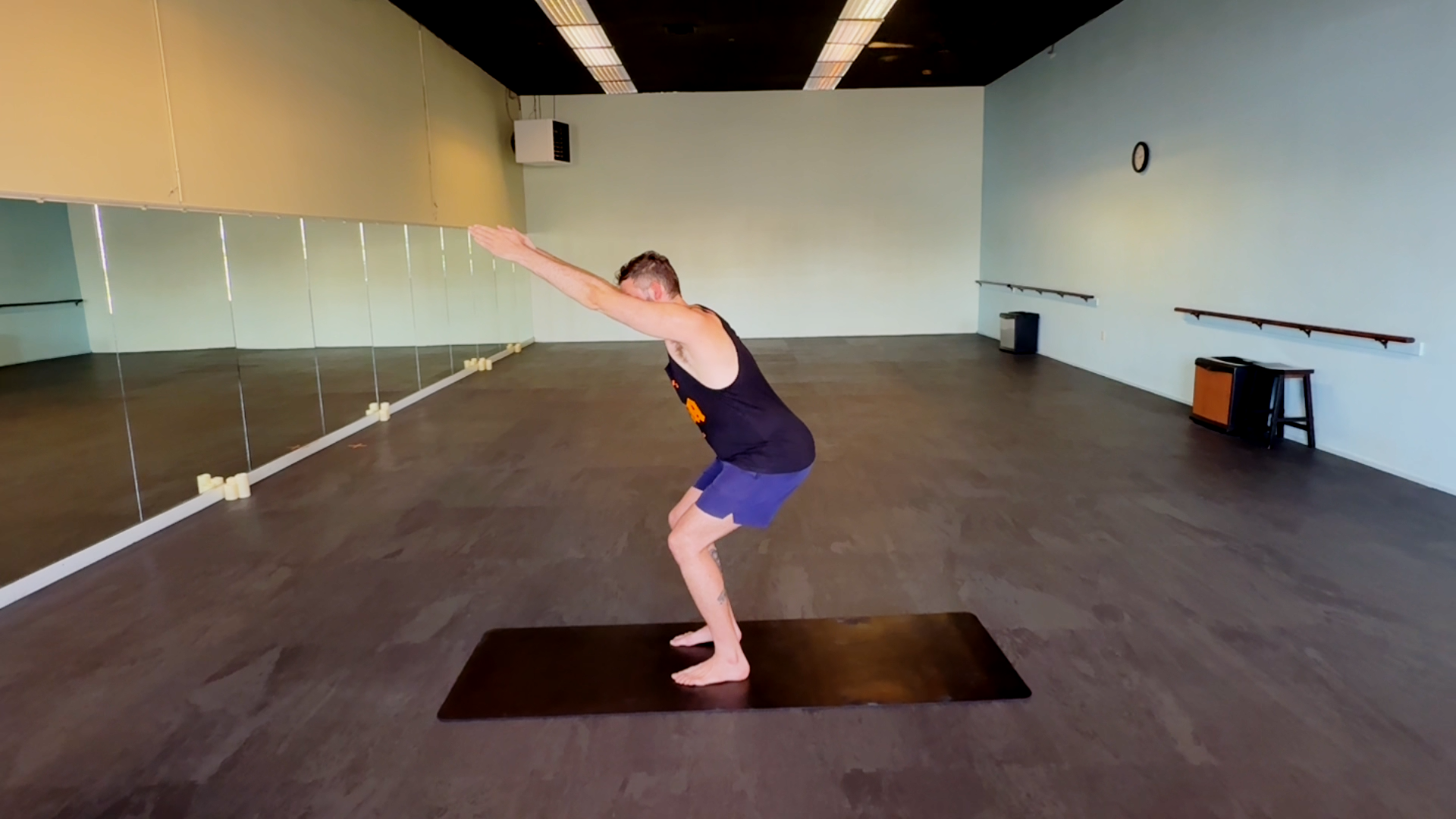
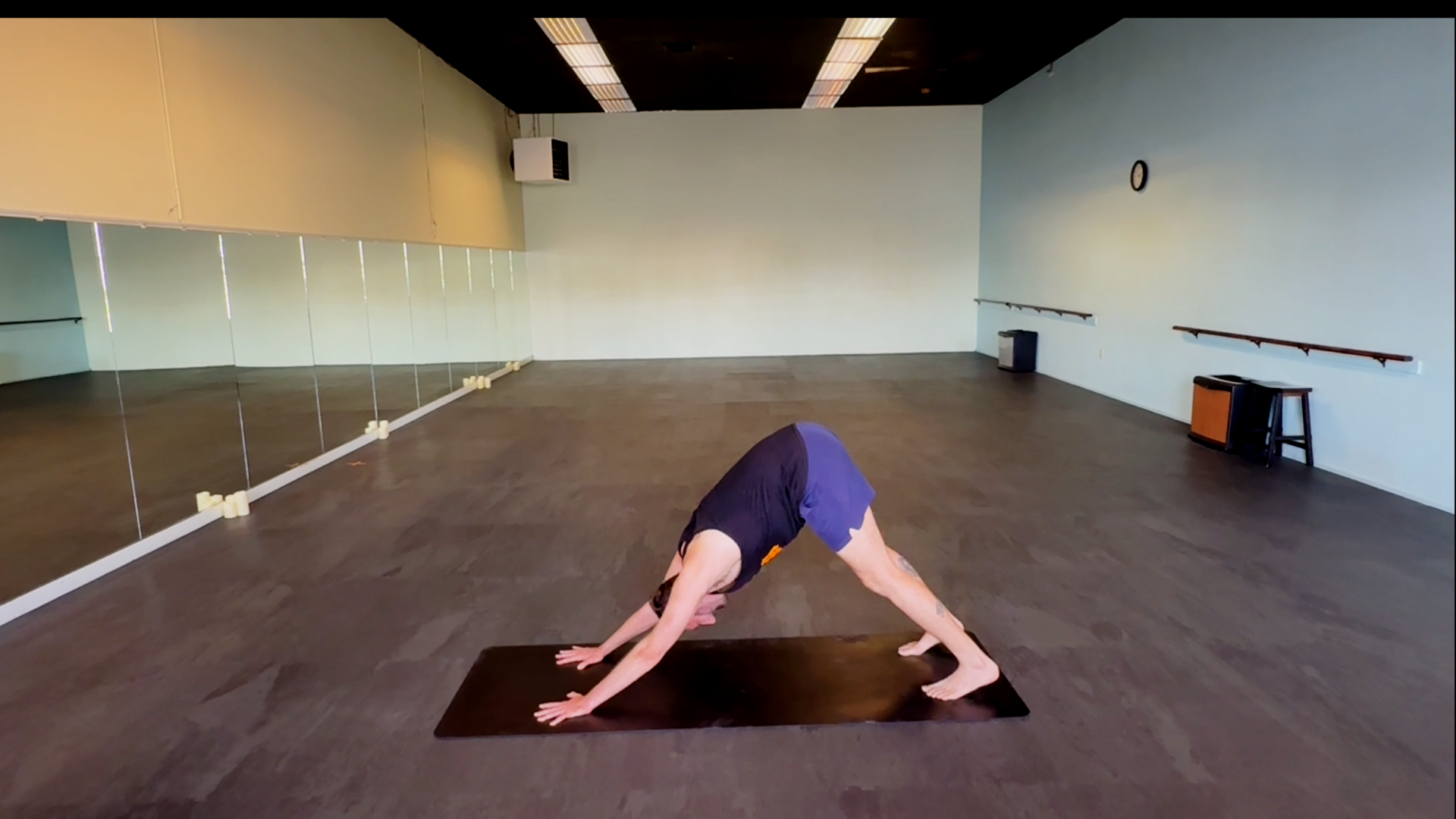
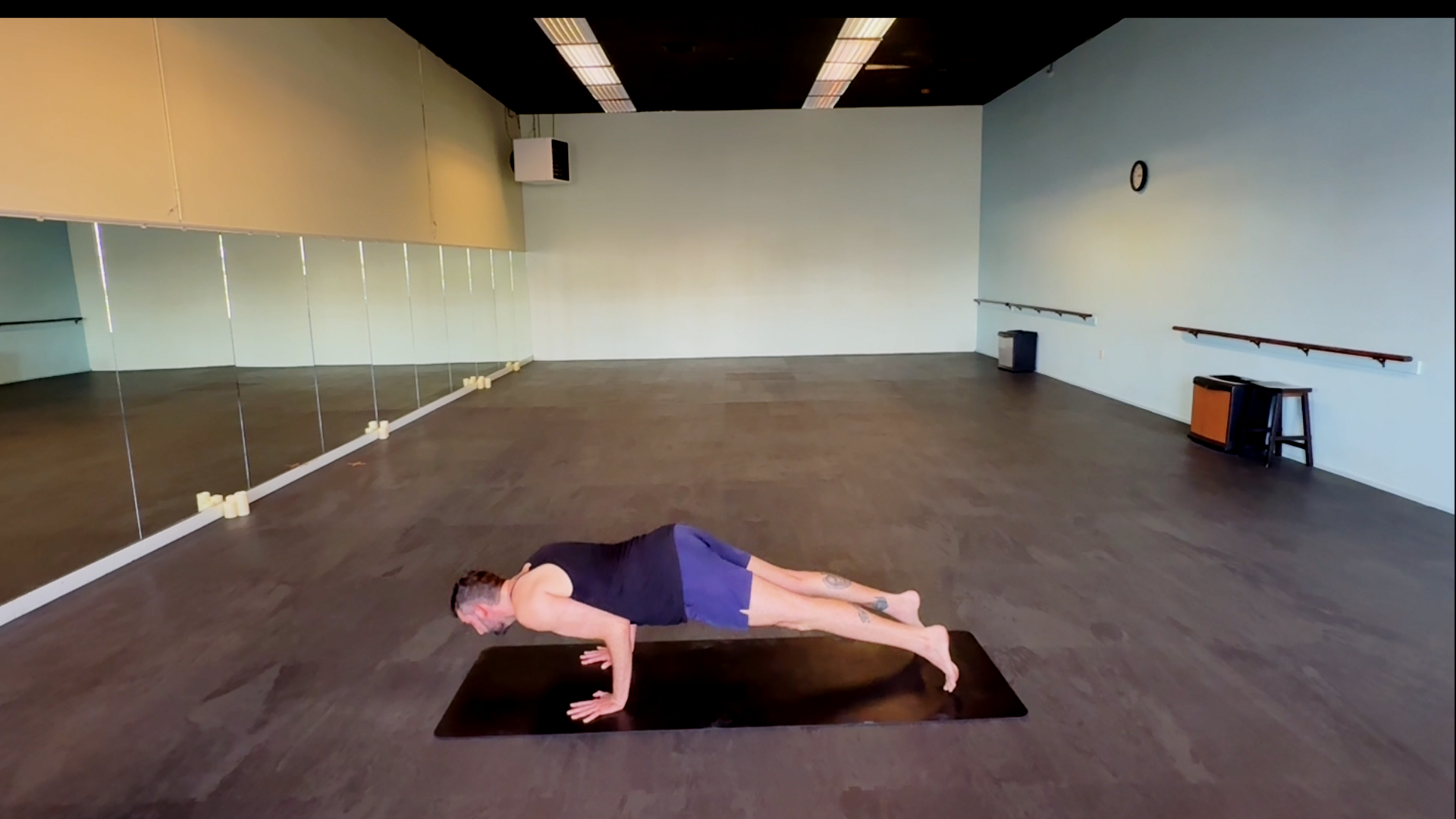

Crescent Pose is where grounding meets elevation. Unlike Warrior 1, your back heel is lifted, which immediately demands more balance and engagement from your toes. You are not anchored through two flat feet. You are rising from a narrower base.