
Chair Pose (Utkatasana)
Stay Strong in the Fire
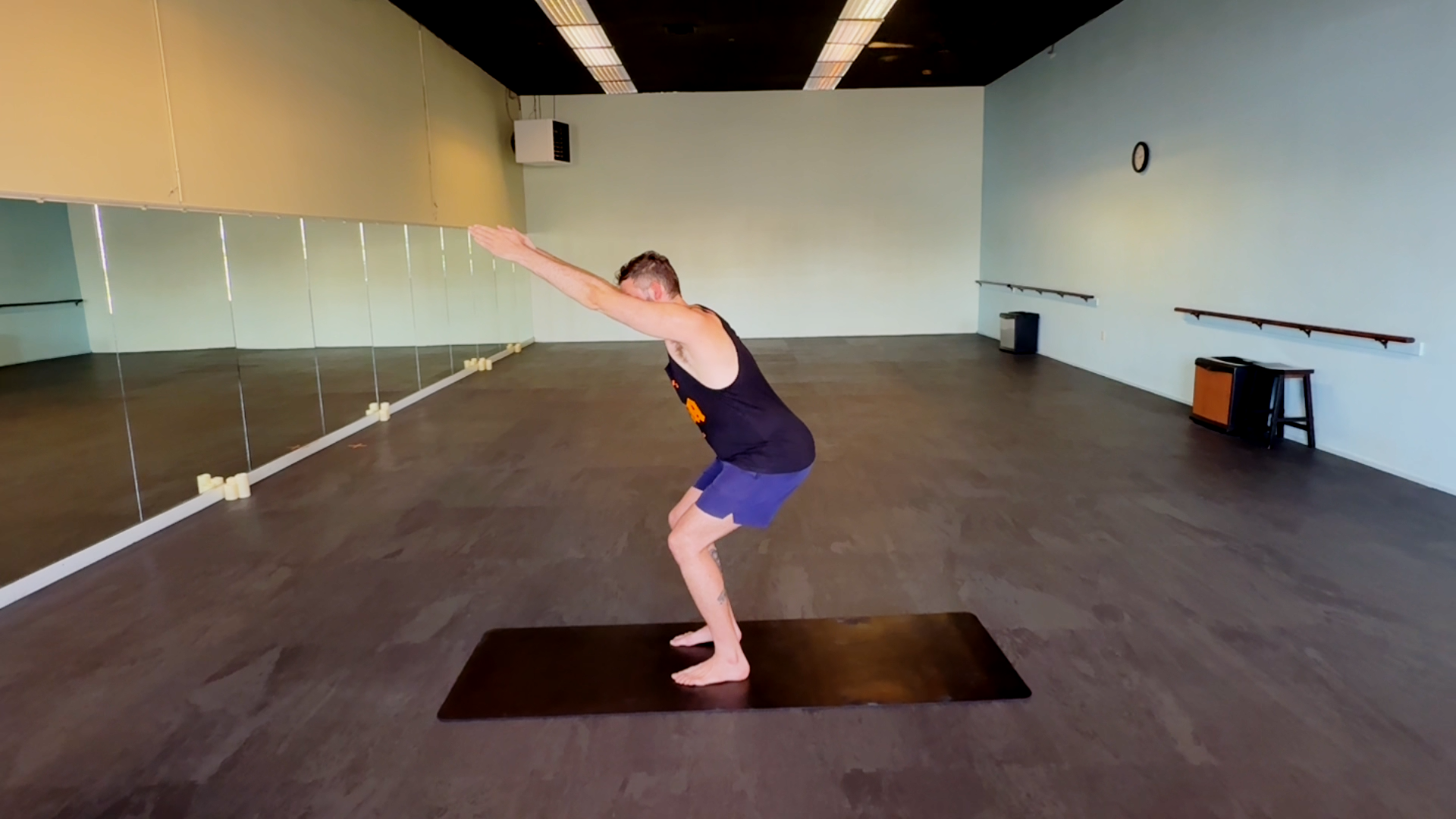
Chair Pose has a way of looking much easier than it feels. You bend your knees, lower your hips, and reach your arms overhead. Within a few breaths, however, your legs usually have something to say, and it tends to be a complaint.
That intensity is part of the practice.
Chair Pose asks you to lower yourself without collapsing, generate power without immediately escaping the discomfort, and remain tall through your upper body while your legs do the heavy work below.
On the Warrior’s Path, Chair Pose represents endurance. You are not charging forward or retreating. You are learning how to stay when staying gets difficult.
The Meaning Behind Chair Pose
Utkatasana is commonly known in English as “Chair Pose” because the shape resembles sitting back into an invisible chair. But the Sanskrit name carries considerably more intensity. Utkata can convey qualities of fierceness, power, or intensity, which is why the pose is also sometimes translated as “Fierce Pose” or “Powerful Pose.”
That meaning changes the way you can approach the posture.
You are not simply pretending to sit. You are deliberately lowering your center of gravity while maintaining strength in your legs, stability in your core, and length in your spine. The deeper you sit, the more obvious that fierceness becomes.
Chair Pose is also a familiar part of Sun Salutation B, where it begins the sequence before your body moves through the rest of the flow. Instead of starting with ease, you begin by generating heat.
Symbolically, Chair reminds you that strength is not always expressed through movement. Sometimes power is built by staying exactly where you are.
How to Practice Chair Pose
1. Begin in either Mountain Pose or Forward Fold
Some people prefer entrance into Chair Pose from Mountain Pose, though it is commonly introduced in the flow from Forward Fold. Either way, keep your feet the same distance as you would in either of those poses—either together or hip-width apart—and ground evenly through your feet.
2. Bend Your Knees
Bend your knees and send your hips back as though you were sitting into a chair.
3. Reach Your Arms Up
Extend your arms overhead with your palms facing. Keep your arms shoulder-width apart if that gives your shoulders more space, or let your palms come together in prayer at your chest.
4. Ground Through Your Feet
Keep your heels connected to the floor and distribute your weight throughout your feet. Avoid shifting so far back that your toes lift, or so far forward that your heels lift (though these can be intentional and cued).
5. Support Your Spine
Engage your core and keep your torso lifted. Allow your spine to maintain its natural curves rather than exaggerating an arch through your low back.
6. Find Your Depth
Lower your hips only as far as you can maintain control. Your thighs do not need to become parallel with the floor for the pose to be effective.
7. Breathe and Hold
Stay for 5 to 10 breaths. Let your legs work while keeping your breath steady and your upper body spacious.
Props and Modifications
Practice with your feet hip-width apart to create a wider, more stable foundation.
Place a block between your thighs and gently squeeze into it to encourage engagement through your inner legs.
Keep your hands at your heart or on your hips if reaching overhead causes shoulder discomfort.
Practice with a wall behind you, lightly touching your hips to it for support and feedback.
Take a shallower bend in your knees to reduce intensity while maintaining the essential shape of the pose.
Common Misconceptions and Misalignments
Believing you need to sit as low as possible. Depth matters less than maintaining strength and control. The more you practice, the deeper your knees will bend over time.
Shifting all your weight into your heels. Keep your whole foot connected to the ground. Press into your toes just as much as you ground into your heels.
Allowing your knees to collapse inward or outward. Keep your knees tracking in the same general direction as your toes. If your feet naturally turn in or out, ensure your knees follow in the same line.
Flaring your ribs as your arms reach overhead. Maintain support through your core instead of turning Chair into a backbend.
Holding your breath when your legs begin to burn. The intensity is precisely when your breath becomes most important.
Benefits of Chair Pose
Physical
Strengthens your quadriceps, glutes, and calves.
Builds strength and stability through your core.
Challenges your ankles and lower-body stability.
Develops muscular endurance through sustained engagement.
Mental and Emotional
Builds concentration and determination.
Develops patience in moments of intensity.
Encourages steady breathing under physical stress.
Strengthens your ability to remain present when discomfort urges you to escape.
Cautions and Considerations
Reduce the depth of your bend if you experience knee discomfort.
Use a wall for additional support if balance or lower-body strength is limited.
Modify your arm position if you have shoulder or neck limitations.
Keep your knees tracking comfortably with your toes rather than forcing them into a predetermined position.
Come out of the pose if you experience sharp or joint-related pain rather than muscular effort.
The Edge Connection
Your edge in Chair Pose tends to announce itself quickly.
Your legs begin to shake. Your breath gets louder. Five breaths suddenly feel much longer than they did in Mountain Pose. The instinct is often immediate. Stand up. Get out. Make the sensation stop.
Chair asks you to investigate that instinct before automatically obeying it.
Can you distinguish intensity from danger? Can you soften the places that do not need to work while allowing your legs to keep working? Can you remain for one more steady breath without turning the experience into a battle against yourself?
On the Warrior’s Path, endurance is not about suffering for its own sake. It is about discovering that discomfort does not always require retreat. Sometimes your edge is simply the place where you learn you can stay.
Warrior’s Edge Takeaway
In Chair Pose, you embody the enduring warrior.
There is nowhere to charge forward and nowhere to hide. You lower into the fire and discover what remains when your strength is asked to last.
On the Warrior’s Path, this pose reminds you that power is not measured only by what you can lift, reach, or accomplish. It is also measured by your ability to remain steady when the challenge continues.
Sit deeper if you can. Breathe steadily. Stay in the fire.
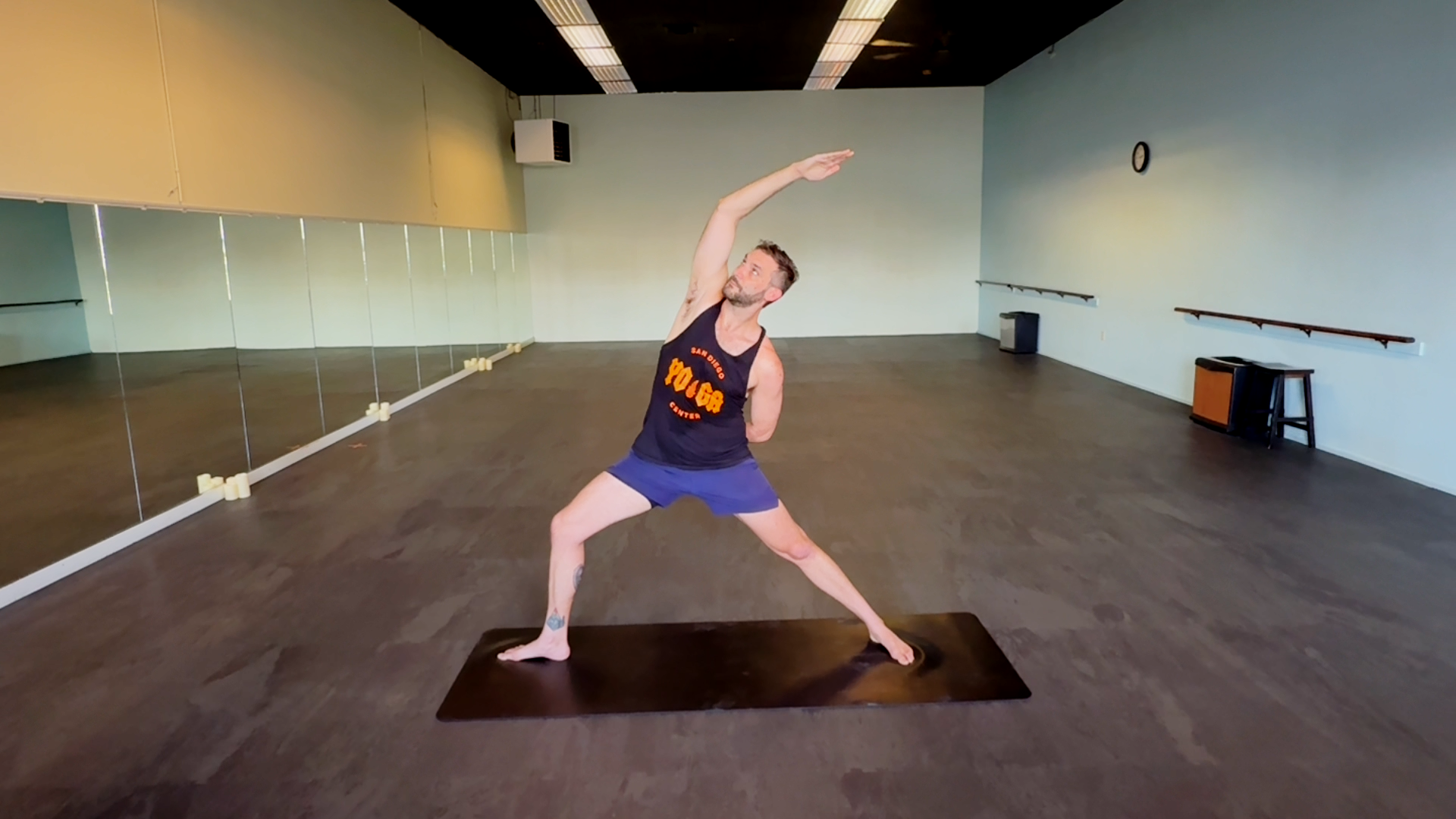
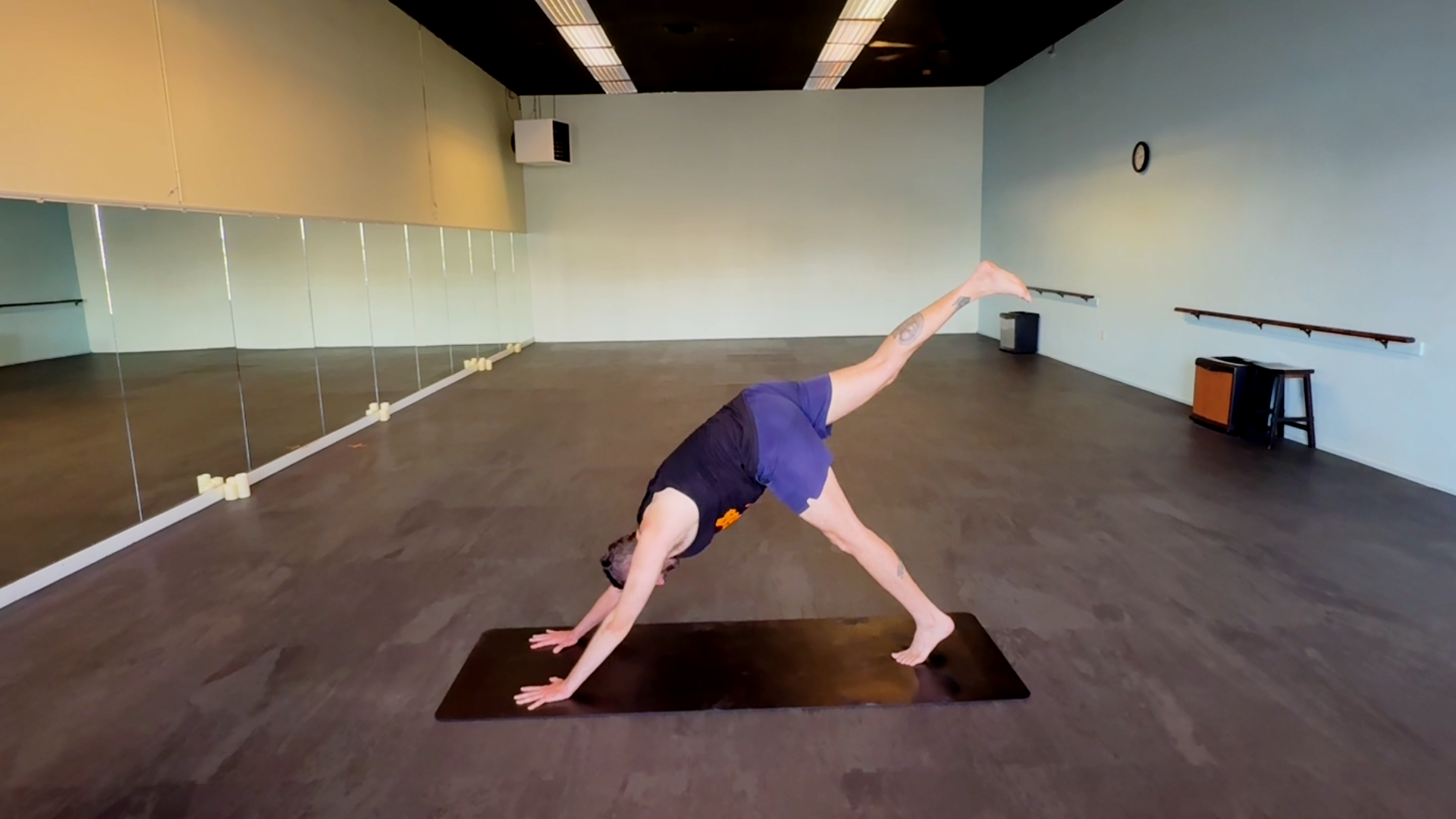
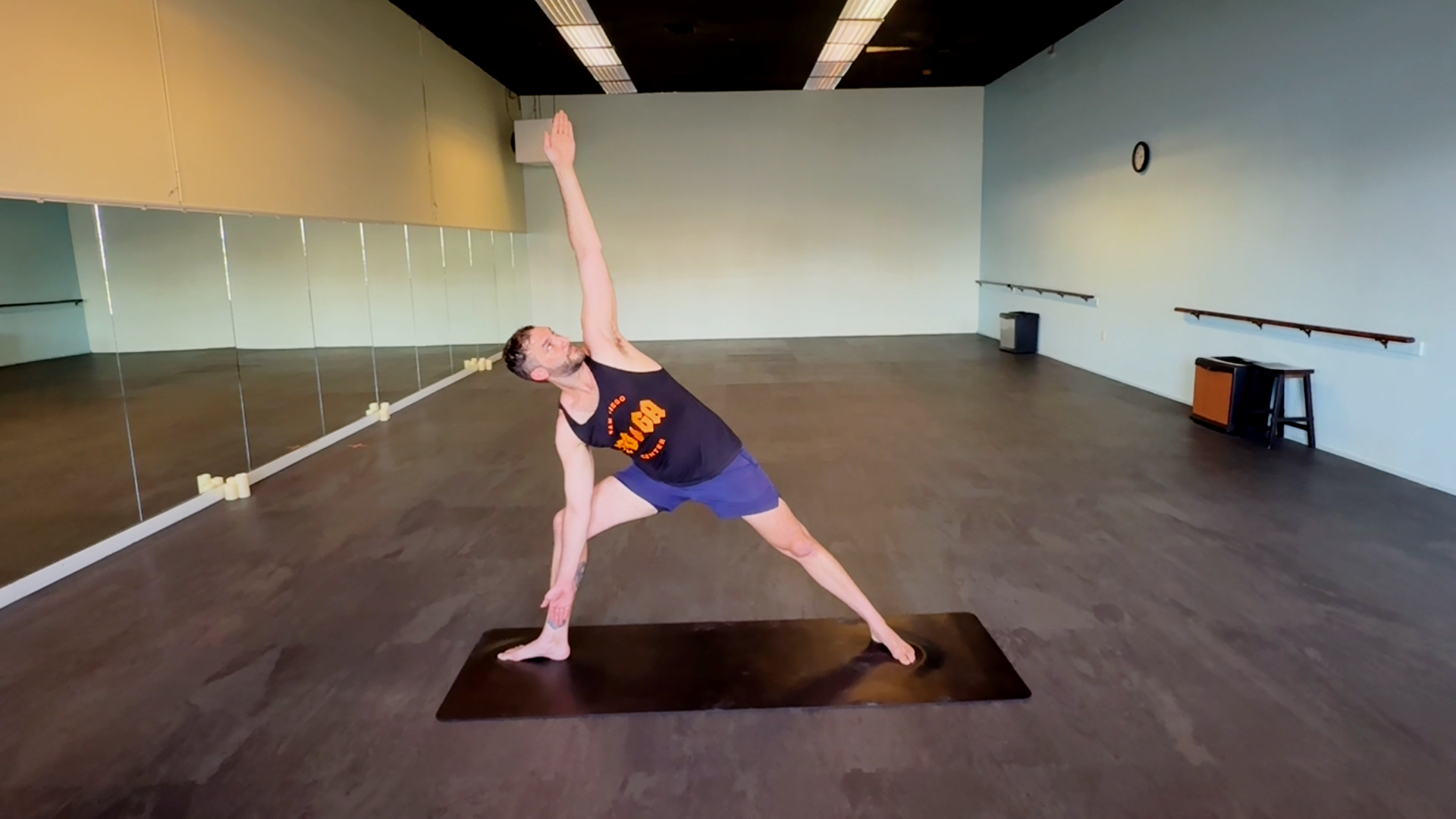
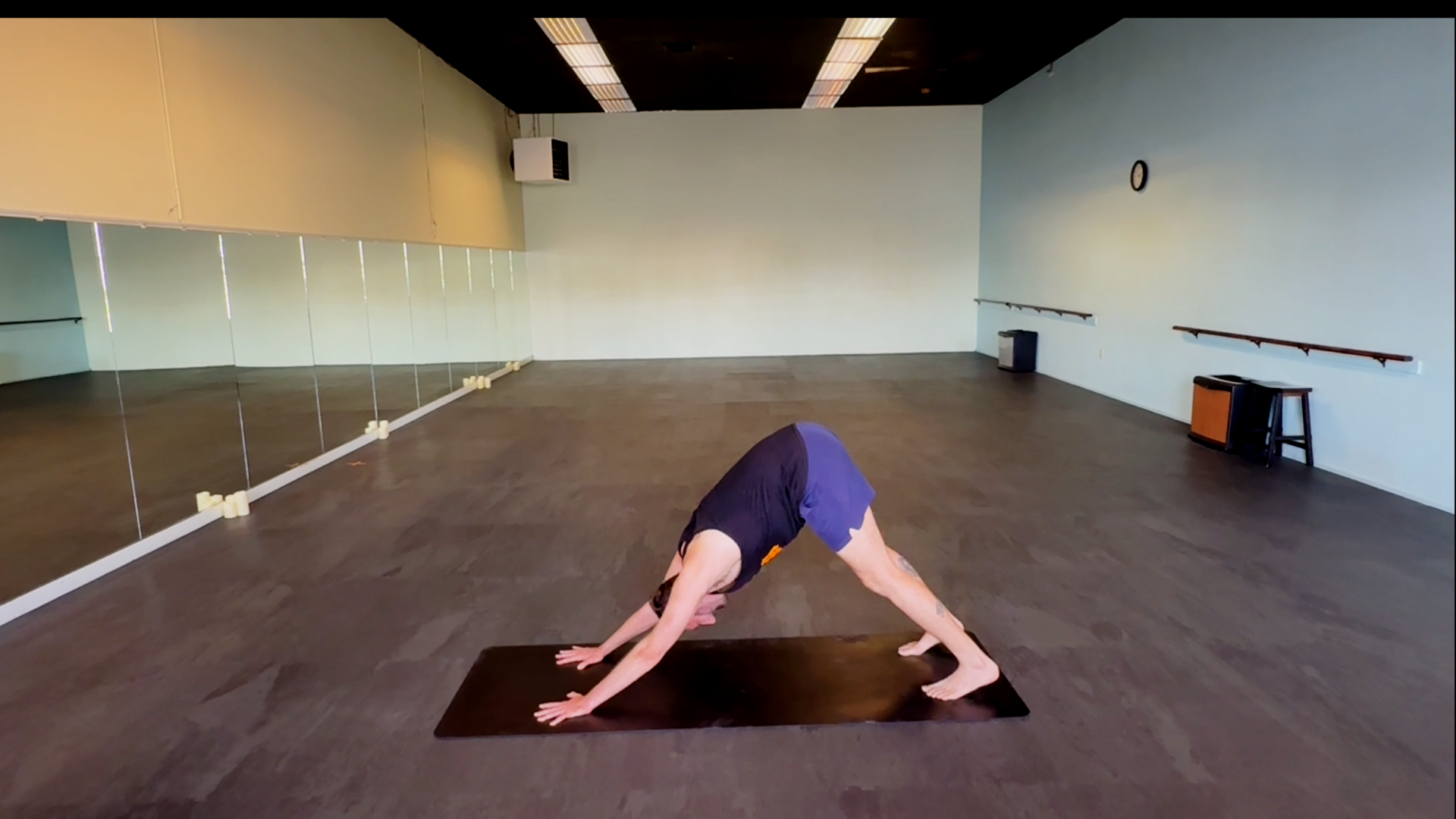
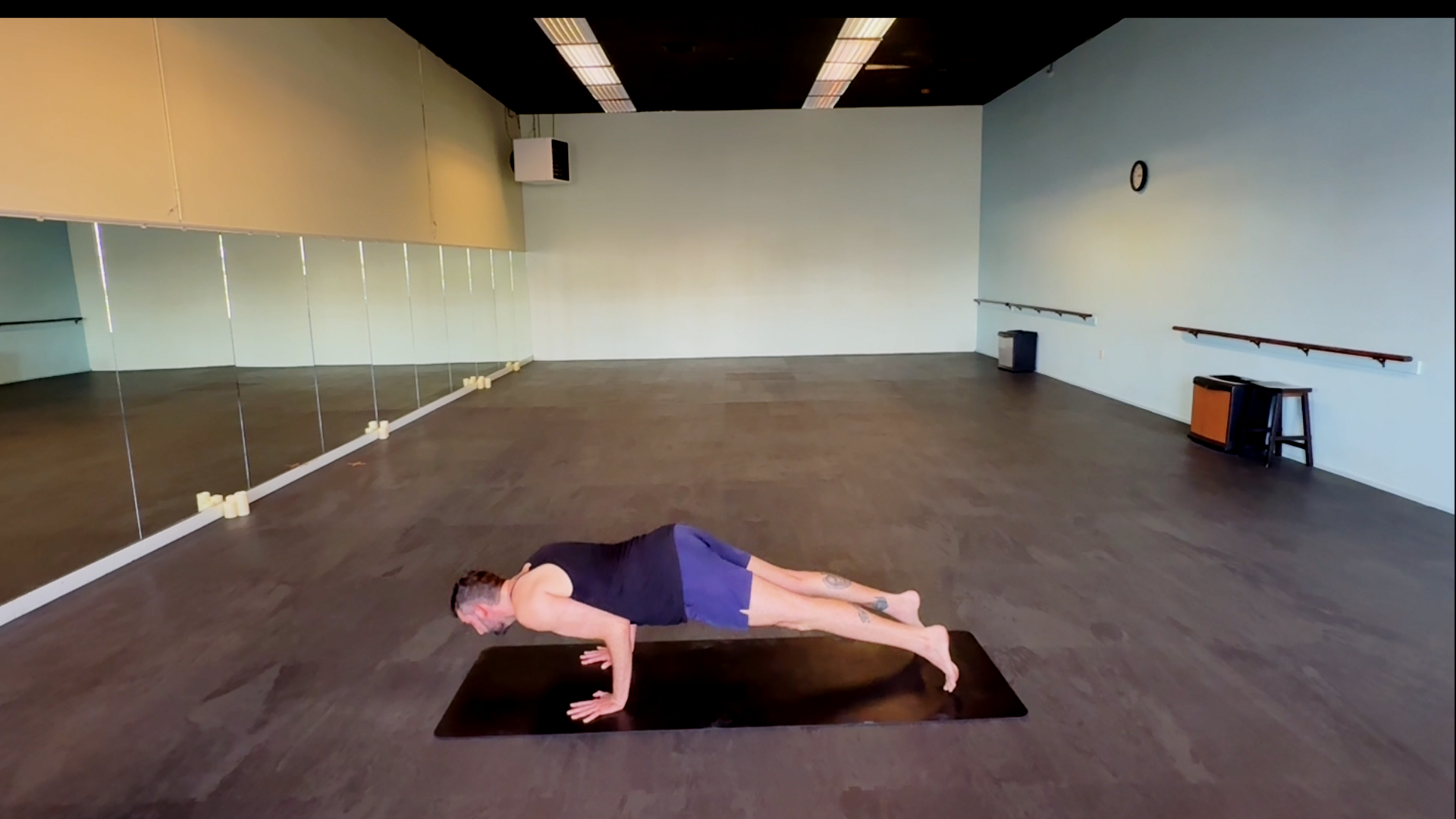

Crescent Pose is where grounding meets elevation. Unlike Warrior 1, your back heel is lifted, which immediately demands more balance and engagement from your toes. You are not anchored through two flat feet. You are rising from a narrower base.