
Three-Legged Dog (Eka Pada Adho Mukha Svanasana)
Find Lift Within Your Foundation
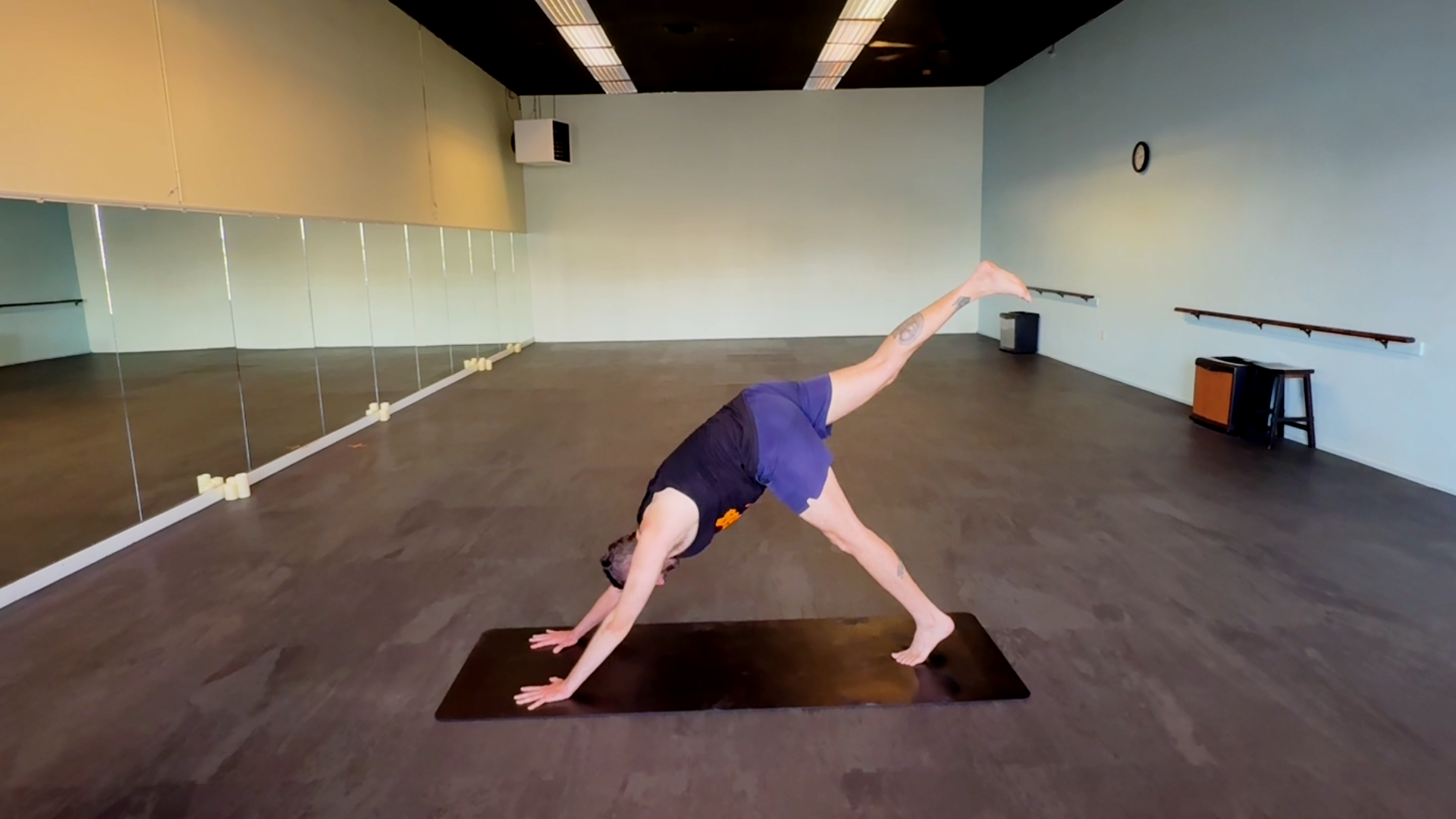
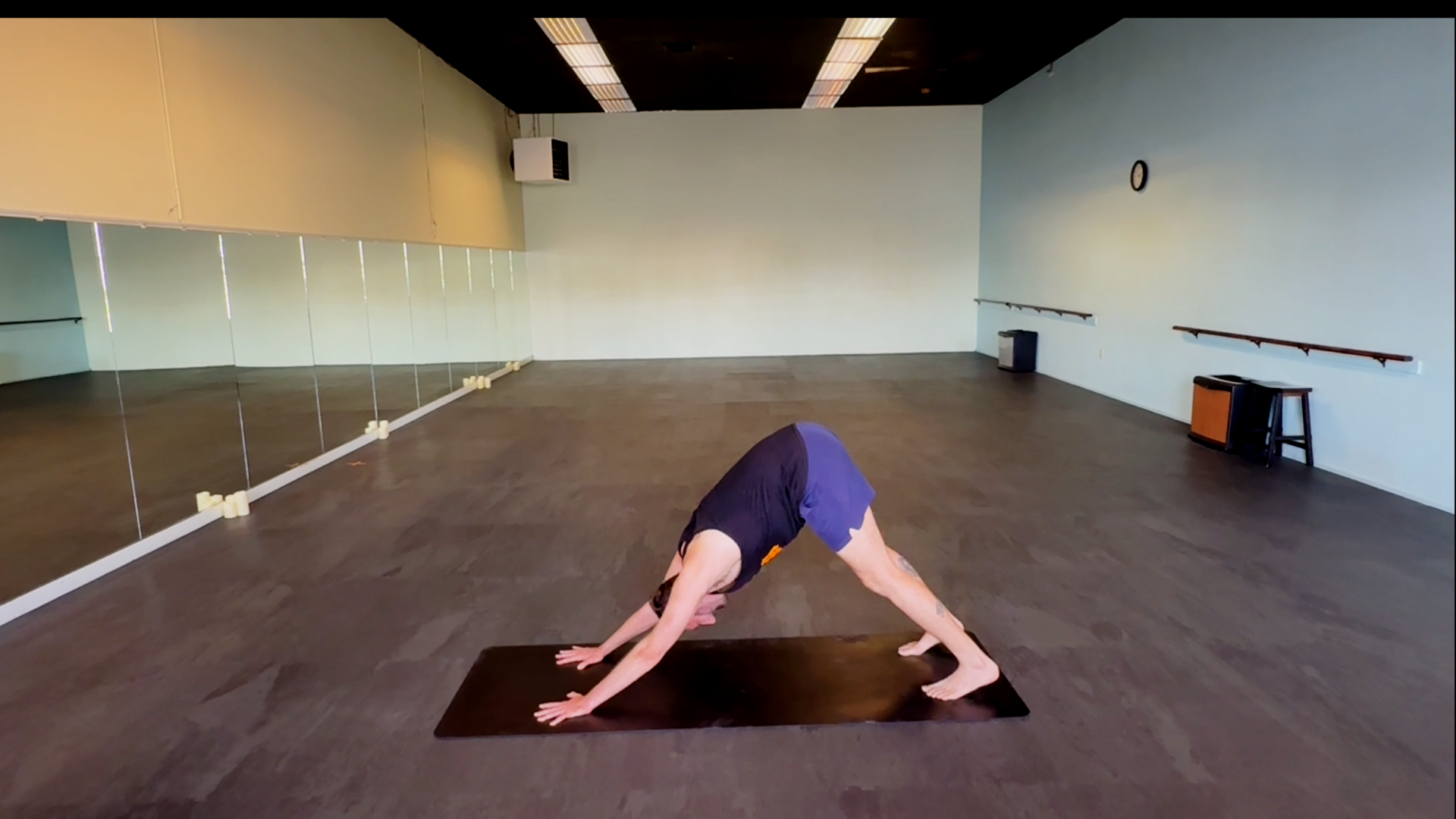
Three-Legged Dog begins somewhere familiar. Your hands are grounded. Your feet are connected to the earth. Your hips reach back just as they do in Downward Dog.
Then one leg rises.
Suddenly, a posture that may feel like home becomes something less predictable. Your weight shifts, your foundation changes, and your body has to adapt without losing the structure you already established.
On the Warrior’s Path, Three-Legged Dog represents progression. You do not abandon your foundation to move forward. You learn how to build from it.
The Meaning Behind Three-Legged Dog
“Three-Legged Dog,” translated as Eka Pada Adho Mukha Svanasana in Sanskrit, is a variation of Downward Dog. Eka means “one,” Pada means “foot” or “leg,” Adho Mukha means “downward-facing,” and Svana means “dog.”
The name describes the physical evolution of the pose. Downward Dog takes its inspiration from the familiar image of a dog stretching its body, while Three-Legged Dog adds movement and asymmetry to that foundation.
That relationship matters.
Downward Dog teaches you to create stability through four points of contact. Three-Legged Dog removes one of them. You are asked to maintain the integrity of the original pose even as your center of gravity begins to change.
The pose also frequently acts as a gateway. From here, you might step forward into a lunge, open your hip, move toward a balance, or continue through a flow. It exists between where you were and where you are going.
Symbolically, Three-Legged Dog represents evolution. A foundation is valuable not because it keeps you still, but because it gives you somewhere strong enough to grow from.
How to Practice Three-Legged Dog
1. Begin in Downward Facing Dog
Plant your hands firmly into the mat and send your hips up and back. Keep your knees bent as much as needed to maintain length through your spine.
2. Establish Your Foundation
Spread through your fingers and press evenly through your hands. Ground through your standing foot and create stability before lifting anything.
3. Lift One Leg
On an inhale, extend your right leg up and back. Reach through your heel or the ball of your foot rather than simply trying to lift your leg as high as possible. Press your left heel toward the ground.
4. Keep Your Hips Level
For the traditional variation, keep both hip points oriented toward the floor. Your lifted leg may not rise as high, but you will create more controlled extension.
5. Lengthen in Both Directions
Continue sending your hips back while reaching your lifted leg away from you. Keep your arms strong and your spine long.
6. Set Your Gaze
Look toward your standing foot, your mat, or slightly forward depending on what feels most comfortable for your neck.
7. Breathe and Hold
Stay for 5 to 10 breaths, or use the pose as a transition into your next movement. Repeat on the opposite side.
Props and Modifications
Keep your standing knee bent to create more length through your spine and reduce tension through your hamstrings.
Lift your back leg only as high as you can while maintaining control through your pelvis.
Practice Downward Facing Dog without lifting your leg if the weight-bearing demand through your shoulders or wrists is too intense.
Place your hands on blocks if additional elevation helps create space through your shoulders and upper body.
For an open-hip variation, bend your lifted knee and stack your hips. Treat this as a deliberate variation rather than allowing your pelvis to rotate unintentionally.
Common Misconceptions and Misalignments
Trying to lift your leg as high as possible. Height matters less than maintaining length and control.
Opening your hip unintentionally. Keep your pelvis relatively level unless you are deliberately practicing the open-hip variation.
Dumping your weight into your standing side. Continue pressing evenly through both hands.
Collapsing through your shoulders. Keep your arms active and maintain space through your upper body.
Forcing your standing heel to touch the floor. Your heel does not need to touch the mat, just actively draw down toward it.
Treating Three-Legged Dog only as a transition. Even when you stay for a single breath, the pose deserves intentional movement.
Benefits of Three-Legged Dog
Physical
Strengthens your arms, shoulders, and upper body.
Builds core stability through an asymmetrical position.
Strengthens your glutes and engages your lifted leg.
Stretches your standing hamstring and calf.
Develops coordination and awareness through your hips and pelvis.
Mental and Emotional
Builds concentration as your foundation changes.
Encourages adaptability within a familiar posture.
Develops confidence during transitions.
Cultivates awareness of how your body responds when stability becomes less symmetrical.
Cautions and Considerations
Reduce the amount of weight in your hands or modify the pose if you have wrist or shoulder discomfort.
Keep your standing knee bent if your hamstrings or calves feel restricted.
Avoid forcing your lifted leg higher at the expense of your low back or pelvis.
Move deliberately when transitioning from Three-Legged Dog into a lunge or other standing posture.
Choose the hip position that serves your intention rather than assuming the highest leg position is the most advanced variation.
The Edge Connection
Your edge in Three-Legged Dog appears the moment you change something that was already working.
Downward Dog gave you a foundation. You knew where your hands were. You knew where your feet were. You may even have found a sense of familiarity there. Then you lift one leg and the entire equation changes.
The challenge is not preventing that change. It is responding to it.
Can you let your balance shift without losing your structure? Can you continue pressing through both hands when your body wants to lean toward one side? Can you reach farther through your lifted leg while staying connected to everything that remains grounded?
On the Warrior’s Path, growth inevitably disrupts familiarity. Your foundation is not there to prevent change. It is there to support you when change begins.
Warrior’s Edge Takeaway
In Three-Legged Dog, you embody the evolving warrior.
You begin from something familiar, remove one point of support, and discover that your foundation can adapt.
On the Warrior’s Path, this pose reminds you that progress does not require starting over. Sometimes the next step begins by taking what already supports you and asking it to carry you somewhere new.
Root down. Lift up. Move forward.

Crescent Pose is where grounding meets elevation. Unlike Warrior 1, your back heel is lifted, which immediately demands more balance and engagement from your toes. You are not anchored through two flat feet. You are rising from a narrower base.