
One-Legged Mountain (Eka Pada Tadasana)
Find Stability When the Ground Changes
One-Legged Mountain begins with the foundation you built in Mountain Pose and changes one thing.
You lift a foot.
Suddenly, standing requires attention. Your grounded foot has to respond. Your ankle makes tiny adjustments. Your core engages. Your gaze becomes more deliberate. What felt effortless on two feet becomes a conversation between stability and change.
On the Warrior’s Path, One-Legged Mountain represents progression. You have learned how to stand your ground. Now you begin discovering whether you can maintain that strength when part of your foundation disappears.
The Meaning Behind One-Legged Mountain
One-Legged Mountain, in Sanskrit, is commonly translated as Eka Pada Tadasana. Eka means “one,” Pada means “foot” or “leg,” and Tadasana is Mountain Pose.
The essential qualities of Tadasana remain. Your standing leg is strong. Your spine is long. Your shoulders are relaxed. Your body reaches upward from a grounded foundation. The difference is that you now have to create those qualities while balancing on one foot.
That makes One-Legged Mountain an important bridge between standing and balancing poses. Before Tree, Half Moon, or Warrior 3 asks you to create a more complex shape, this pose lets you practice the fundamental skill of transferring your weight onto one leg and holding it there.
Symbolically, One-Legged Mountain represents stability that can adapt. A strong foundation is not one that never changes. It is one that can respond when change arrives.
How to Practice One-Legged Mountain
1. Begin in Mountain Pose
Stand tall with your feet together or approximately hip-width apart. Ground evenly through both feet and lengthen through your spine.
2. Shift Your Weight
Gradually transfer your weight into your left foot. Press firmly through the entire surface of your standing foot rather than collapsing into one edge.
3. Lift Your Knee
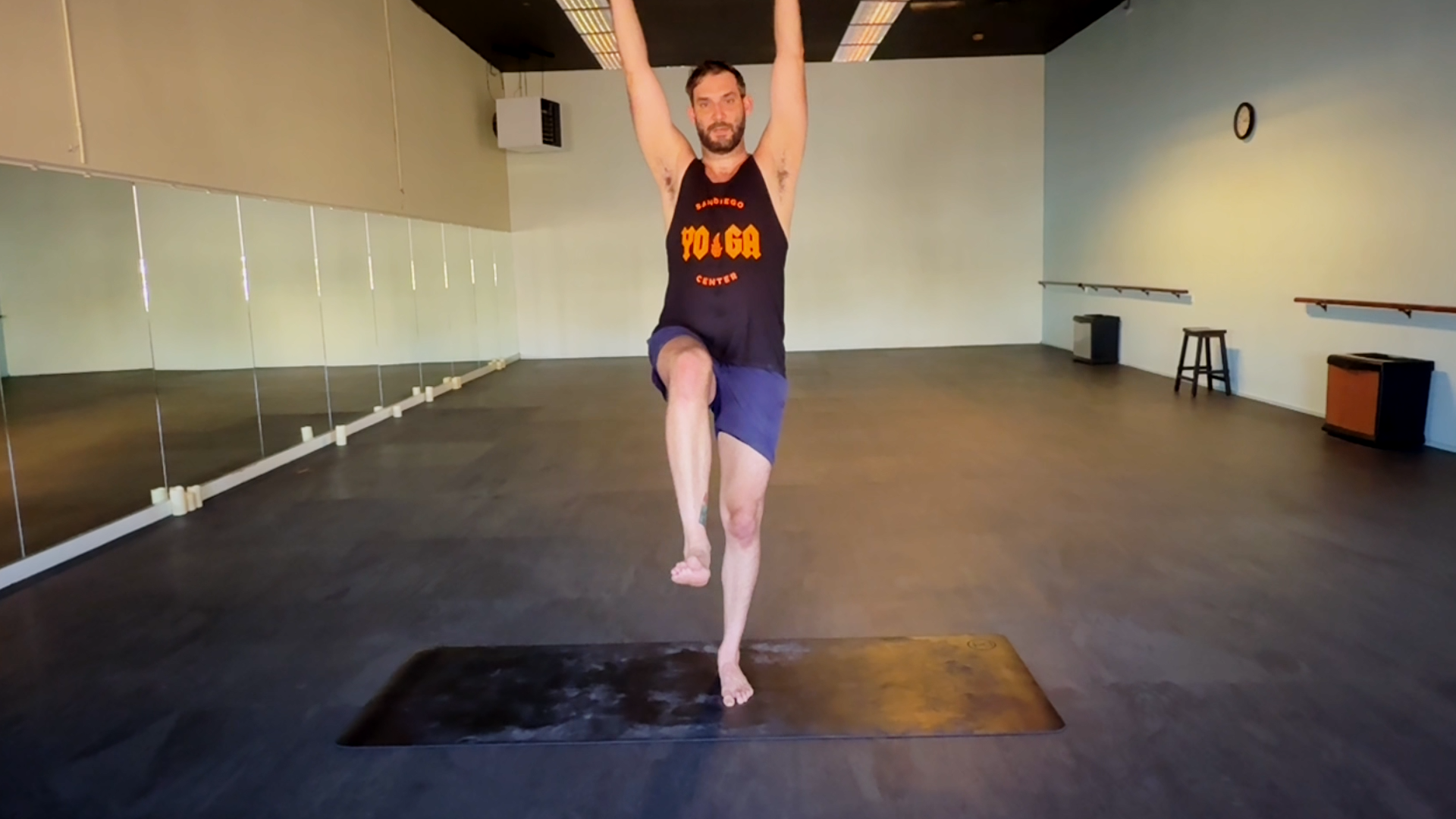
Bend your right knee and slowly lift it toward hip height. Keep your pelvis upright rather than leaning backward to compensate.
4. Stabilize Your Standing Leg
Engage your standing leg without locking your knee. Feel your ankle and foot making the small adjustments necessary to maintain balance.
5. Choose Your Arm Position
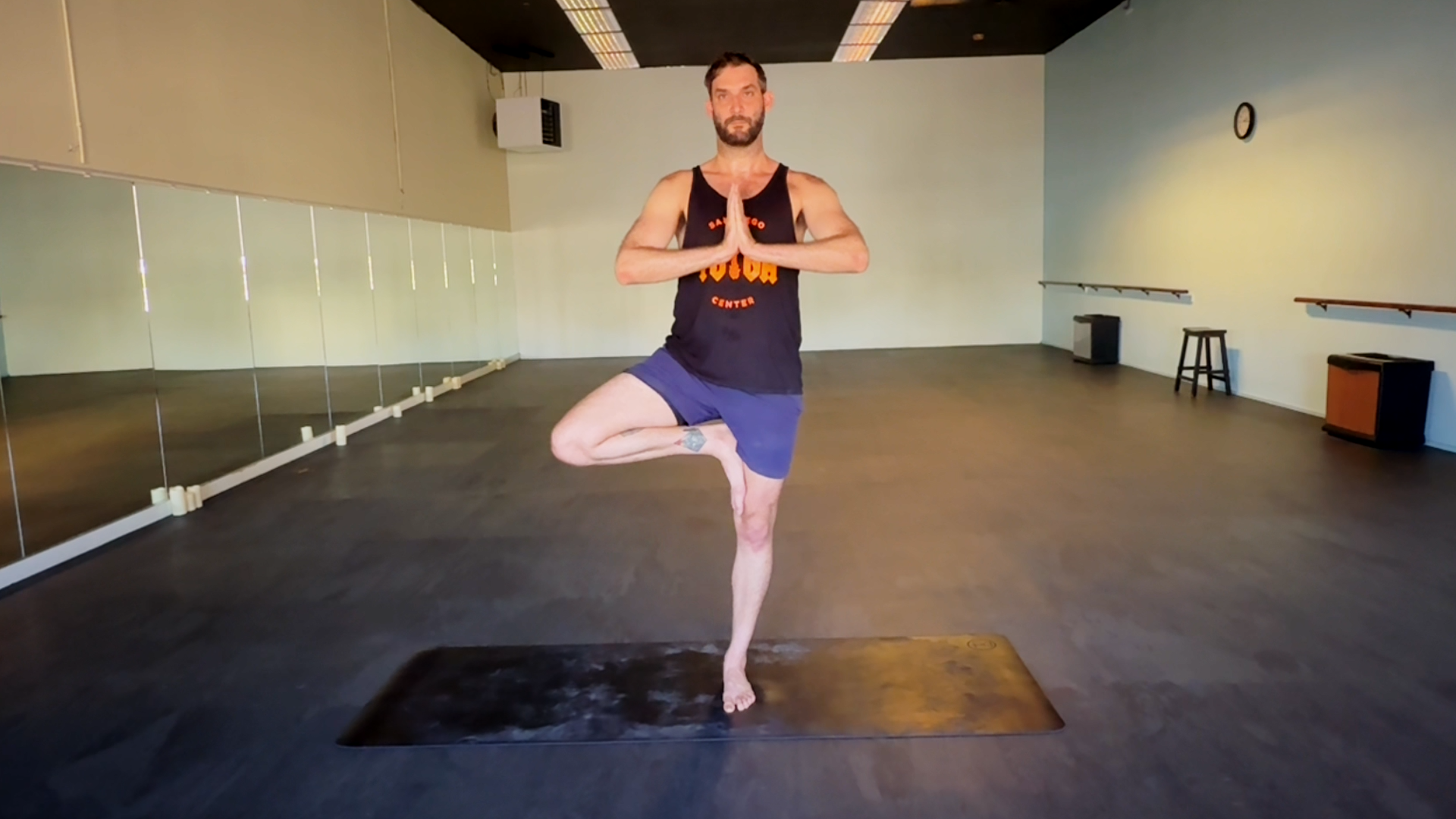
Keep your hands at your hips, bring your palms together at your heart, or reach your arms overhead for a greater challenge.
6. Lengthen Your Spine
Reach through the crown of your head while keeping your ribs stacked over your pelvis. Avoid leaning away from your lifted leg.
7. Set Your Gaze
Choose one unmoving point in front of you and let your gaze settle there. Use that focus to help steady your balance. Lower your foot with control, return to Mountain Pose, and notice the difference between sides before repeating on the opposite leg.
Props and Modifications
Keep your lifted toes lightly touching the floor or on a block while shifting most of your weight into your standing leg.
Lift your knee only as high as you can without changing the alignment of your torso or pelvis.
Keep your hands on your hips or at heart center rather than reaching overhead.
Place one hand against a wall for additional balance support.
Practice near a wall even if you do not intend to use it. Knowing support is available can make it easier to explore your balance without fear of falling.
Common Misconceptions and Misalignments
Locking your standing knee. Keep your leg strong without pushing the joint into hyperextension.
Hiking the hip of your lifted leg. Keep both sides of your pelvis relatively level.
Leaning your torso backward to lift your knee higher. Height matters less than maintaining your Mountain Pose alignment.
Gripping through your standing toes. Let your toes stay connected to the floor without trying to claw your way into balance.
Holding your breath when you wobble. Your breath is part of your stability.
Treating movement as failure. Small adjustments in your feet and ankles help your body maintain balance.
Benefits of One-Legged Mountain
Physical
Strengthens your feet, ankles, and standing leg.
Builds core stability and postural awareness.
Improves balance and coordination.
Develops proprioception and awareness of weight distribution.
Prepares your body for more complex standing balances.
Mental and Emotional
Builds concentration and focus.
Develops patience when balance fluctuates.
Encourages confidence as your foundation becomes smaller.
Teaches you to respond to instability without immediately abandoning the pose.
Creates a foundation for the mental discipline required in more challenging balance postures.
Cautions and Considerations
Practice near a wall or stable surface if you have significant balance concerns.
Keep a soft knee when standing, rather than locking the joint.
Lower your lifted foot whenever you need to reset your balance.
Choose a steady forward gaze if changes in head position cause dizziness.
Progress gradually. The purpose of the pose is to develop stability, not prove how long you can remain on one foot.
The Edge Connection
Your edge in One-Legged Mountain lives in the wobble.
The goal is not to eliminate those movements. Balance is not perfect stillness. It is your ability to respond to movement without losing your center.
Can you wobble without immediately putting your foot down? Can you make an adjustment without treating it as a mistake? Can you remain focused while your body continually negotiates where center actually is?
On the Warrior’s Path, stability means you know how to find your center again when something tries to move you.
Warrior’s Edge Takeaway
In One-Legged Mountain, you embody the developing warrior.
This pose reminds you that progression does not always require a dramatic leap forward. Sometimes growth begins by changing one small piece of something you already understand and discovering an entirely new challenge within it.
Find your center. Embrace the wobble. Reaffirm your ground.
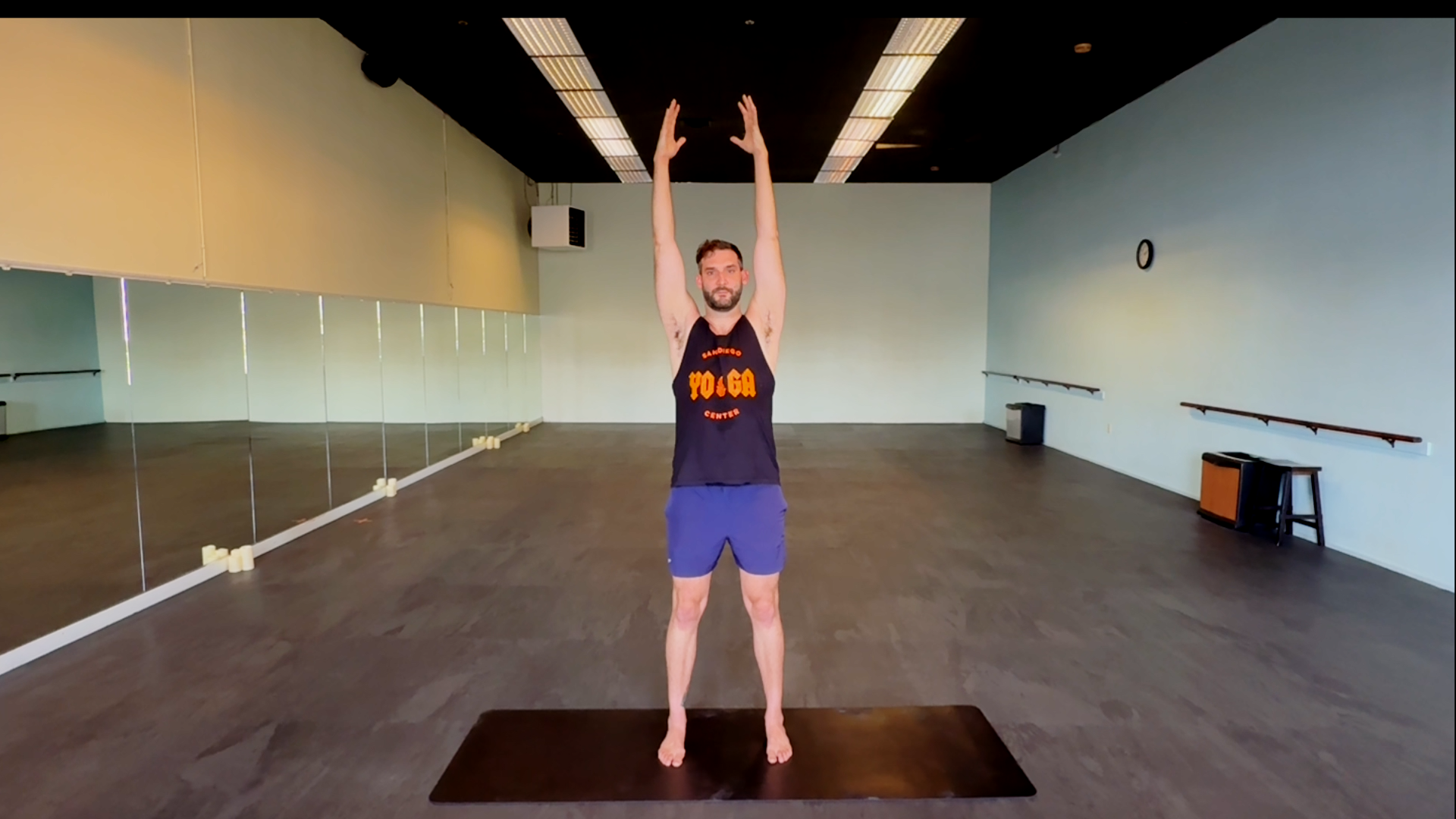
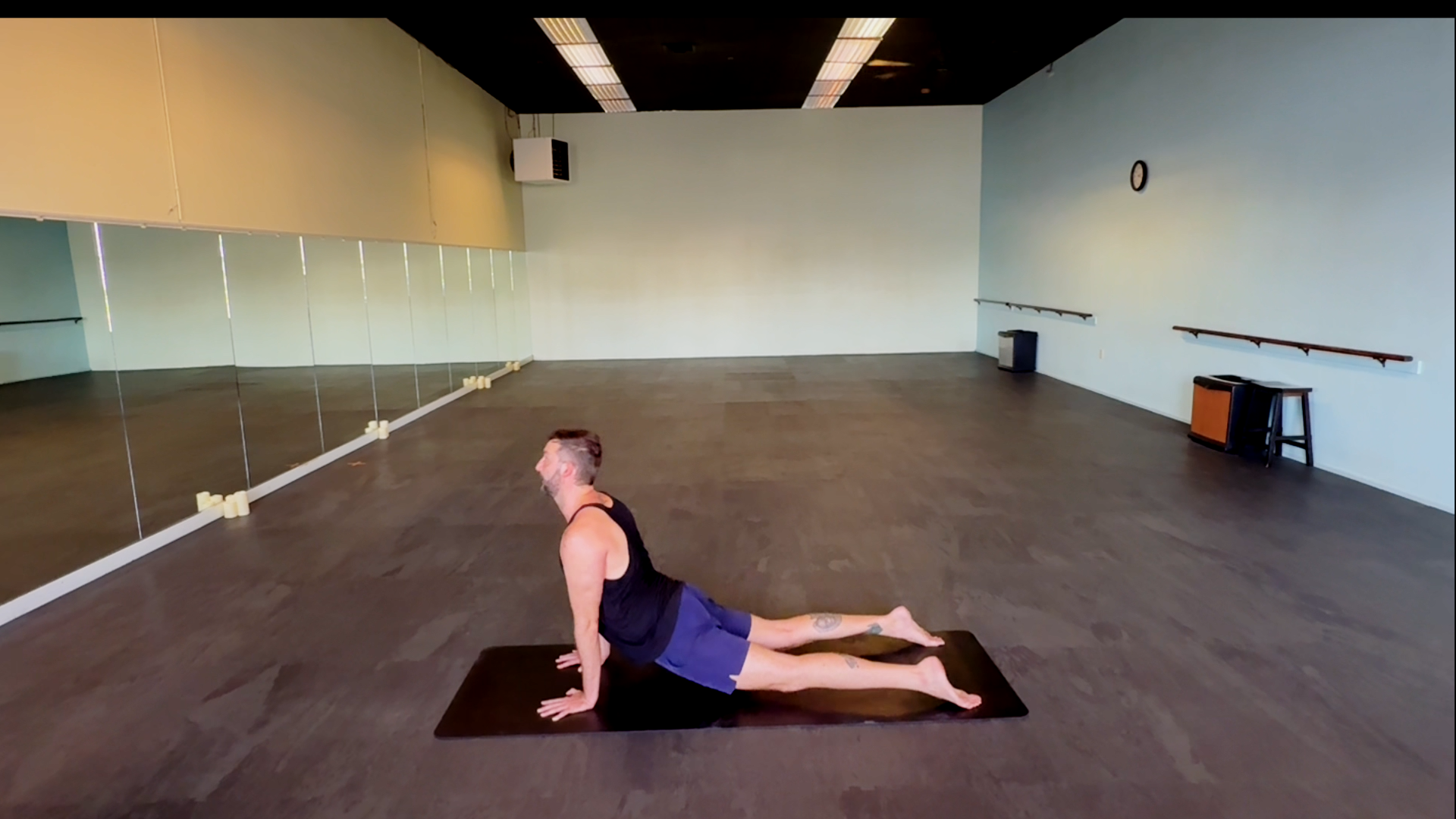
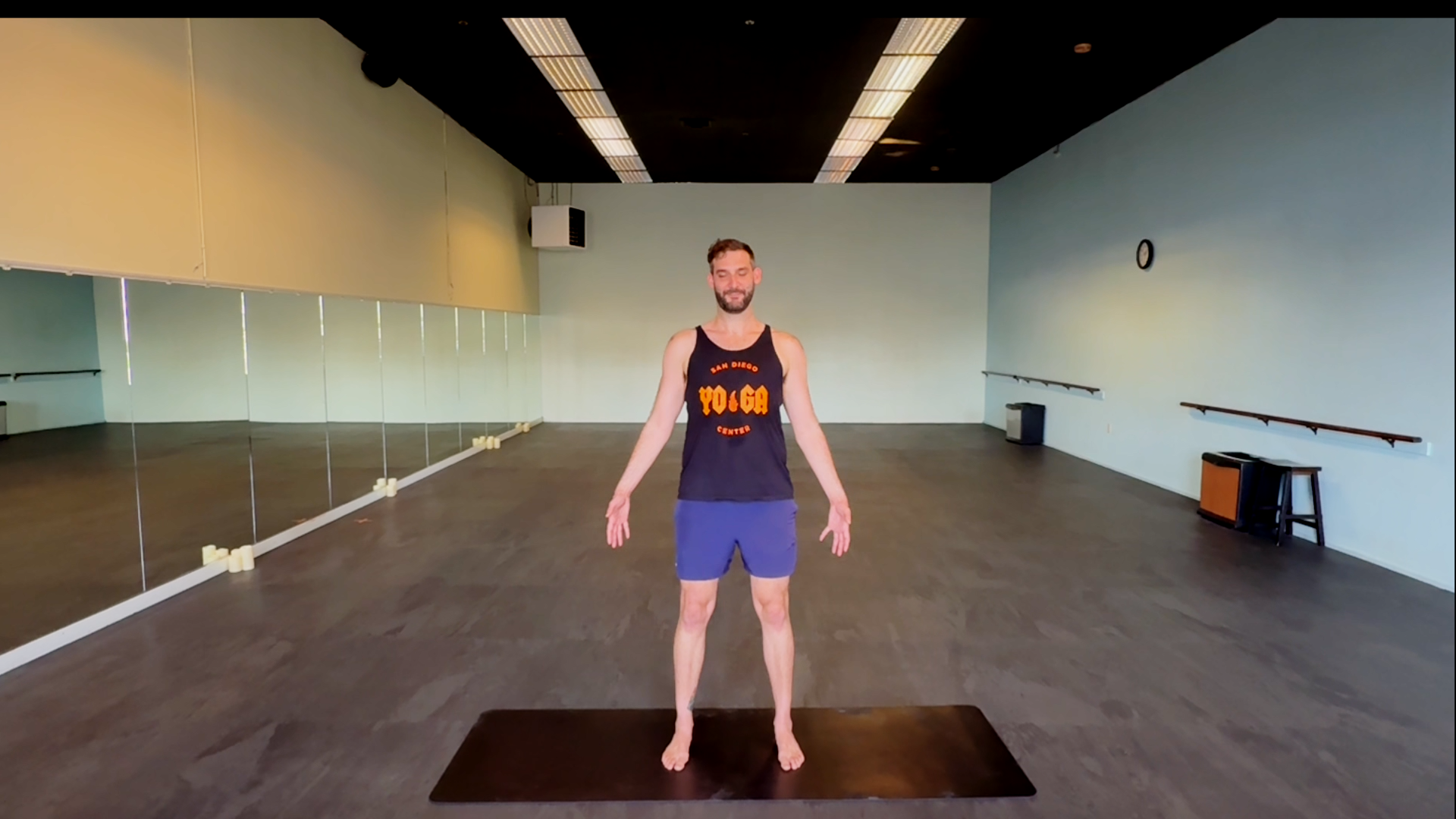
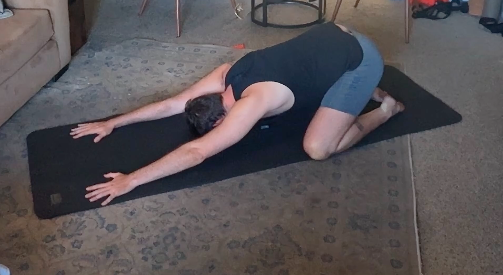

Plank Pose is one of the clearest expressions of strength in yoga. There is nowhere to hide. No dramatic shape. No deep fold. Just a straight line of effort from your heels through the crown of your head.
On the Warrior’s Path, Plank represents discipline. It is the moment where you hold steady under pressure. You do not collapse. You do not rush. You stay.