
Tree Pose (Vrksasana)
Grow From the Ground Up
Tree Pose takes the balance you began developing in One-Legged Mountain and gives it shape.
One foot roots into the earth while the other leg opens outward. Your standing leg becomes your trunk. Your arms can reach overhead like branches. The pose asks you to grow taller while maintaining your connection to the ground beneath you.
And like an actual tree, you probably will not be perfectly still.
On the Warrior’s Path, Tree Pose represents rooted growth. Balance does not come from resisting every movement. It comes from creating a foundation strong enough to bend, adjust, and continue reaching upward.
The Meaning Behind Tree Pose
In Sanskrit, Vrksa means “tree,” and asana means “pose.” The name comes directly from the posture’s shape, but the symbolism of the tree runs much deeper through Indian spiritual traditions.
Trees frequently represent growth, wisdom, endurance, and the connection between earth and sky. Their roots extend downward while their branches reach upward. What allows them to grow in one direction is their ability to remain firmly connected in the other.
That same relationship defines Tree Pose.
Your standing foot becomes your root. Your leg creates the trunk. Your spine rises while your arms can extend like branches overhead. The higher you reach, the more important your connection to the ground becomes.
Tree Pose also naturally builds on One-Legged Mountain. Once you learn to transfer your weight and maintain your center on one foot, Vrksasana introduces external rotation through your lifted hip and asks you to organize your body into a new shape.
Symbolically, Tree Pose represents growth without abandoning your roots. You are not choosing between stability and expansion. One makes the other possible.
How to Practice Tree Pose
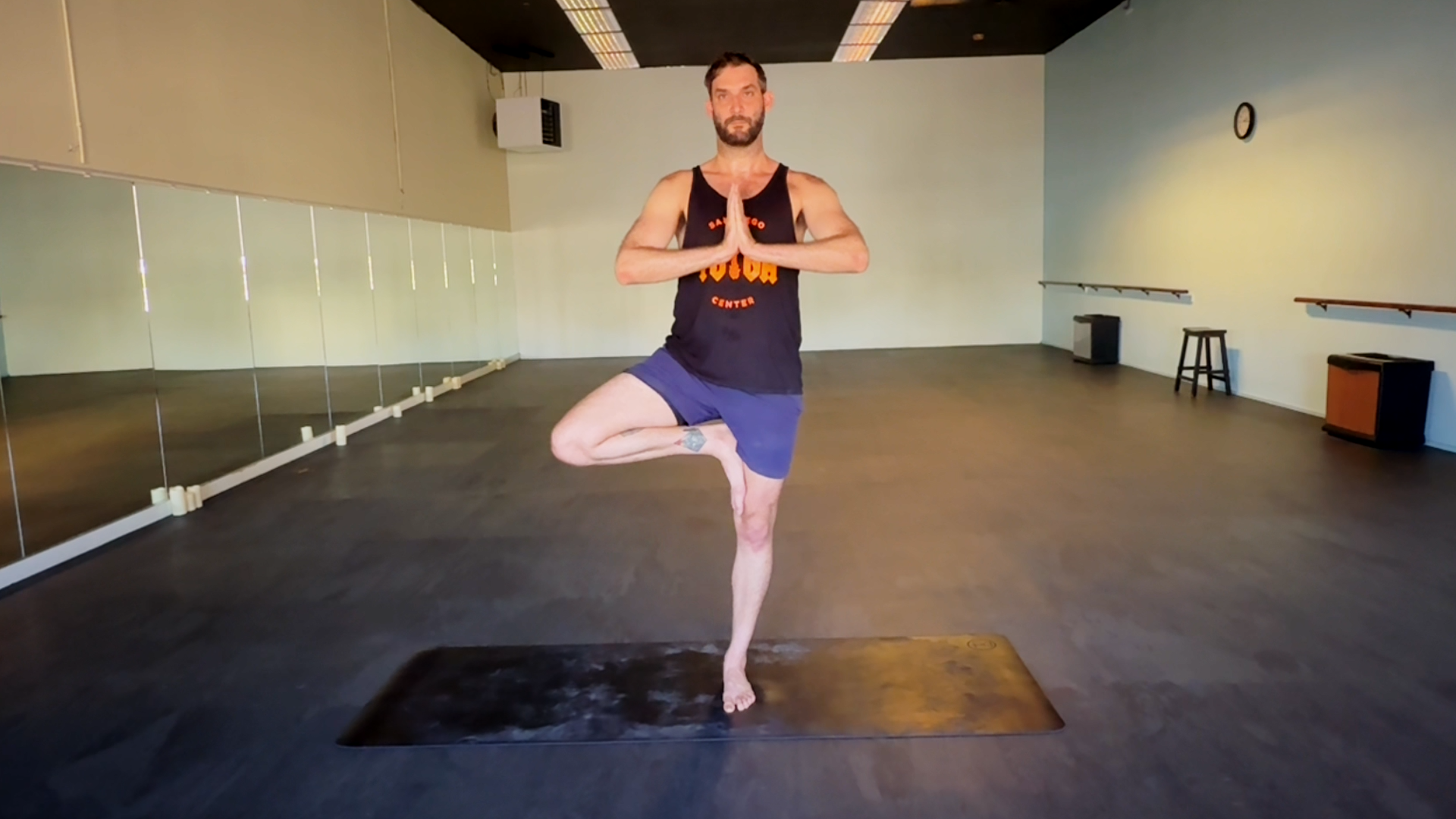
1. Begin in Mountain Pose
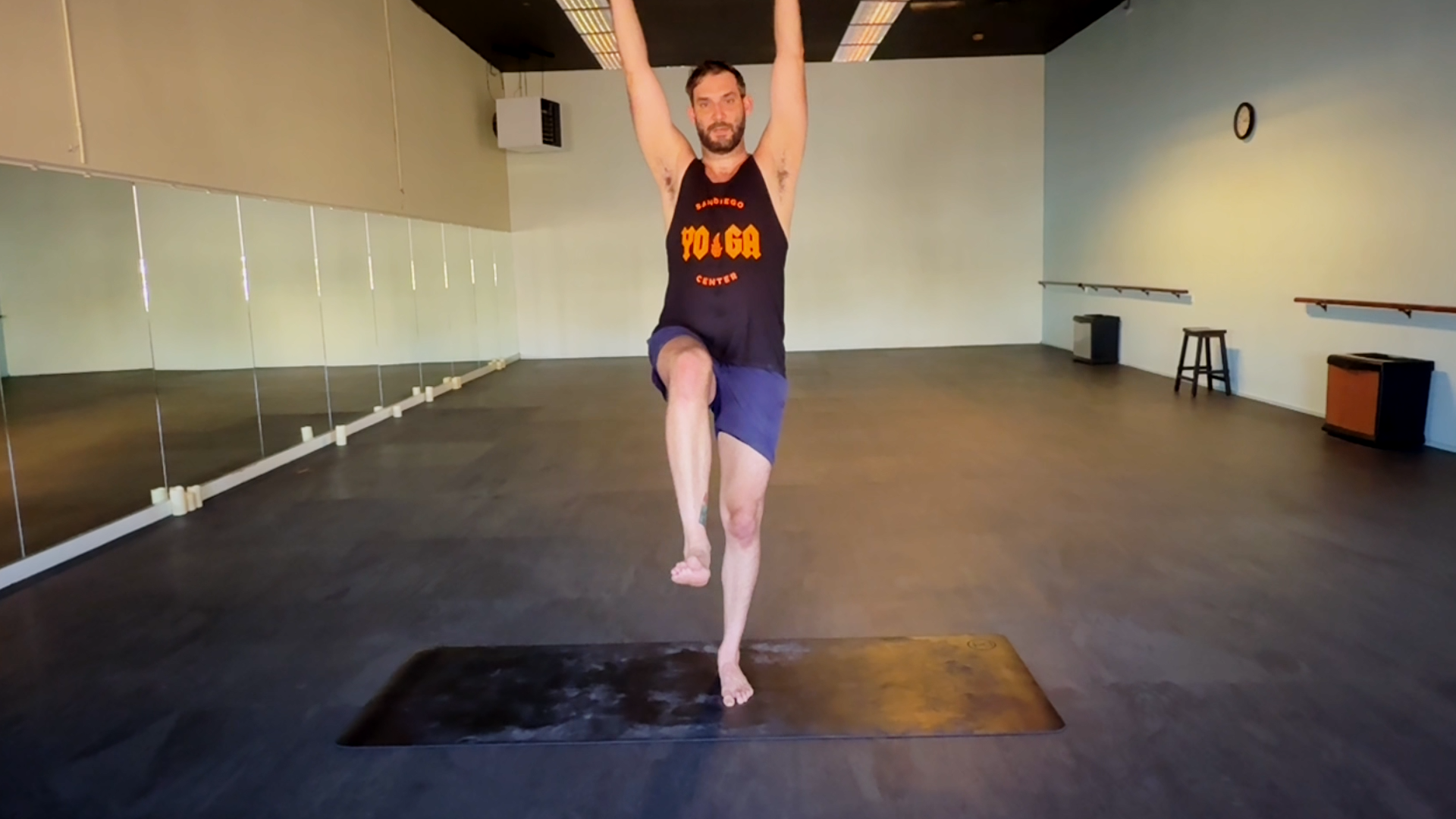
Stand tall with your feet together or approximately hip-width apart. Ground through both feet and lengthen through your spine. Transfer your weight into your left foot. Press evenly through the entire foot and engage your standing leg without locking your knee.
2. Lift Your Opposite Foot
Bend your right knee and turn your thigh outward from your hip. Bring your right foot to your inner left ankle, calf, or thigh.
Be mindful if your foot falls around your knee joint. Ideally, place it above or below, and use your hands to help bring it higher if you need to.
3. Create Connection
Press your right foot gently into your left leg and actively press your left leg into the ground, and envision the trunk of a tree. Let that opposing pressure help create stability.
4. Level Your Pelvis
Keep your hips relatively level and facing forward even as your lifted thigh rotates outward. Avoid forcing your knee farther open than your hip comfortably allows.
5. Choose Your Arms
Bring your palms together at your heart, keep your hands at your hips, or extend your arms overhead like branches.
6. Set Your Gaze
Choose one unmoving point in front of you and allow your gaze to settle there. In yoga, this focused gaze is known as drishti and can help steady both your body and attention. When you release, lower your foot with control, return to Mountain Pose, and repeat on the opposite side.
Props and Modifications
Keep the toes of your lifted foot on the floor and rest your heel against your standing ankle.
Place your lifted foot against your inner calf rather than your thigh.
Use a wall for support while developing your balance.
Keep your hands at your heart or hips rather than reaching overhead.
If your lifted knee does not comfortably open far to the side, let it remain farther forward. Your hip determines the range, not the pose’s appearance.
Common Misconceptions and Misalignments
Placing your lifted foot directly against your knee. This one is tricky, because a lot of people naturally place their foot there. The problem is, it increases the chances of you not only knocking yourself out of position because the pressure of your foot may cause your knee to bend, but also of injuring your knee when you do so. Be mindful if you place your foot here.
Forcing your lifted knee toward the side. External rotation should come from your hip rather than pressure against your knee.
Locking your standing leg. Maintain muscular engagement without hyperextending your knee.
Letting your standing hip drift dramatically outward. Draw your standing hip toward your centerline to maintain support.
Gripping the floor with your toes. Let your foot respond naturally rather than forcing yourself into stillness.
Thinking that wobbling means you have lost the pose. The adjustments are part of balancing.
Benefits of Tree Pose
Physical
Strengthens your feet, ankles, and legs.
Improves balance and coordination.
Builds stability through your core.
Encourages mobility through your hips.
Develops proprioception and postural awareness.
Mental and Emotional
Builds concentration through a steady gaze.
Develops patience when balance changes.
Encourages adaptability rather than rigidity.
Cultivates confidence on a changing foundation.
Reinforces the connection between grounding and growth.
Cautions and Considerations
Practice near a wall or stable surface if balance is a concern.
Never force your lifted foot against your knee joint.
Respect the natural range of motion in your hip rather than pushing your knee farther open.
Keep a slight softness through your standing knee if you tend to hyperextend.
Choose a steady forward gaze if looking upward affects your balance or causes dizziness.
The Edge Connection
Your edge in Tree Pose is not perfect stillness.
Trees move. Their branches shift with the wind. Their trunks bend under pressure. What keeps them standing is not rigidity, but the strength of their roots and their ability to adapt.
Your body works the same way in Vrksasana. Your standing foot makes tiny adjustments. Your ankle shifts. Your hips respond. Some days you may feel almost motionless. On others, keeping your foot off the ground for three breaths may feel like an accomplishment.
Can you allow the movement without fighting it? Can you lose your balance, place your foot down, and begin again without turning the moment into failure? Can you remain rooted while still allowing yourself to change?
On the Warrior’s Path, resilience does not mean refusing to bend. It means developing roots strong enough that bending does not break you.
Warrior’s Edge Takeaway
In Tree Pose, you embody the rooted warrior.
Your strength begins beneath you, but it does not end there. You ground through one foot so the rest of you can rise, open, and expand. The deeper you understand your foundation, the more confidently you can reach beyond it.
Root deeply. Bend when needed. Keep growing.

Plank Pose is one of the clearest expressions of strength in yoga. There is nowhere to hide. No dramatic shape. No deep fold. Just a straight line of effort from your heels through the crown of your head.
On the Warrior’s Path, Plank represents discipline. It is the moment where you hold steady under pressure. You do not collapse. You do not rush. You stay.