
Forward Fold (Uttanasana)
Folding Without Collapsing
Forward Fold appears everywhere in yoga. You meet it in Sun Salutations, between standing sequences, as a transition, and as a posture in its own right. Because it is so familiar, it can be easy to mistake simplicity for insignificance.
From standing, you fold toward the earth. Your upper body descends while your legs remain rooted beneath you. The shape asks for both release and support.
On the Warrior’s Path, Forward Fold represents surrender without collapse. You bow, but you do not lose your foundation. You soften without giving up your strength.
The Meaning Behind Forward Fold
In Sanskrit, Uttanasana is commonly translated as “Intense Stretch Pose”, referring to the deep length created along the back of your body as you fold forward.
But the physical direction of the pose gives it another layer of meaning.
You begin upright, occupying space and looking outward. Then you fold inward. Your gaze turns toward yourself and the ground beneath you. The world becomes smaller for a moment.
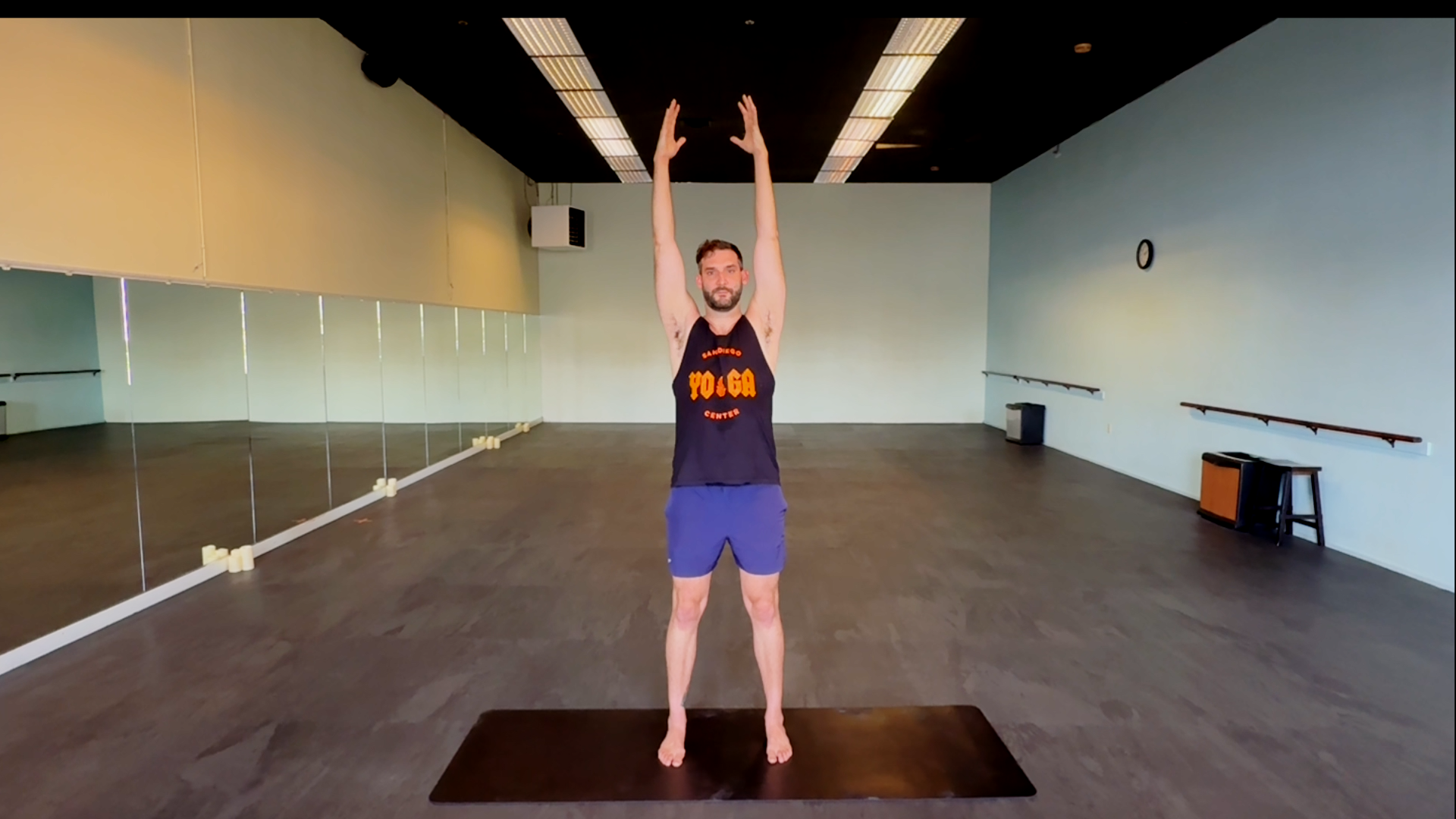
Forward folding is also woven throughout Sun Salutations. After reaching upward in Upward Salute, you immediately reverse direction and bow toward the earth. Expansion gives way to surrender before you rise again.
Symbolically, Forward Fold reminds you that progress does not always move upward. There are moments when the path asks you to bow, turn inward, and release what you no longer need to carry.
How to Practice Forward Fold
1. Begin in Mountain Pose
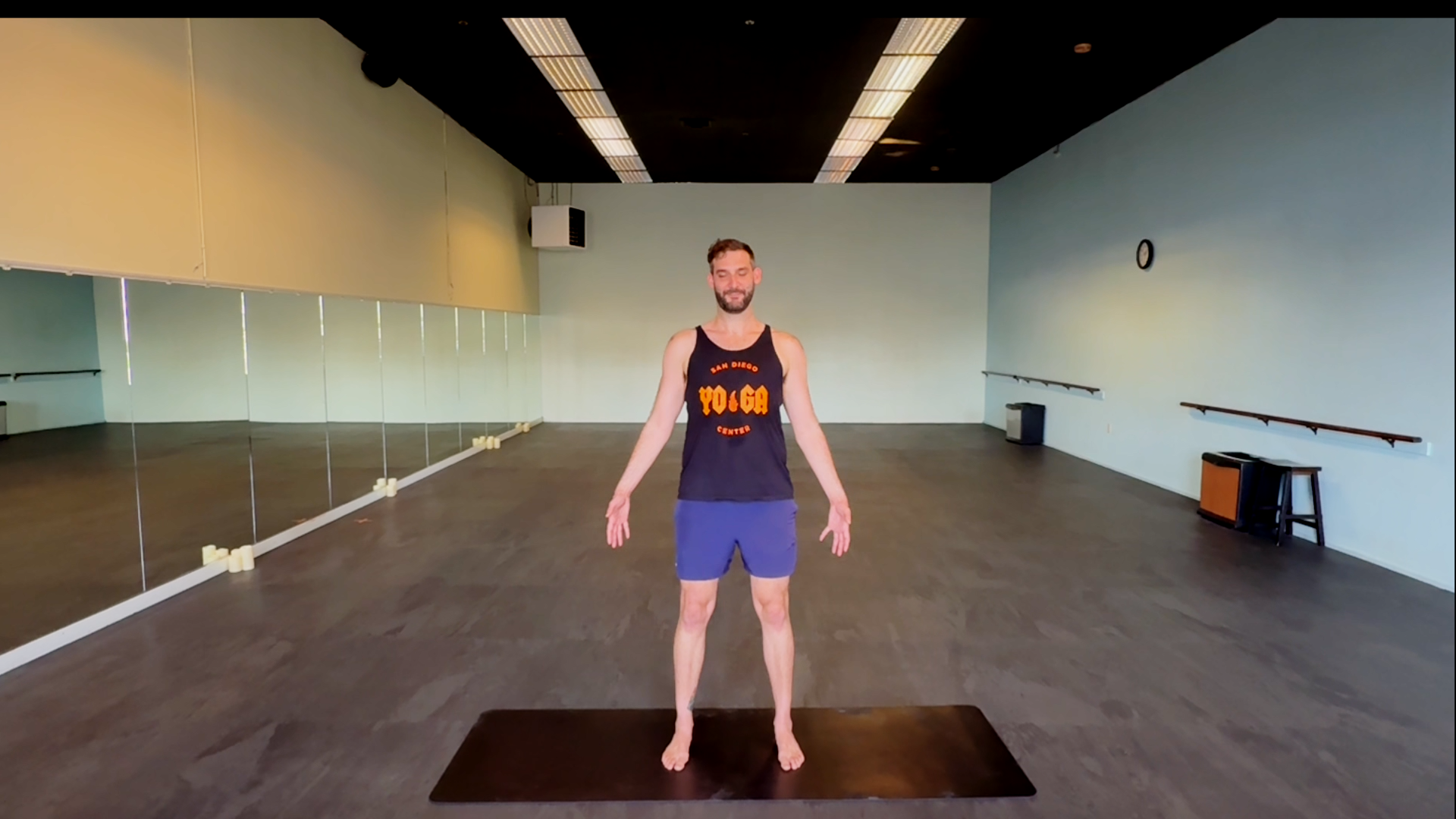
Stand tall with your feet together or hip-width apart. Ground evenly through your feet and lengthen through your spine.
2. Hinge From Your Hips
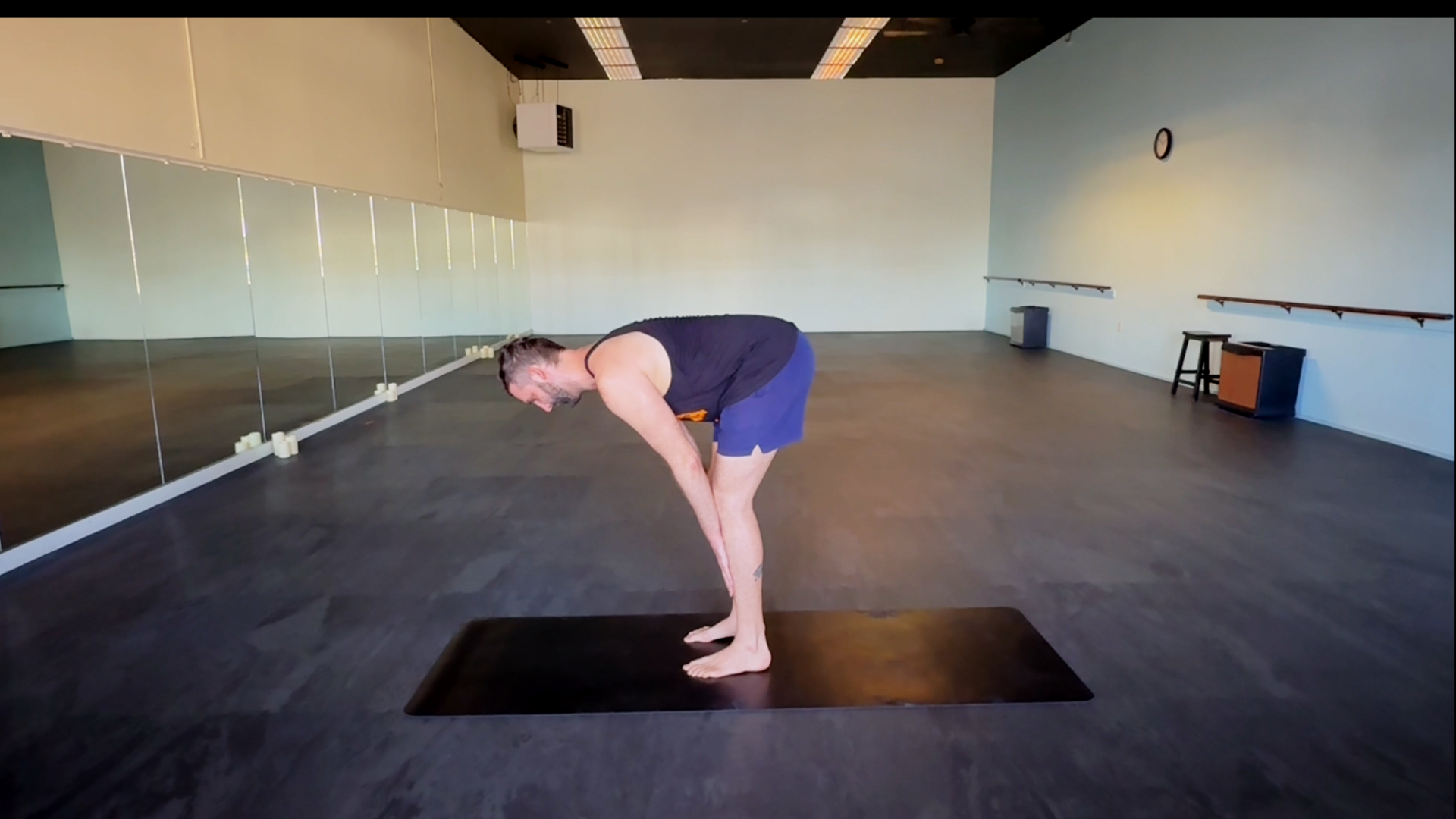
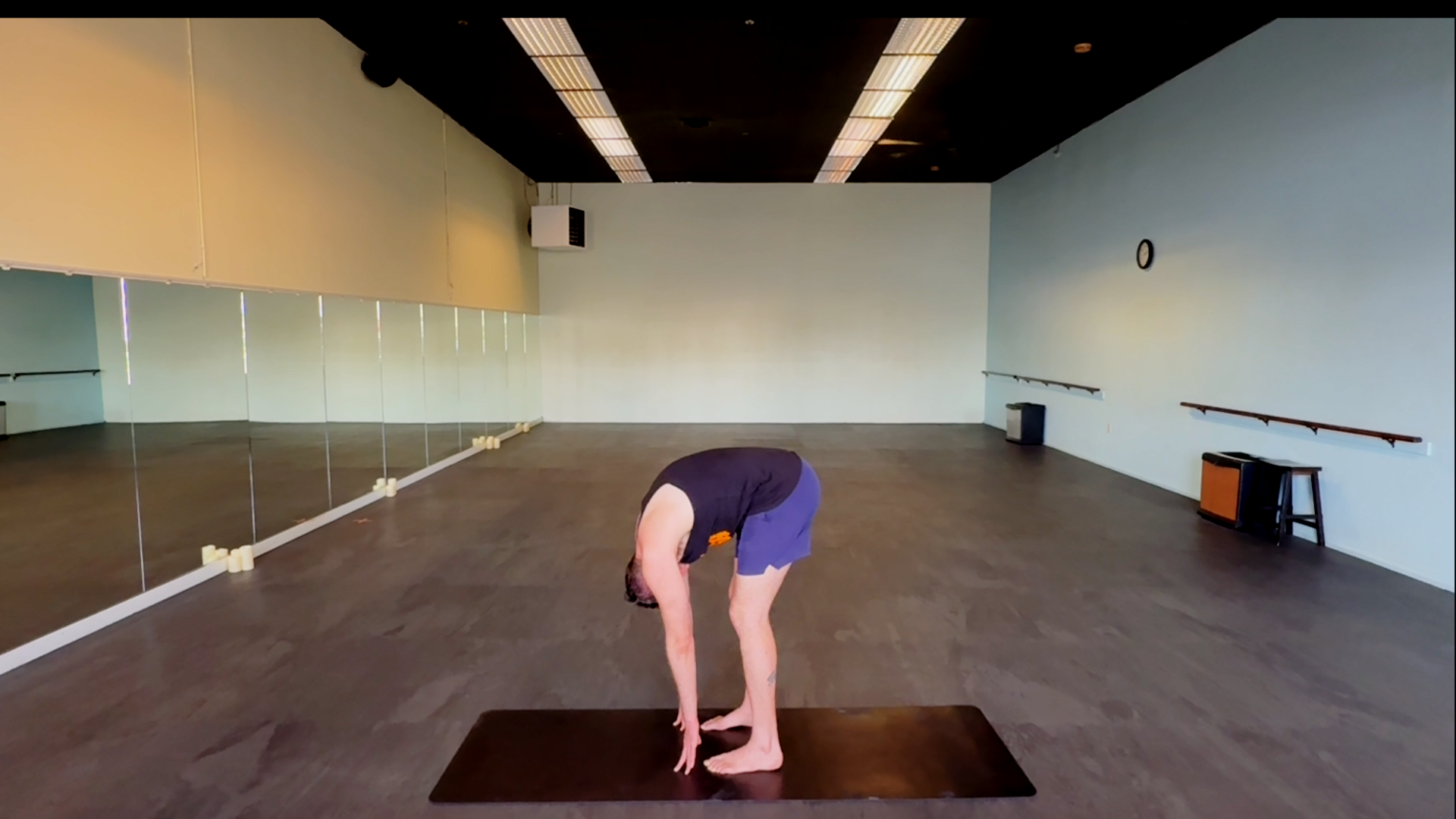
On an exhale, fold forward by sending your hips back and allowing your torso to descend over your legs.
3. Bend Your Knees
Keep as much bend in your knees as you need. Prioritize creating space through your torso and compressing your stomach to your thighs rather than forcing your legs straight.
4. Place Your Hands
Bring your fingertips or palms to the floor or blocks. You can also hold opposite elbows and allow your upper body to hang, or wrap your hands behind your hamstrings or calves to help assist the fold.
5. Release Your Head and Neck
Let the crown of your head melt toward the floor. Soften your jaw and allow your neck to release.
6. Balance Your Weight
Keep your weight distributed across your feet rather than shifting entirely into your heels. Allow your hips to remain stacked over your ankles.
7. Breathe and Hold
Stay for several breaths, allowing the pose to gradually deepen without pulling or forcing yourself toward the floor.
Props and Modifications
Place blocks beneath your hands to bring the floor closer to you.
Bend your knees generously to create more space through your hamstrings and lower back.
Separate your feet wider for additional stability.
Common Misconceptions and Misalignments
Thinking your legs have to be straight. Bent knees are not a lesser version of Forward Fold.
Trying to touch the floor at the expense of your alignment. The floor is not the goal.
Pulling aggressively against your legs to deepen the pose. Allow your breath and time to create space instead.
Holding tension in your neck. Let your head become heavy.
Shifting all your weight into your heels. Maintain connection through the entire surface of your feet.
Benefits of Forward Fold
Physical
Stretches your hamstrings and calves.
Creates length through your back body.
Encourages mobility through your hips.
Releases tension through your neck and shoulders.
Mental and Emotional
Encourages introspection and inward focus.
Creates an opportunity to slow down within an active practice.
Cultivates patience and acceptance.
Invites a sense of release and surrender.
Cautions and Considerations
Bend your knees or reduce your depth if you have hamstring or low back sensitivity.
Use blocks to support your hands rather than forcing yourself toward the floor.
Move slowly when entering and leaving the pose if you experience dizziness.
If deep forward folding is uncomfortable or contraindicated for your body, keep the fold higher and prioritize length over depth.
The Edge Connection
Your edge in Forward Fold is surrender without force.
There is always somewhere farther you could try to go. Straighter legs. Hands flatter on the floor. Chest closer to your thighs. But chasing the deepest possible version of the pose can quickly turn surrender into another form of striving.
The challenge is learning when to stop pulling and start listening.
Can you remain strong through your foundation while allowing everything above it to soften? Can you accept the depth available to you today without measuring it against yesterday, someone beside you, or an imagined version of where you think you should be?
On the Warrior’s Path, surrender does not mean abandoning your strength. Sometimes it means trusting yourself enough to stop fighting.
Warrior’s Edge Takeaway
In Forward Fold, you embody the warrior willing to bow.
You remain rooted even as you turn inward. You release what does not need to be held while keeping the foundation that supports you.
On the Warrior’s Path, this pose reminds you that surrender and strength are not opposites. Knowing when to soften can require just as much courage as knowing when to stand.
Stay grounded. Bow inward. Let go.

Plank Pose is one of the clearest expressions of strength in yoga. There is nowhere to hide. No dramatic shape. No deep fold. Just a straight line of effort from your heels through the crown of your head.
On the Warrior’s Path, Plank represents discipline. It is the moment where you hold steady under pressure. You do not collapse. You do not rush. You stay.