
Wild Thing (Camatkarasana)
Open Beyond the Expected
Wild Thing begins with control and then asks you to open beyond it.
Often entered from Three-Legged Dog or Side Plank, the pose shifts your weight, opens your hips, plants your lifted foot behind you, and sends your chest toward the sky. What began as a familiar shape transforms into something entirely different.
There is strength beneath the expression. Your grounded hand stays active. Your legs support your lift. Your core stabilizes you even as your heart opens.
On the Warrior’s Path, Wild Thing represents freedom. You have built the foundation. You have developed the strength. Now you learn what happens when you trust both enough to move beyond the expected.
The Meaning Behind Wild Thing
Wild Thing is commonly known by the Sanskrit name Camatkarasana. Camatkara can convey a sense of wonder, astonishment, or something extraordinary, giving the posture a meaning far richer than simply being “wild.” That sense of wonder is reflected in the shape itself.
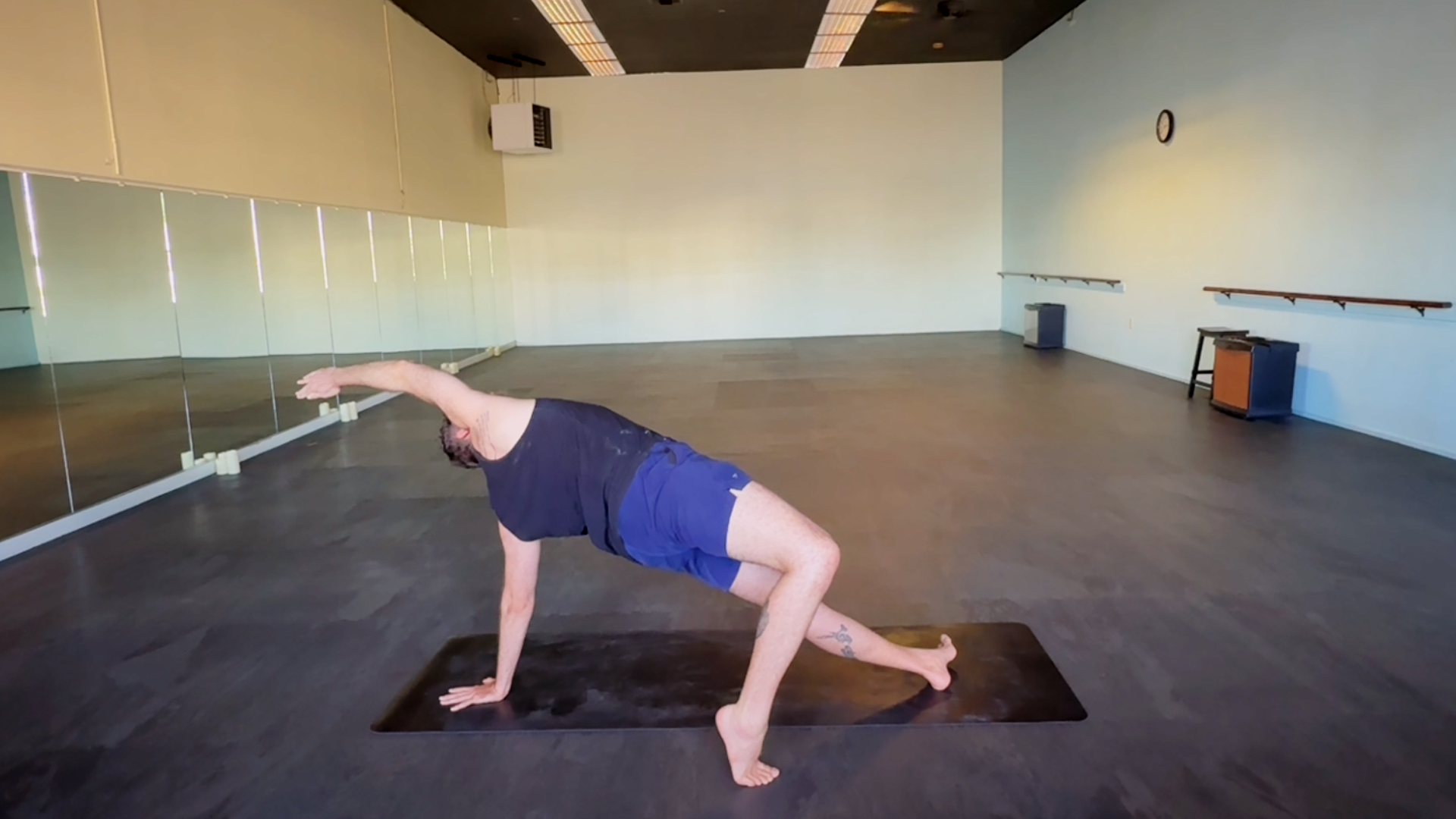
Wild Thing combines elements of a balance, a backbend, a heart opener, and a strength pose. Rather than fitting neatly into one category, it asks your body to explore several directions at once. You ground through one hand and both feet while your hips lift, your chest opens, and your free arm reaches overhead.
The pose is also closely related to Side Plank. Where Side Plank asks you to organize yourself around a narrow foundation, Wild Thing asks you to trust that foundation enough to move beyond it.
Symbolically, Camatkarasana represents discovery. Discipline has brought you this far, but discipline is not meant to confine you. Sometimes the reward for building control is discovering the freedom to let yourself explore.
How to Practice Wild Thing
1. Begin in Three-Legged Dog
From Downward Facing Dog, lift your right leg up and back. Keep your hands firmly grounded and your shoulders active.
2. Open Your Hip
Bend your right knee and stack your right hip over your left. Allow your right heel to move toward your glutes as your pelvis rotates open.
3. Shift Your Weight
Continue pressing firmly through your left hand as you begin rotating onto the outer edge of your left foot. Keep your supporting shoulder strong and stable.
4. Plant Your Foot
Slowly bring your right foot to the floor behind you. Land on the ball of your foot with your knee still bent.
5. Lift Your Hips
Press firmly through your grounded hand and both feet. Engage your glutes and core as you lift your hips and open your chest toward the ceiling.
6. Reach Your Top Arm
Sweep your right arm overhead and reach it toward the front of your mat. Create one long arc from your grounded hand through your chest and out through your fingertips.
7. Open Your Chest
Continue pressing the floor away through your supporting hand. Broaden across your collarbones and allow the backbend to come from your entire spine rather than collapsing into your lower back.
8. Breathe and Hold
Stay for several steady breaths. To exit, move with control as you rotate your torso back toward the floor and return to Three-Legged Dog or Side Plank. Repeat on the opposite side.
Props and Modifications
Begin from Side Plank instead of Three-Legged Dog if that transition feels more controlled.
Practice Side Plank with your top foot planted behind you before adding the backbend and overhead reach.
Start from seated with your left leg long and your right foot planted on the floor with your knee bent. Place your left hand behind you, fingers toward the back of the room, and practice lowering and lifting your hips.
Keep your top hand on your hip while establishing your foundation before reaching overhead.
Practice the shape near a wall for additional spatial awareness as you learn where to place your back foot.
Stay with Three-Legged Dog with an open hip if flipping into Wild Thing does not feel stable or appropriate for your shoulders.
Common Misconceptions and Misalignments
Dropping into the pose without control. Wild Thing should unfold from a stable foundation rather than becoming a blind flip backward.
Collapsing into your supporting shoulder. Continue pressing the floor away, keeping your shoulder active throughout the pose.
Trying to create the entire backbend through your low back. Lift your hips and expand through your chest to distribute the curve through your spine.
Allowing your grounded hand to lose connection. Spread your fingers and press through your entire palm.
Throwing your head backward. Let your neck follow the natural line of your spine rather than using your head to create the appearance of a deeper backbend.
Focusing on how dramatic the pose looks. The expression comes from strength and openness, not how far you can drop toward the floor.
Benefits of Wild Thing
Physical
Strengthens your arms, shoulders, and wrists.
Builds strength through your core, glutes, and legs.
Opens your chest, shoulders, and hip flexors.
Encourages mobility through your spine.
Develops balance, coordination, and full-body awareness.
Mental and Emotional
Builds confidence in unfamiliar movement.
Encourages trust in the strength you have developed.
Cultivates a sense of openness and exploration.
Challenges you to balance control with freedom.
Invites playfulness and curiosity into your practice.
Cautions and Considerations
Approach Wild Thing carefully if you have wrist, shoulder, or rotator cuff injuries or instability.
Avoid forcing the backbend if you experience compression or pain in your low back. Squeeze your glutes to protect it either way.
Keep your supporting shoulder active to avoid sinking into your wrist.
Modify or remain in Side Plank or Three-Legged Dog if you cannot maintain stability through your supporting arm.
Remember that Wild Thing requires both shoulder mobility and stability. A deeper backbend is not worth compromising either.
The Edge Connection
Your edge in Wild Thing exists somewhere between control and freedom.
By the time you arrive here, you have already built many of the pieces. Plank taught you to support yourself. Side Plank taught you to maintain that strength on a narrower foundation. Three-Legged Dog taught you to shift your weight and open your hip.
Wild Thing asks you to trust what you have learned.
That does not mean throwing yourself backward and hoping your body catches up. Freedom without awareness is not the goal. The challenge is to remain connected to your foundation while allowing yourself to move in an unexpected direction.
Can you open without losing control? Can you trust your strength without becoming careless? Can you let the pose feel expansive, expressive, and even playful without abandoning the discipline that makes that freedom possible?
On the Warrior’s Path, your edge is not always another test to endure. Sometimes it is permission to discover what all that training has made possible.
Warrior’s Edge Takeaway
In Wild Thing, you embody the liberated warrior.
You have built strength, learned control, and established your foundation. Now you allow those things to create freedom rather than restriction.
On the Warrior’s Path, this pose reminds you that discipline is not the destination. It is what gives you the confidence to explore beyond what you already know.
Trust your foundation. Open your heart. Find your wonder.
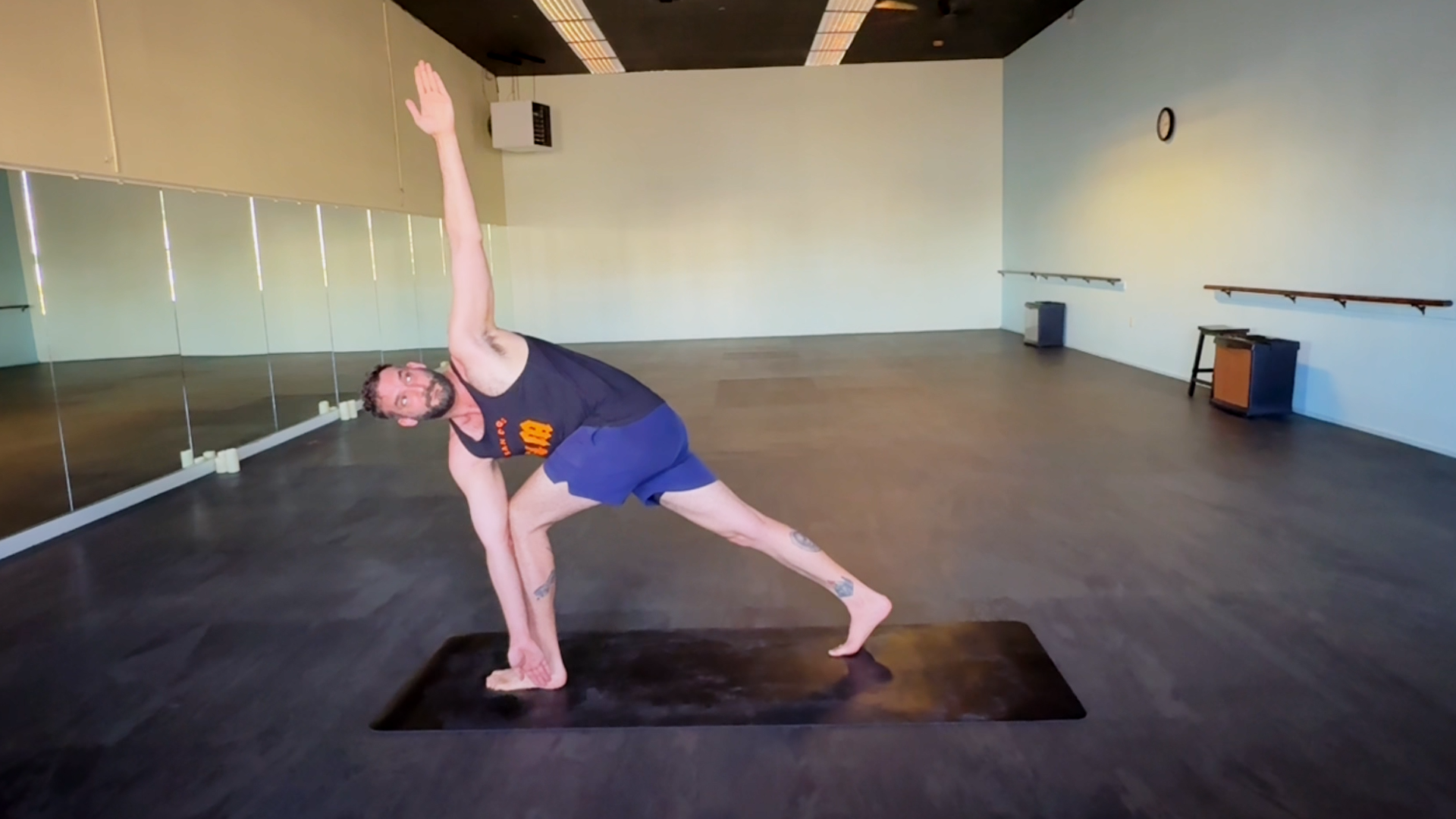
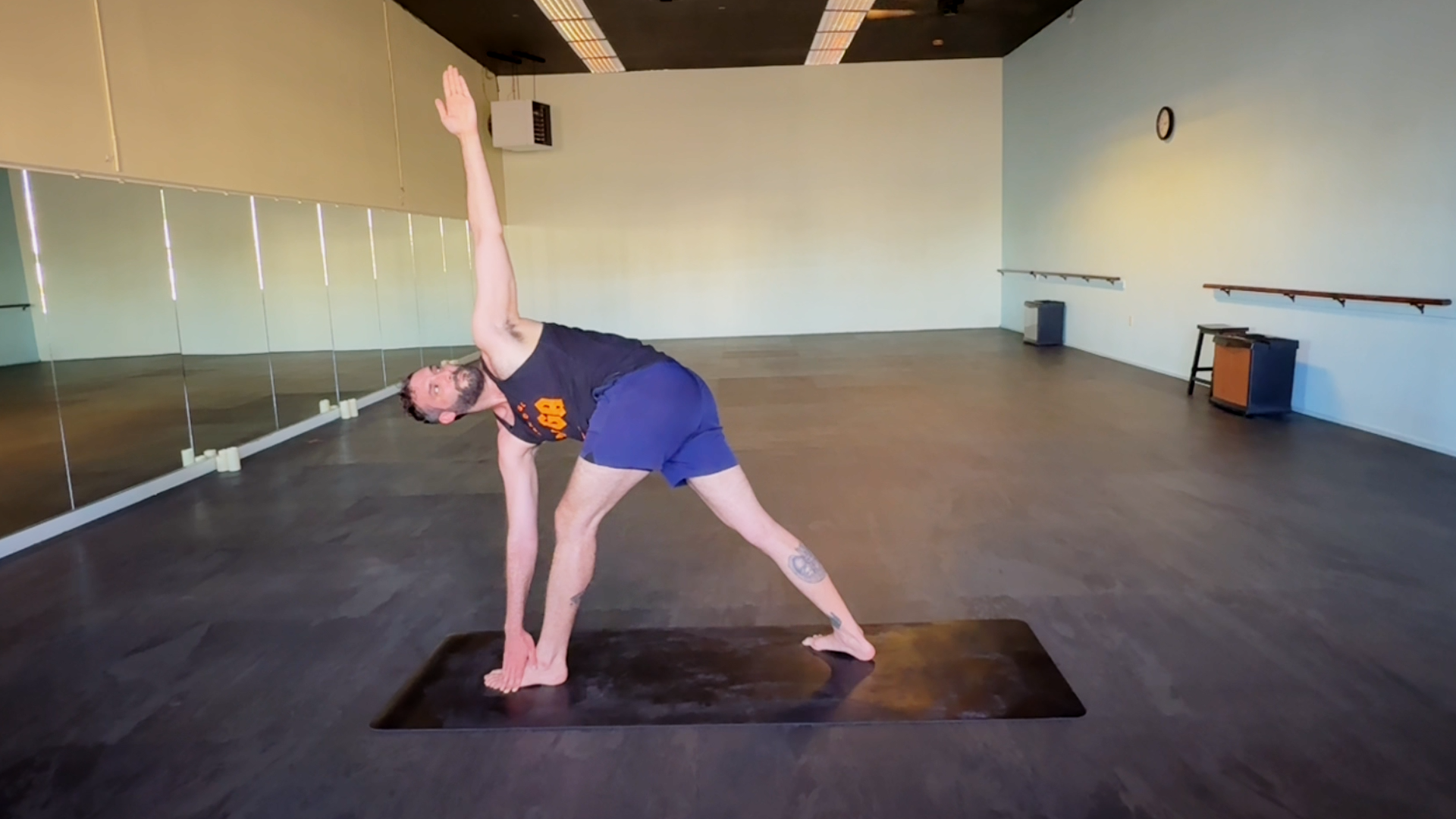

Half Moon Pose builds from the foundation of Triangle and shifts it into balance. You are no longer supported by both feet. One leg roots down while the other lifts. Your body opens wide into space. This is where structure meets instability.