
Revolved Triangle (Parivrtta Trikonasana)
Twist Through Resistance
Revolved Triangle is not passive. It is not forgiving. It asks for strength, precision, and patience all at once.
You begin with the familiar structure of Pyramid Pose, but the rotation changes everything. Your base must be steady. Your legs must be strong. Your breath must guide the twist.
On the Warrior’s Path, Revolved Triangle represents clarity under tension. It is the warrior who remains composed while navigating opposing forces.
The Meaning Behind Revolved Triangle
In Sanskrit, Parivrtta means “revolved” or “turned around,” and Trikonasana means “Triangle Pose.” You are building the same stable geometric foundation, but adding rotation.
The triangle remains one of the most stable shapes. The twist introduces complexity. Symbolically, this pose teaches you how to maintain structure while turning toward challenge.
Revolved Triangle represents perspective. When you twist, you see something new. You face a different direction without abandoning your foundation.
This is strength that adapts without collapsing.
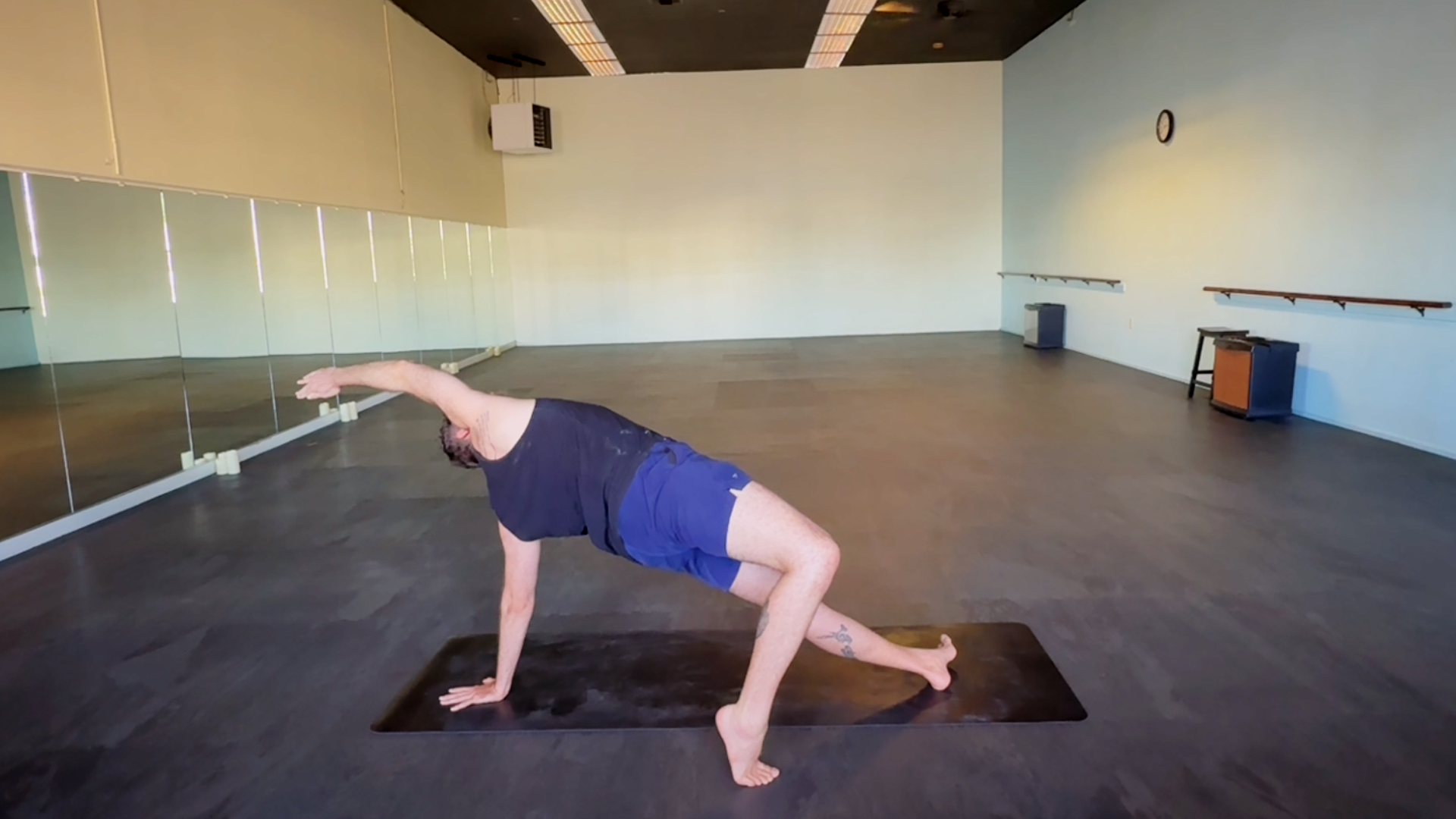
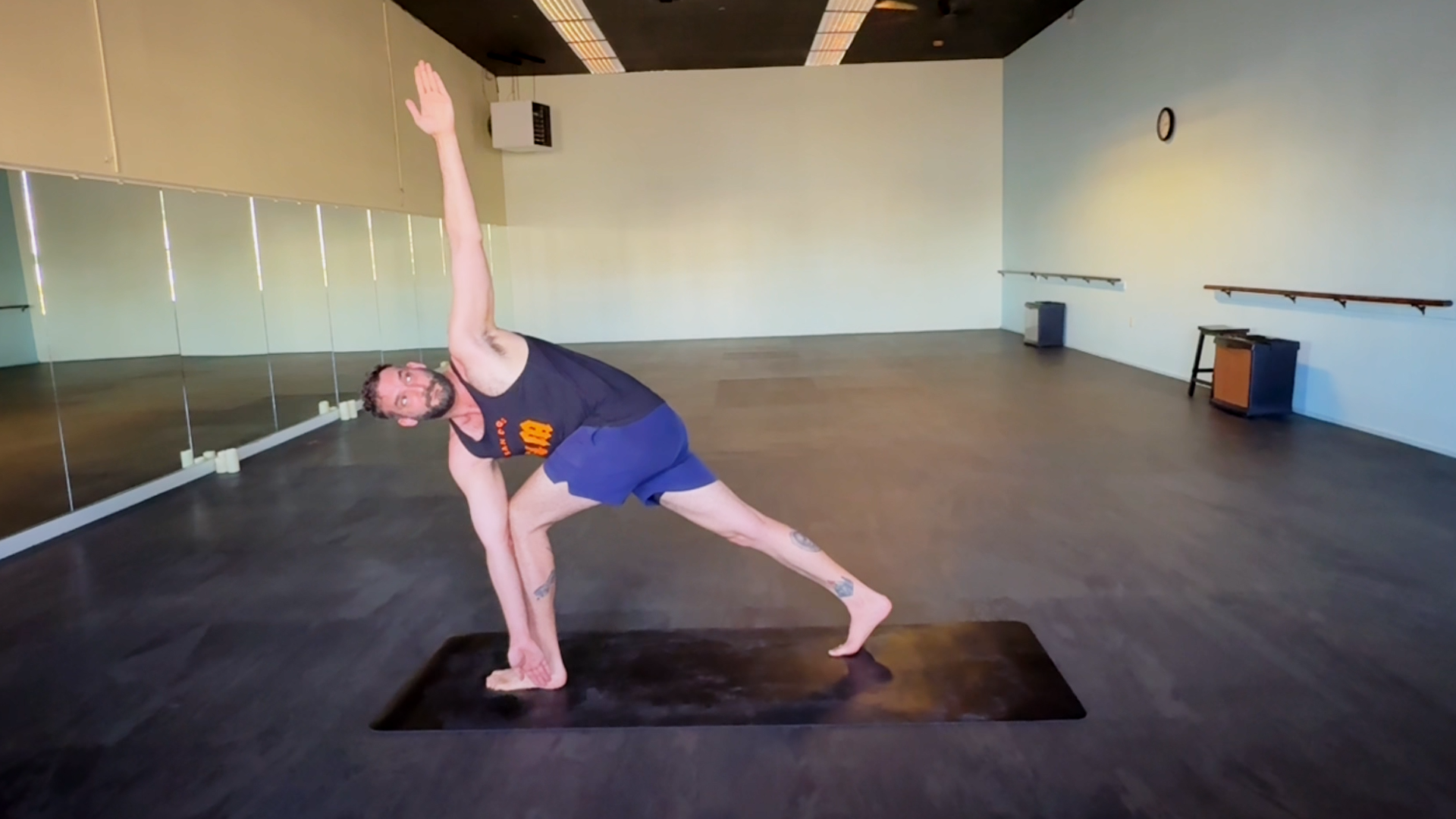
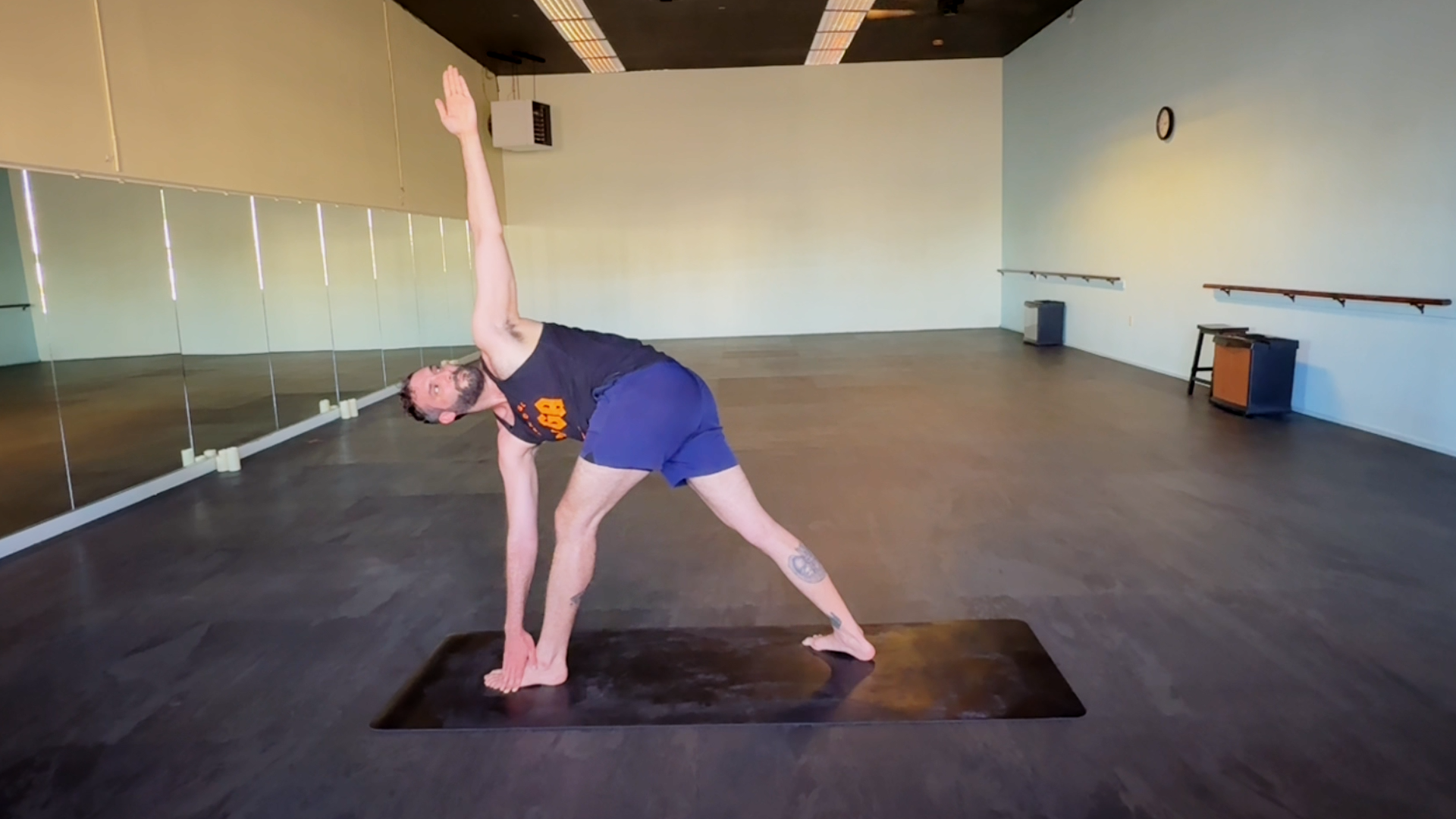
How to Practice Revolved Triangle
1. Set Your Stance
From standing, step your right foot forward and your left foot back about 2 to 3 feet. Keep your feet hip-width apart for balance.
2. Align Your Hips
Draw your back hip slightly forward and your front hip slightly back. Avoid forcing them perfectly square.
3. Lengthen First
Place your hands on your hips. Inhale and lift through your spine to create space.
4. Fold with Control
On an exhale, hinge at your hips and bring your left hand to a block or the floor outside or inside your right foot.
5. Rotate with Intention
Place your right hand on your hip or extend it upward. Rotate your ribcage to the right without collapsing your chest.
6. Set Your Gaze
Look up toward your top hand if comfortable, or keep your gaze down to maintain balance. Stay for 5 to 10 breaths. Maintain strength in both legs while twisting from your torso.
Props and Modifications
Use a block under your bottom hand to maintain alignment.
Shorten your stance if balance feels unstable.
Keep your top hand on your hip to focus on rotation.
Bend your front knee slightly to protect your hamstring.
Common Misconceptions and Misalignments
Forcing your hips square at the expense of stability. Use blocks to help support your alignment
Rounding your spine to reach the floor. It’s more important to find length in your spine and legs.
Locking your front knee. Maintain a soft bend to avoid hyperextension.
Leading the twist from your shoulders instead of your ribcage. Twist from just beneath your shoulder blades.
Benefits of Revolved Triangle
Physical
Strengthens your legs and core.
Stretches your hamstrings and calves.
Improves spinal mobility and balance.
Opens your top shoulder.
Mental and Emotional
Builds focus and composure under challenge.
Encourages adaptability.
Develops patience and precision.
Rings out mental toxins.
Cautions and Considerations
Be mindful with hamstring or lower back injuries.
Move slowly into the twist to avoid strain.
Use props generously to maintain alignment.
Avoid jerking or forcing rotation.
The Edge Connection
Your edge in Revolved Triangle is control in complexity. It is easy to feel unstable here. The twist pulls you off center. Your hamstrings resist. Your balance wavers.
The work is not in how deep you twist. It is in how steady you remain while twisting. Can you maintain integrity through your legs? Can you rotate without collapsing? Can you twist without force?
On the Warrior’s Path, this pose teaches you to stay composed as you turn toward difficulty. You do not abandon your structure. You refine it.
Warrior’s Edge Takeaway
In Revolved Triangle, you embody the adaptable warrior. You hold your ground while shifting perspective. You twist without losing strength.
This pose reminds you that growth often requires turning toward what feels challenging. Stability and change are not opposites. They are partners.
Stay grounded. Rotate with intention. See clearly.

Half Moon Pose builds from the foundation of Triangle and shifts it into balance. You are no longer supported by both feet. One leg roots down while the other lifts. Your body opens wide into space. This is where structure meets instability.