
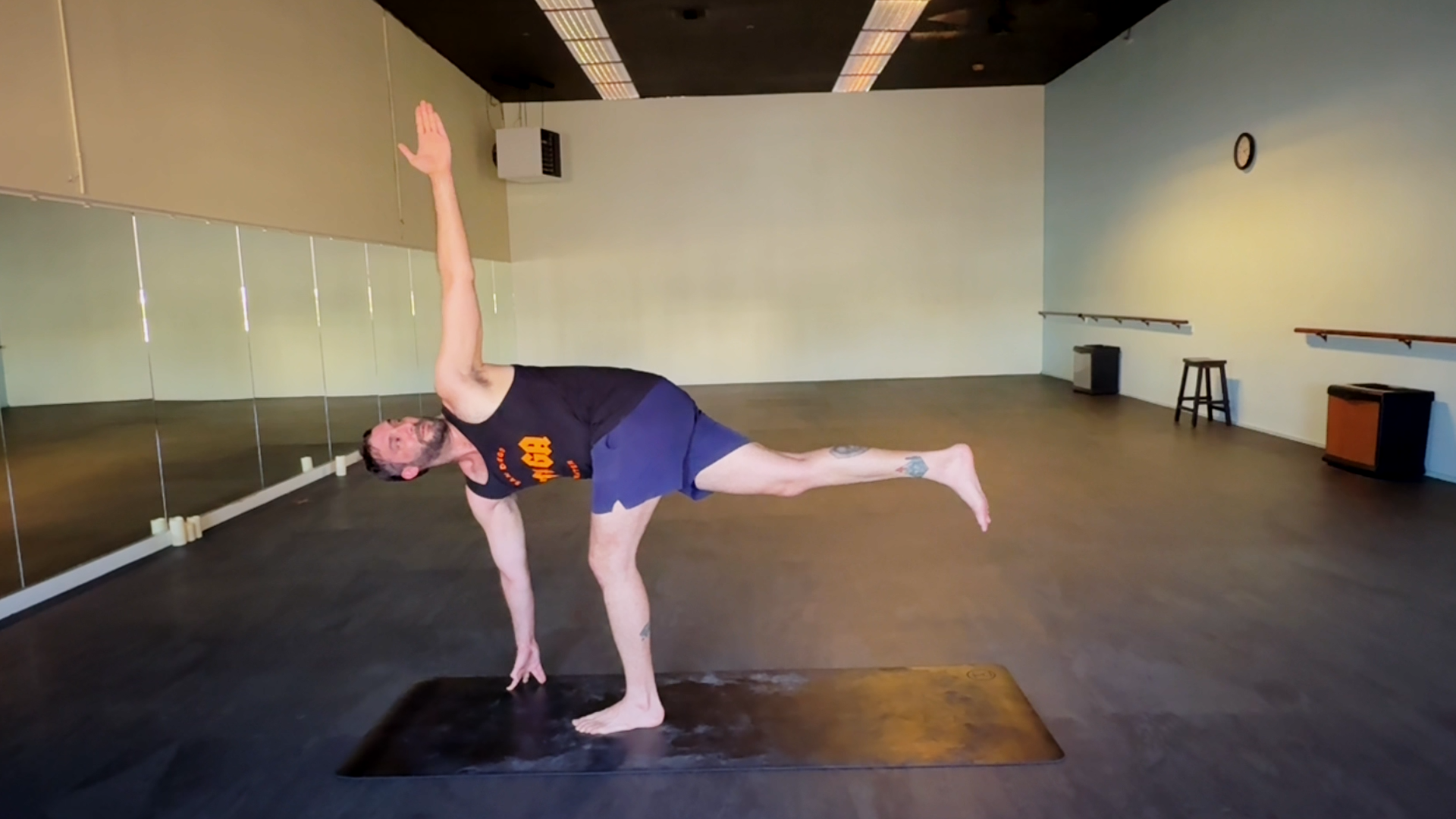
Revolved Half Moon (Parivrtta Ardha Chandrasana)
Revolved Half Moon takes the balance of Half Moon and changes the direction of the opening.
On the Warrior’s Path, Revolved Half Moon represents adaptability. You have already learned how to find your center. Now the pose asks whether you can keep finding it while your perspective changes.
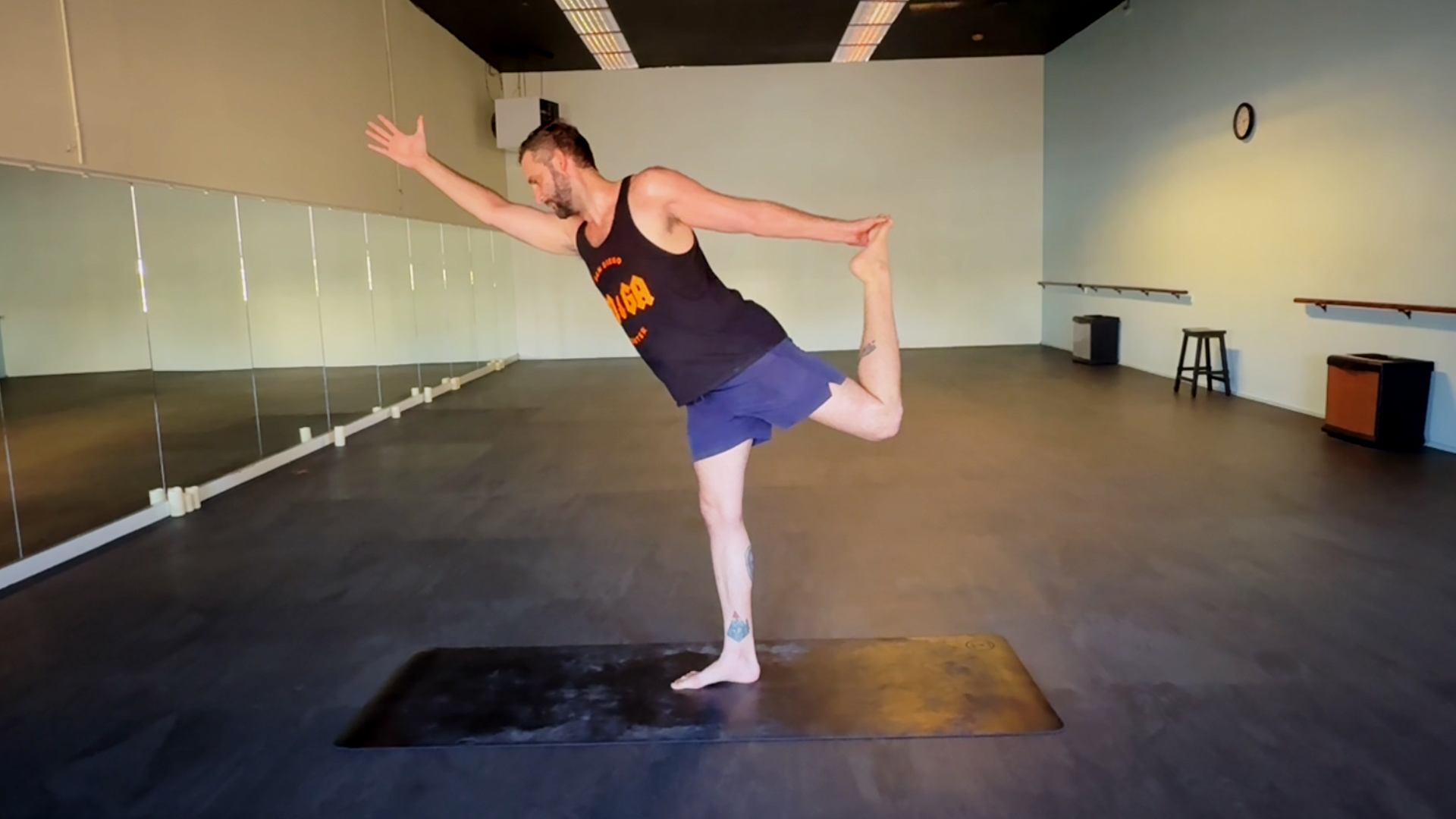
Dancer’s Pose (Natarajasana)
Dancer’s Pose asks you to balance while moving in opposing directions. The finished shape can look graceful, but creating it requires strength, mobility, concentration, and patience.
On the Warrior’s Path, Dancer’s Pose represents grace under pressure. Csontrol alone cannot complete the pose. You also have to open, extend, and trust yourself enough to move.
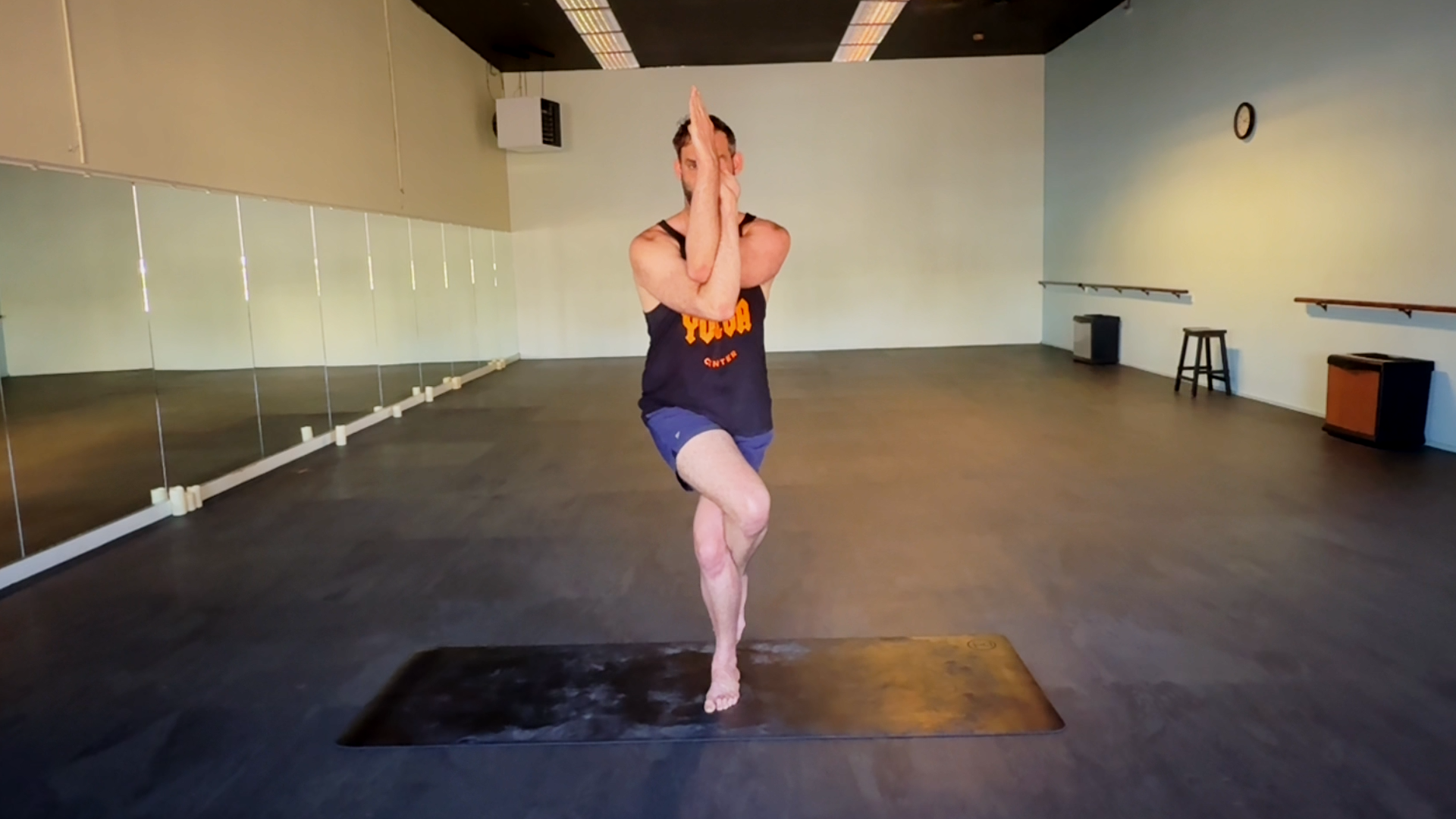
Eagle Pose (Garudasana)
Eagle Pose wraps your body around itself. One leg crosses over the other. One arm wraps beneath the opposite arm. Your knees bend, your center of gravity lowers, and the space your body occupies becomes smaller. Yet the challenge is to create length and stability within that compression.
On the Warrior’s Path, Eagle Pose represents focus. When movement becomes restricted and your balance becomes uncertain, you learn to direct your attention toward what matters and find space within limitation.
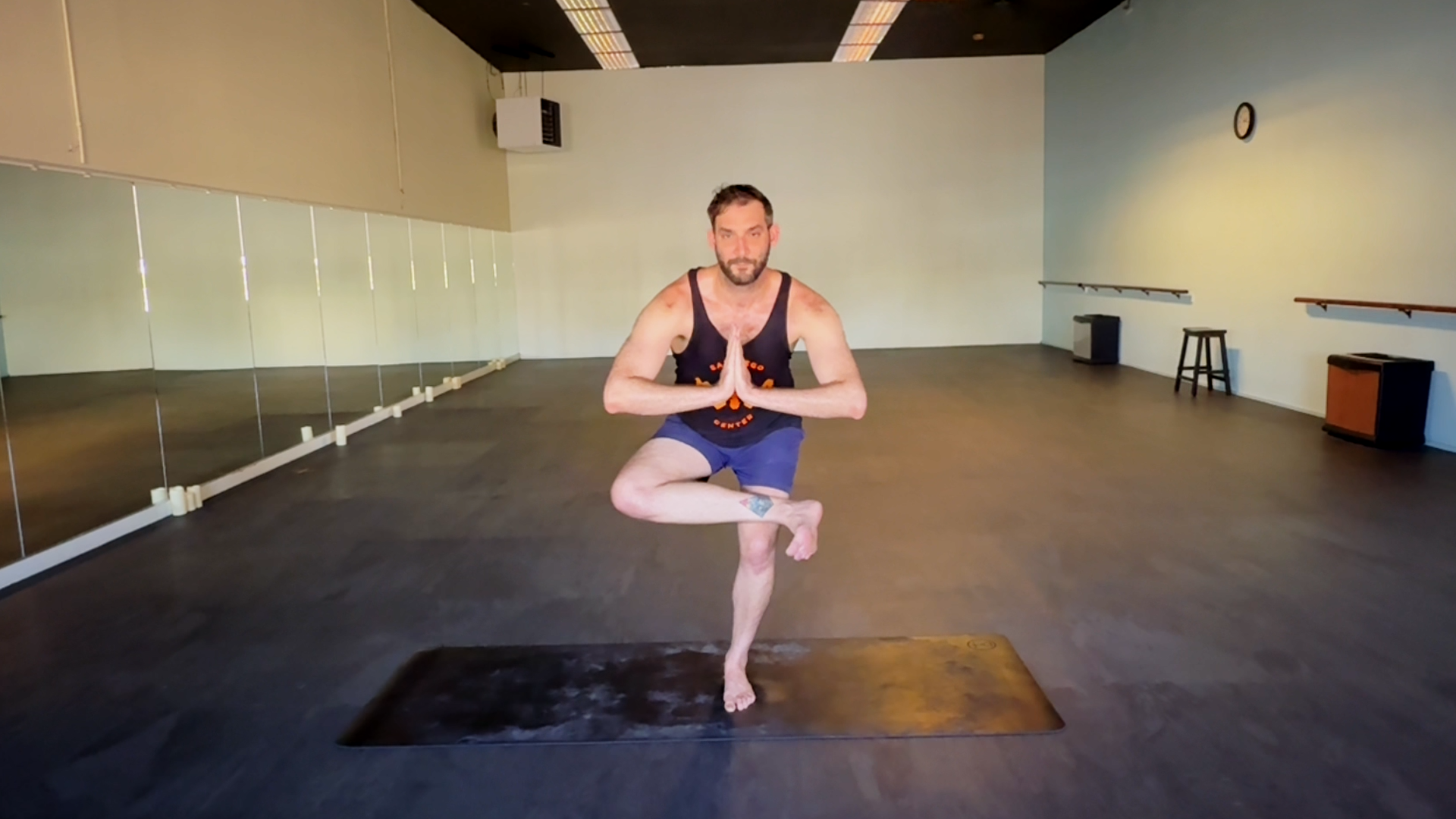
Standing Pigeon (Tada Kapotasana)
Standing Pigeon builds on the balance you have been developing. Your standing leg works harder. Your outer hip on your lifted leg opens more. Your center of gravity drops while your foundation remains limited to a single foot.
On the Warrior’s Path, Standing Pigeon represents composure. The sensation can build quickly, but the challenge is not simply enduring it. You are learning to remain balanced, breathe into resistance, and soften where you can while staying strong where you need to.
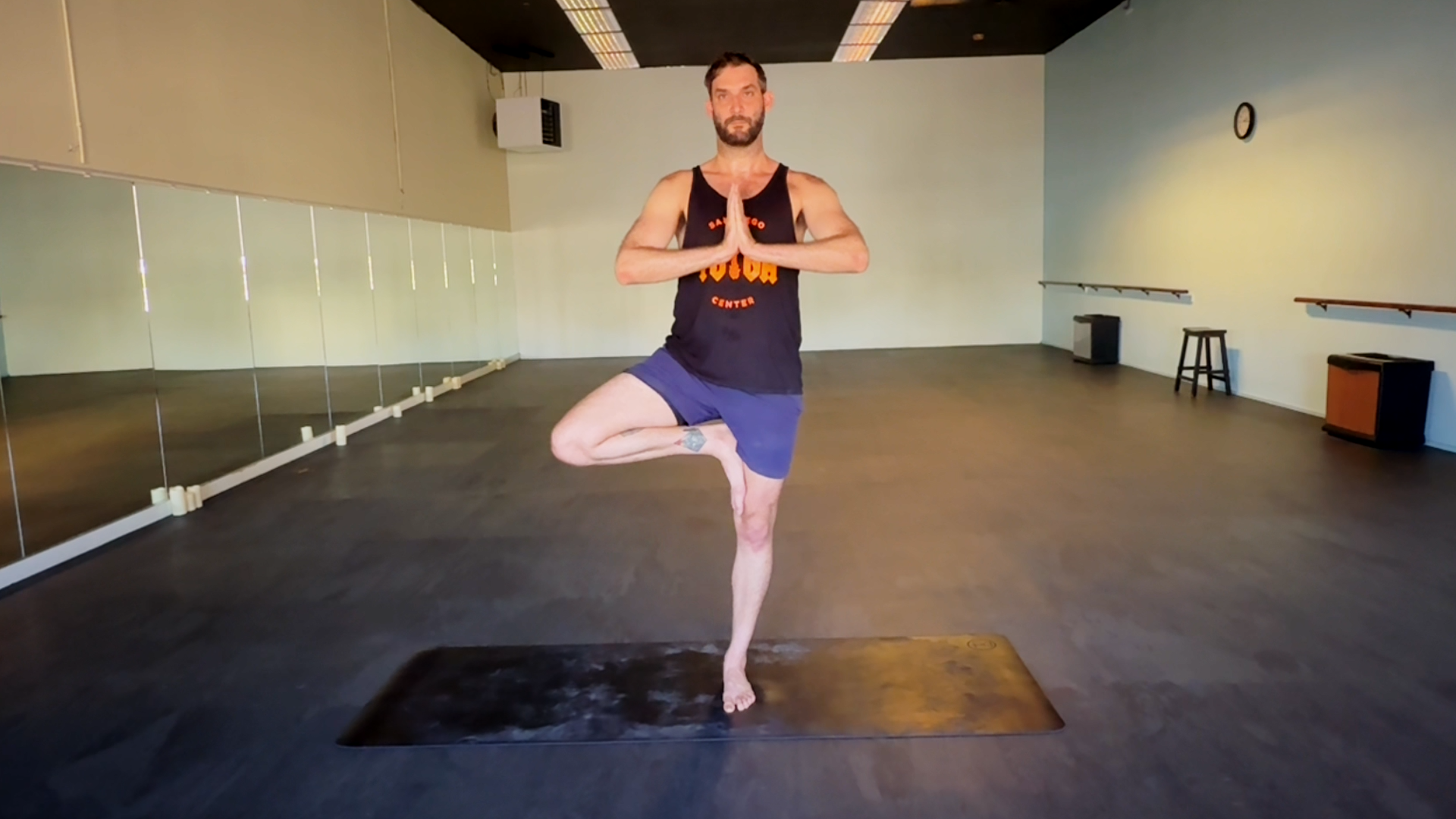
Tree Pose (Vrksasana)
Tree Pose takes the balance you began developing in One-Legged Mountain and gives it shape.
Tree Pose represents rooted growth. Balance does not come from resisting every movement. It comes from creating a foundation strong enough to bend, adjust, and continue reaching upward.
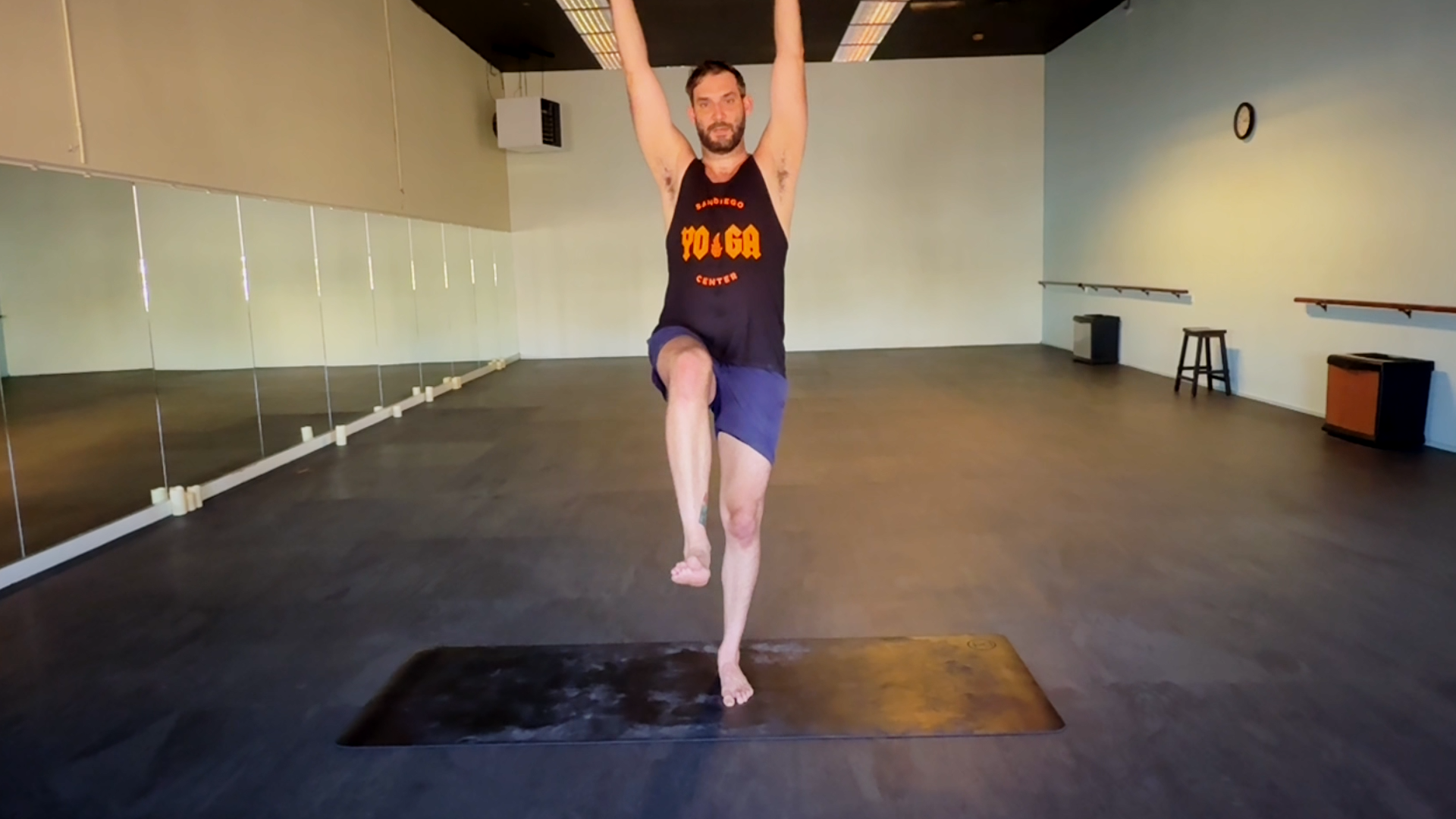
One-Legged Mountain (Eka Pada Tadasana)
One-Legged Mountain begins with the foundation you built in Mountain Pose and changes one thing.
You lift a foot.
On the Warrior’s Path, One-Legged Mountain represents progression. You have learned how to stand your ground. Now you begin discovering whether you can maintain that strength when part of your foundation disappears.
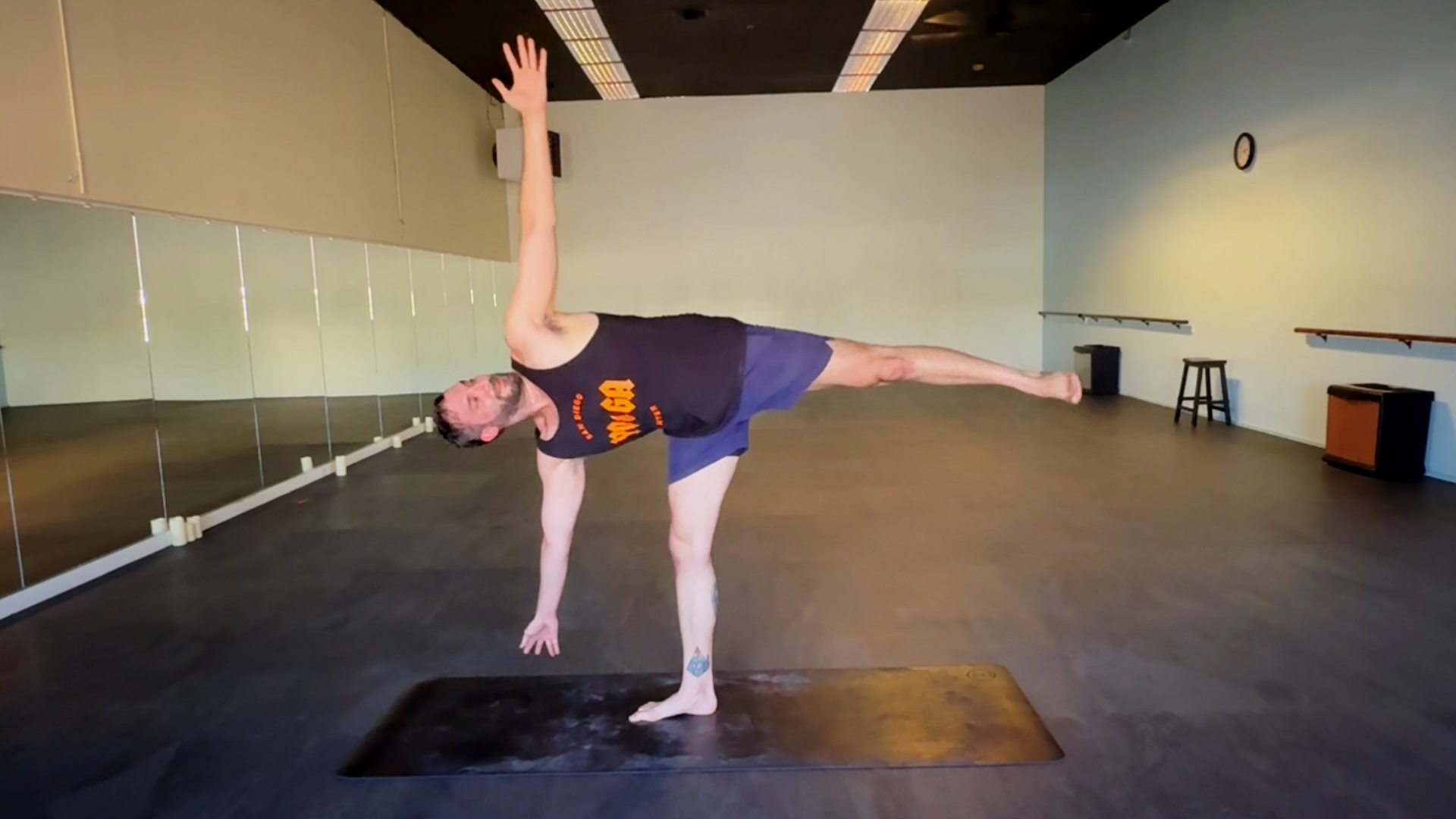
Half Moon (Ardha Chandrasana)
Half Moon Pose builds from the foundation of Triangle and shifts it into balance. You are no longer supported by both feet. One leg roots down while the other lifts. Your body opens wide into space. This is where structure meets instability.

Warrior 3 (Virabhadrasana III)
Warrior III is the leap — the transformation of grounding into flight. If Warrior I is the step and Warrior II is the stance, Warrior III is the soaring strike forward. This pose challenges you to balance strength and surrender, stability and expansion. It strips away the extra, leaving only precision, focus, and trust in your own edge.