
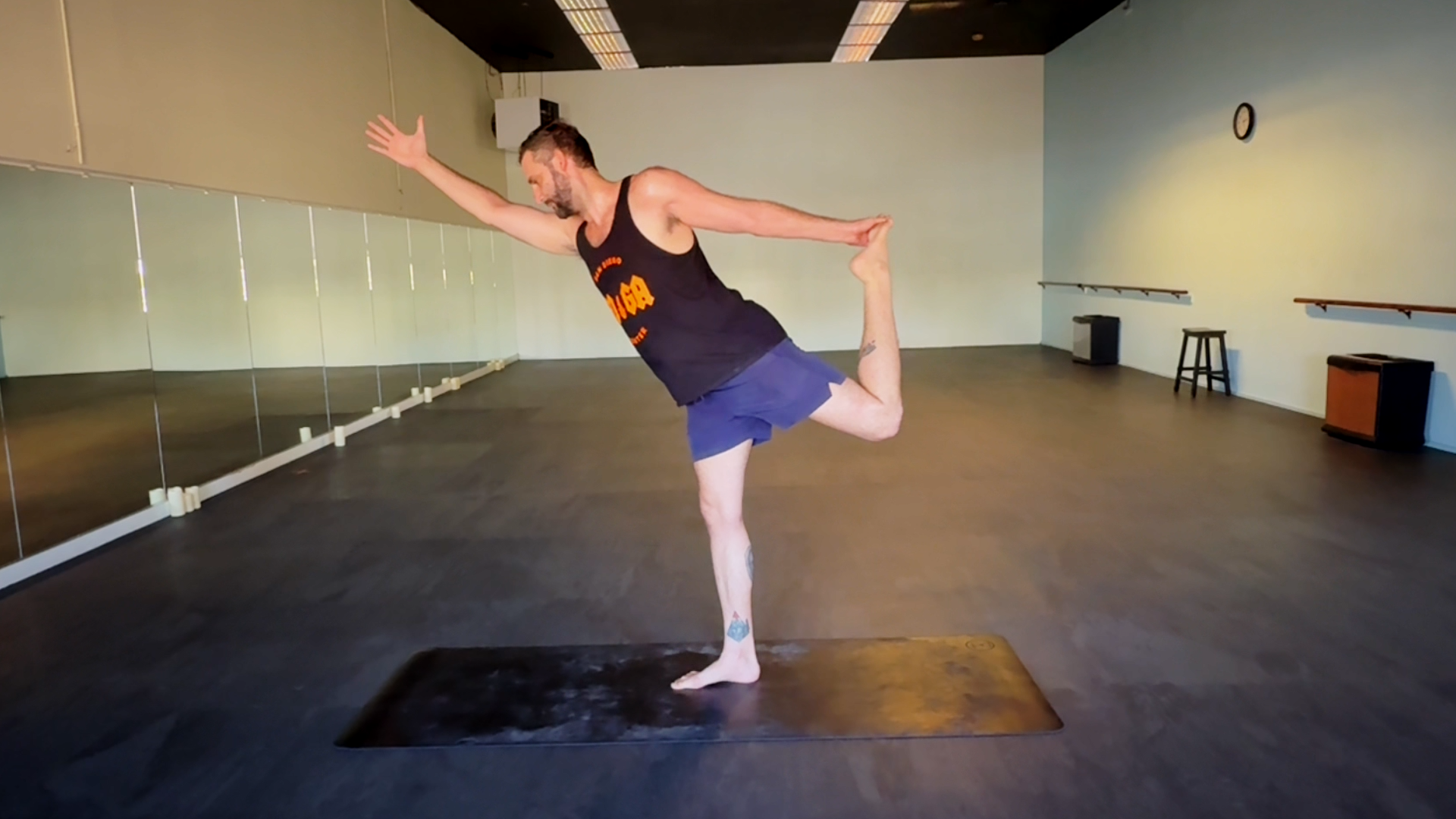
Dancer’s Pose (Natarajasana)
Dancer’s Pose asks you to balance while moving in opposing directions. The finished shape can look graceful, but creating it requires strength, mobility, concentration, and patience.
On the Warrior’s Path, Dancer’s Pose represents grace under pressure. Csontrol alone cannot complete the pose. You also have to open, extend, and trust yourself enough to move.
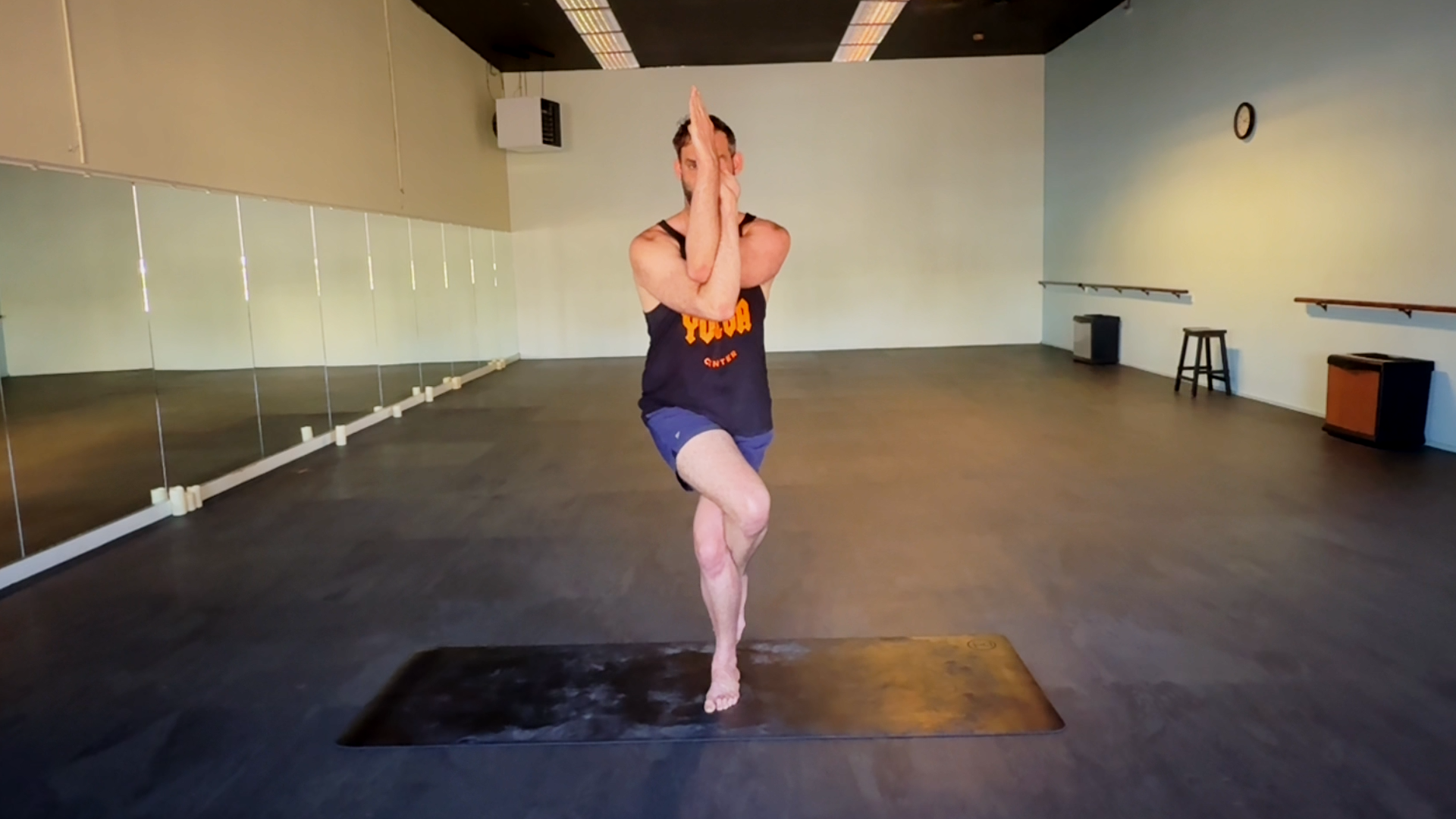
Eagle Pose (Garudasana)
Eagle Pose wraps your body around itself. One leg crosses over the other. One arm wraps beneath the opposite arm. Your knees bend, your center of gravity lowers, and the space your body occupies becomes smaller. Yet the challenge is to create length and stability within that compression.
On the Warrior’s Path, Eagle Pose represents focus. When movement becomes restricted and your balance becomes uncertain, you learn to direct your attention toward what matters and find space within limitation.
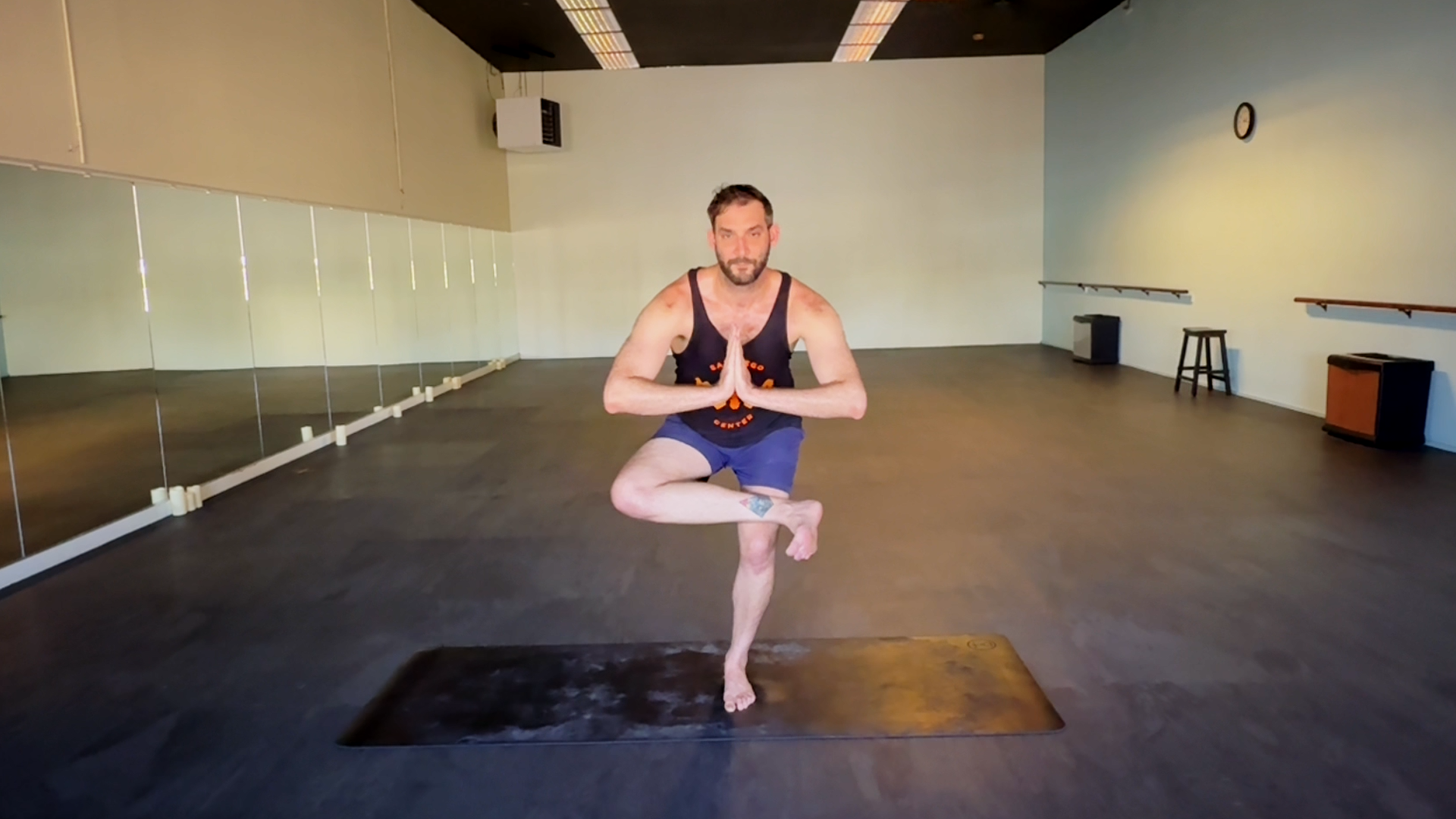
Standing Pigeon (Tada Kapotasana)
Standing Pigeon builds on the balance you have been developing. Your standing leg works harder. Your outer hip on your lifted leg opens more. Your center of gravity drops while your foundation remains limited to a single foot.
On the Warrior’s Path, Standing Pigeon represents composure. The sensation can build quickly, but the challenge is not simply enduring it. You are learning to remain balanced, breathe into resistance, and soften where you can while staying strong where you need to.
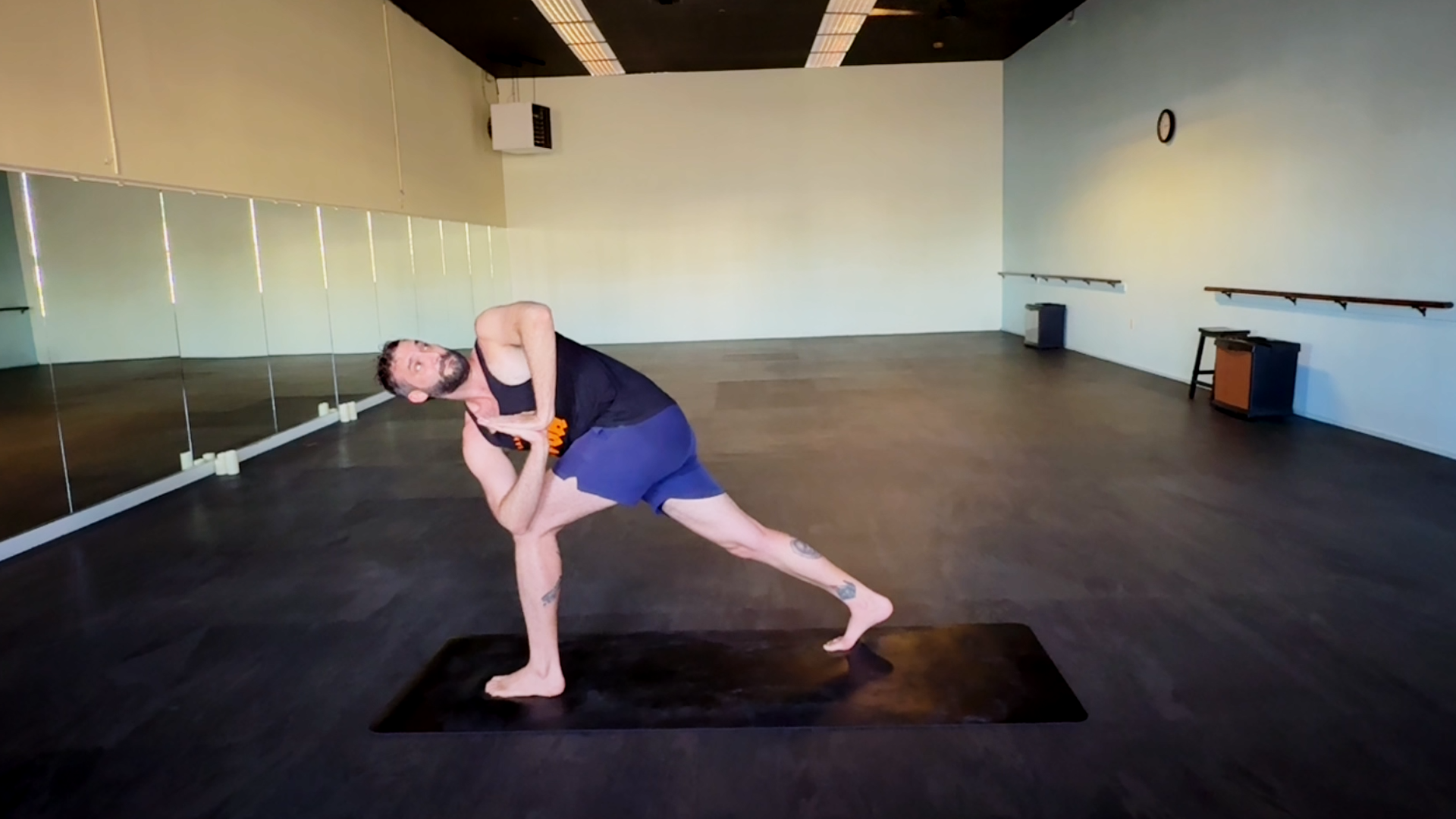
Prayer Twist
Prayer Twist is less a single pose than a movement pattern you will encounter throughout yoga. The temptation is to twist as far as possible. The practice is learning to create space first. On the Warrior’s Path, Prayer Twist represents perspective. You remain grounded in the shape you have already established while learning to view it from another angle.
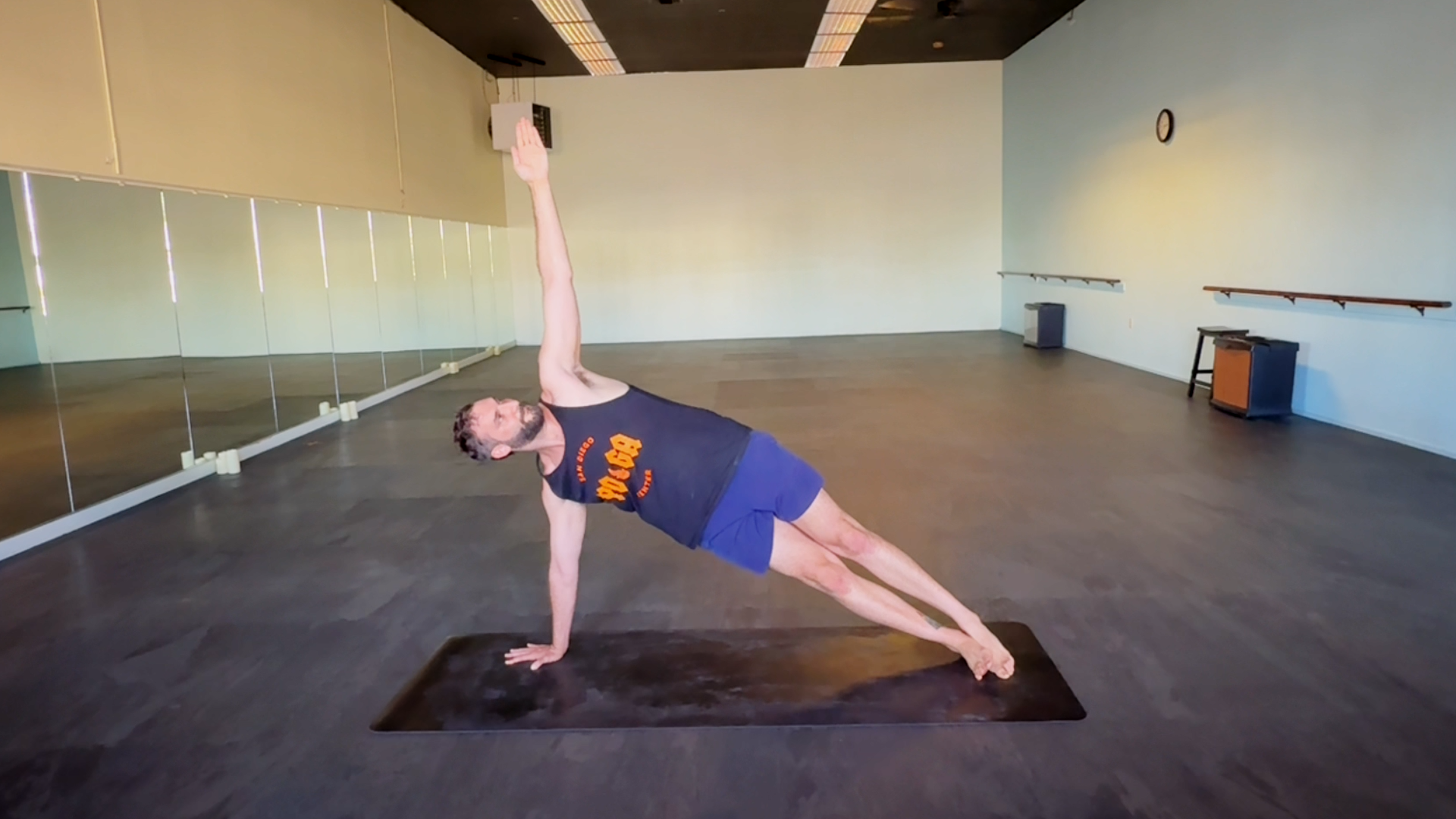
Side Plank (Vasisthasana)
Side Plank takes the stability of Plank Pose and turns it sideways. Suddenly, strength alone is not enough. You need balance, coordination, and full-body integration to keep yourself lifted. On the Warrior’s Path, Side Plank represents self-reliance. Your foundation becomes smaller, but your presence does not.
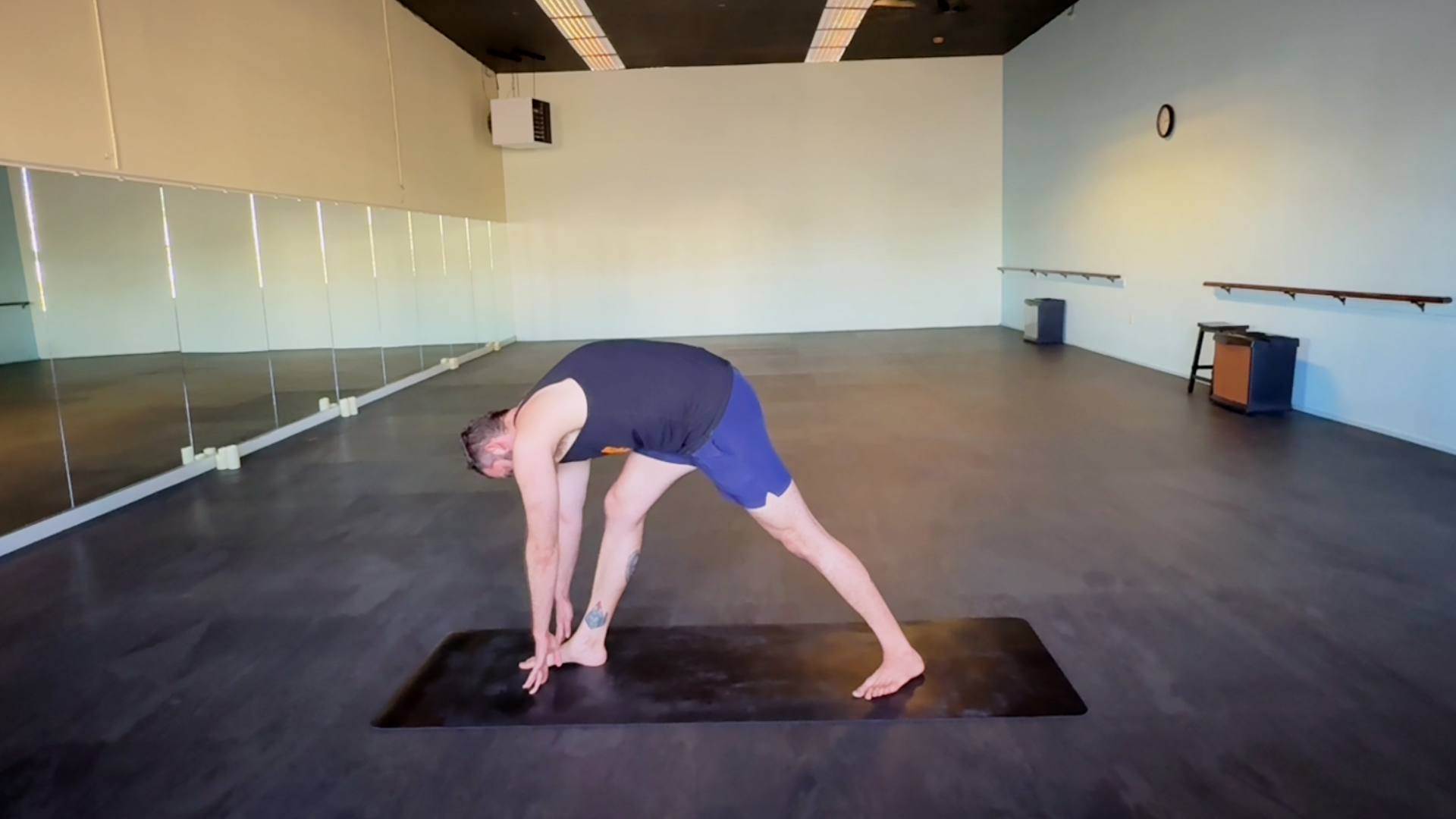
Pyramid Pose (Parsvottanasana)
Pyramid Pose is a posture of precision. It represents refinement. It is less about expansion and more about alignment. Less about movement and more about control. This is the warrior pausing to recalibrate.
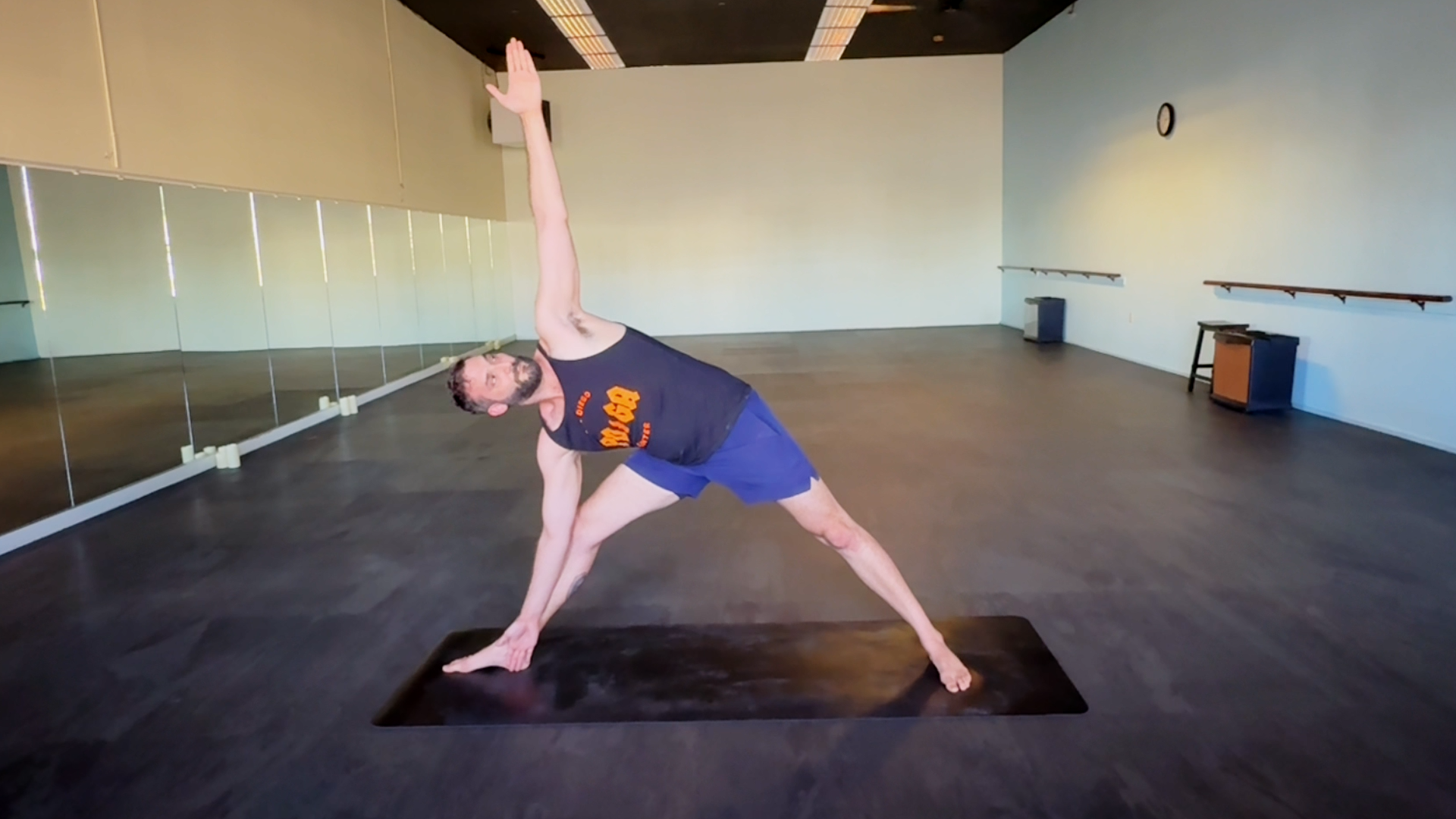
Triangle Pose (Trikonasana)
Triangle Pose is where stability meets spaciousness. On the Warrior’s Path, it teaches you how to expand without losing your base. It is not about collapsing into flexibility. It is about maintaining structure while creating space.
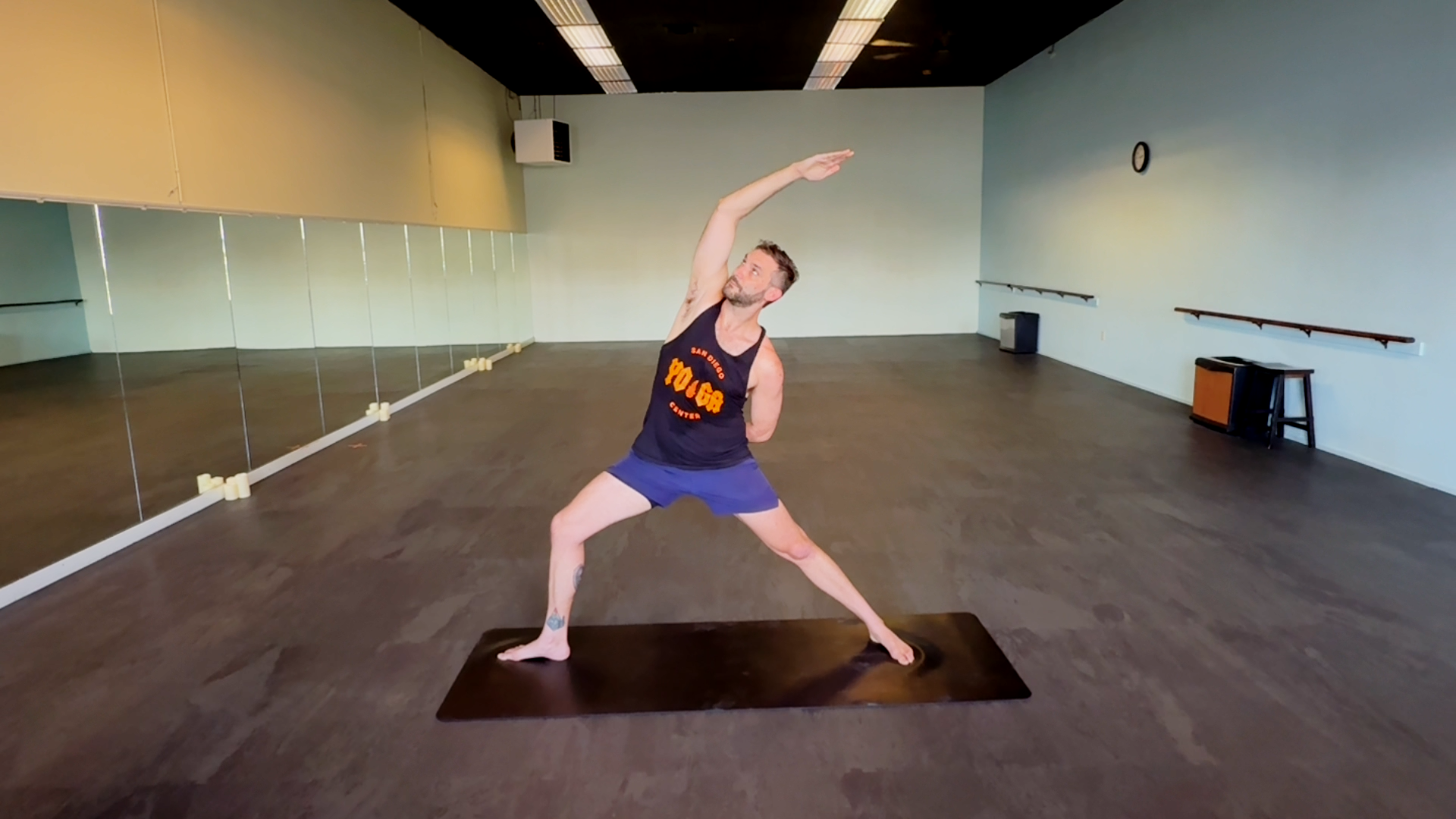
Reverse Warrior (Viparita Virabhadrasana)
Reverse Warrior begins from the strength of Warrior 2. Your legs remain exactly where the work already is. Your front knee stays bent, your back foot stays grounded, and the foundation beneath you does not change. What changes is your direction.
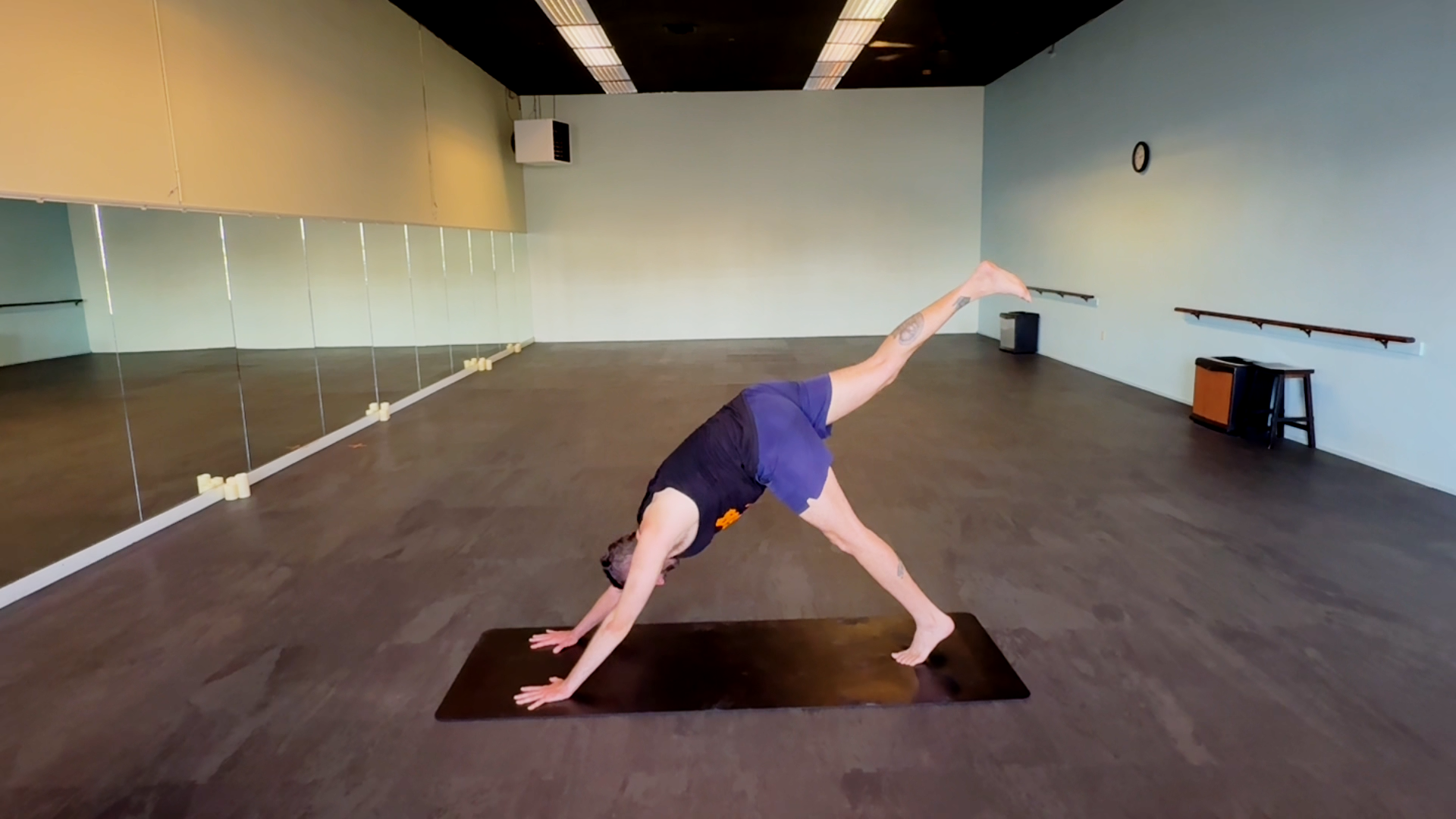
Three-Legged Dog (Eka Pada Adho Mukha Svanasana)
Three-Legged Dog begins somewhere familiar. Your hands are grounded. Your feet are connected to the earth. Your hips reach back just as they do in Downward Dog. Then one leg rises.
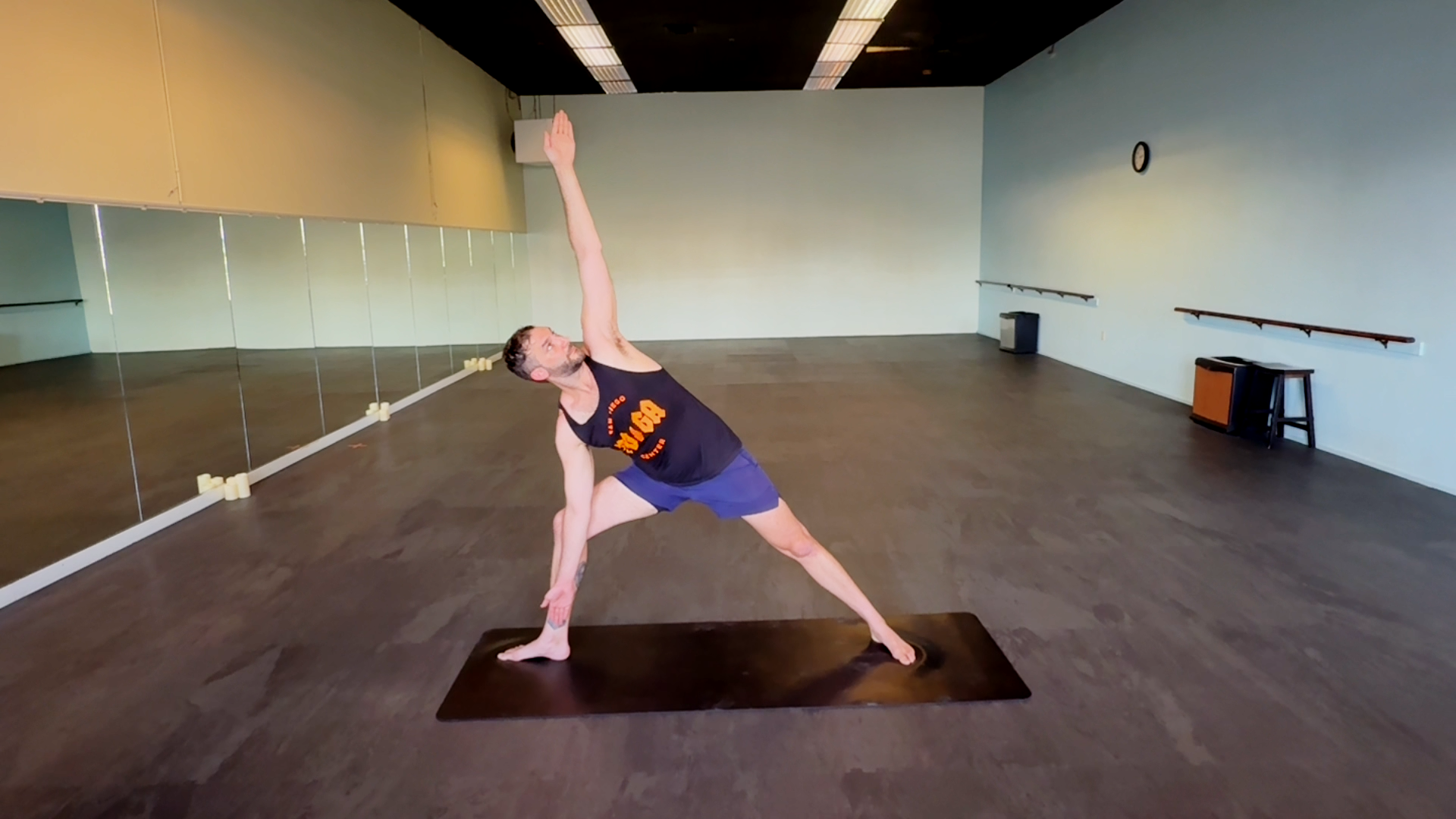
Extended Side Angle (Utthita Parsvakonasana)
Extended Side Angle grows naturally from Warrior 2. On the Warrior’s Path, Warrior 2 teaches you to claim your space. Extended Side Angle asks you to explore how far you can expand within it without sacrificing the foundation beneath you.
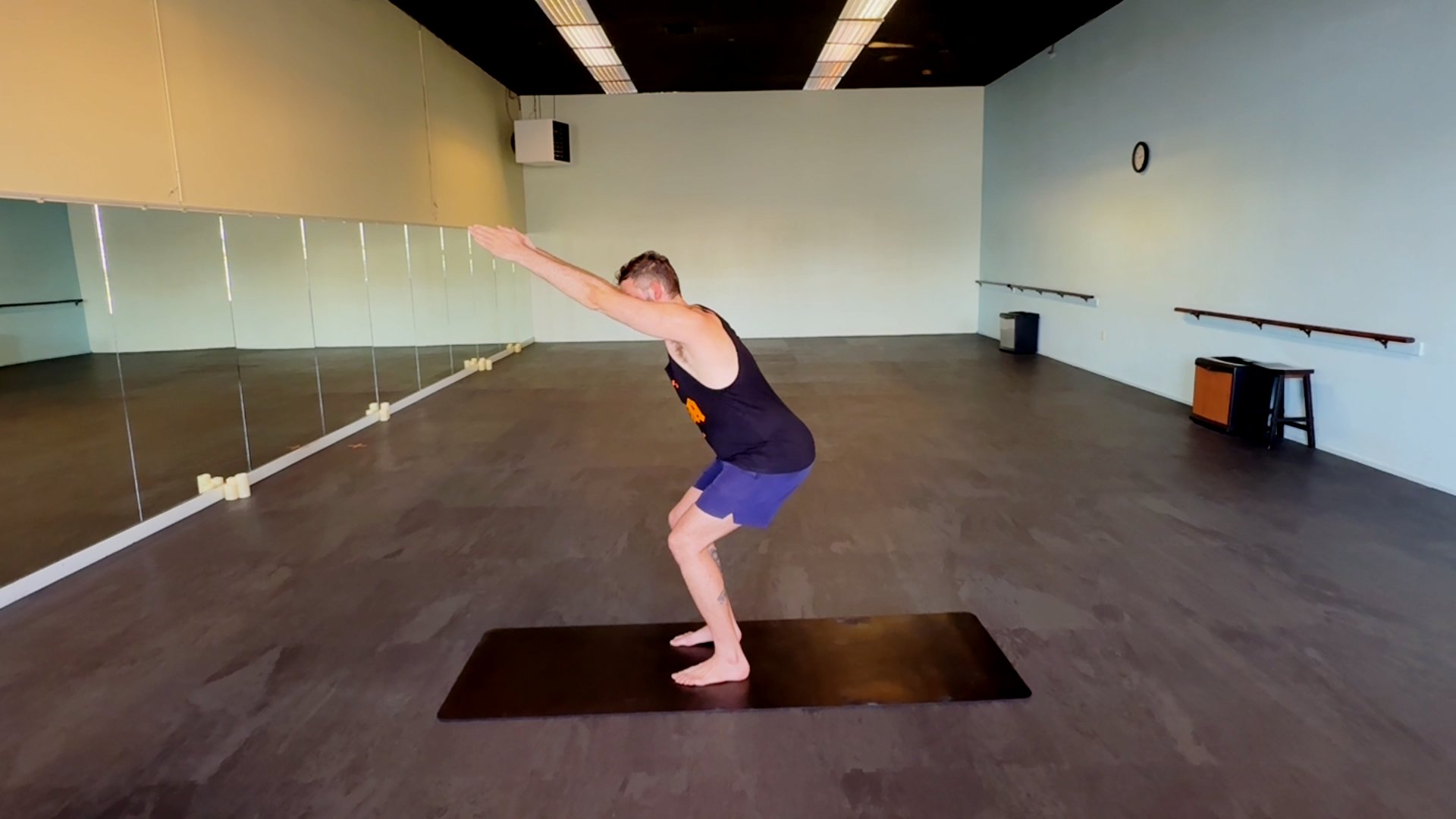
Chair Pose (Utkatasana)
Chair Pose asks you to lower yourself without collapsing, generate power without immediately escaping the discomfort, and remain tall through your upper body while your legs do the heavy work below.
On the Warrior’s Path, Chair Pose represents endurance. You are not charging forward or retreating. You are learning how to stay when staying gets difficult.
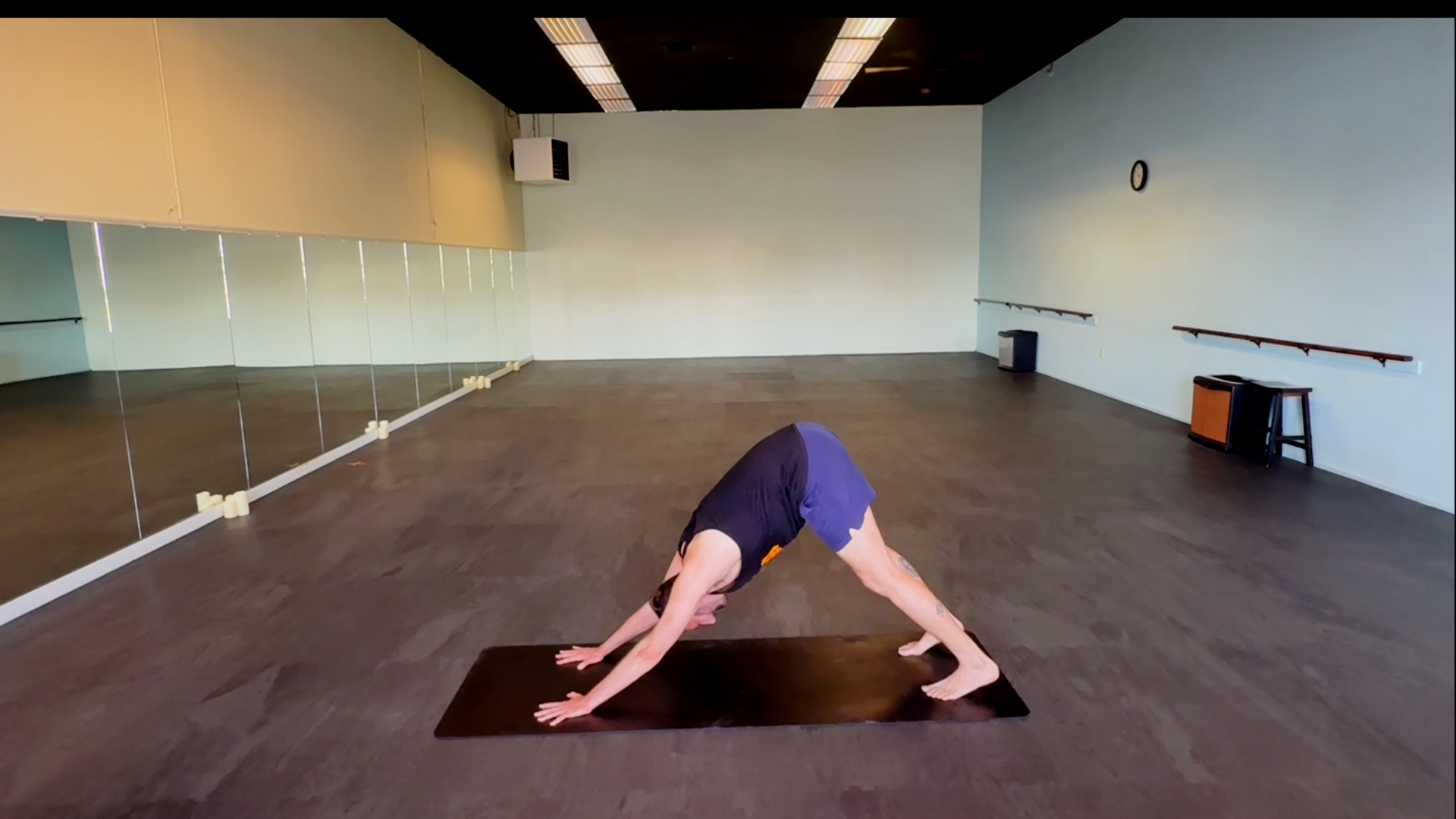
Downward Dog (Adho Mukha Svanasana)
Downward Dog is one of the most recognizable shapes in yoga, yet it is far more than a transition pose. It is a reset point, a recalibration, and a place where strength meets length.
In almost every class, you return to Downward Dog again and again. It becomes your home base. On the Warrior’s Path, it represents the discipline of returning to your foundation no matter how far you’ve moved.
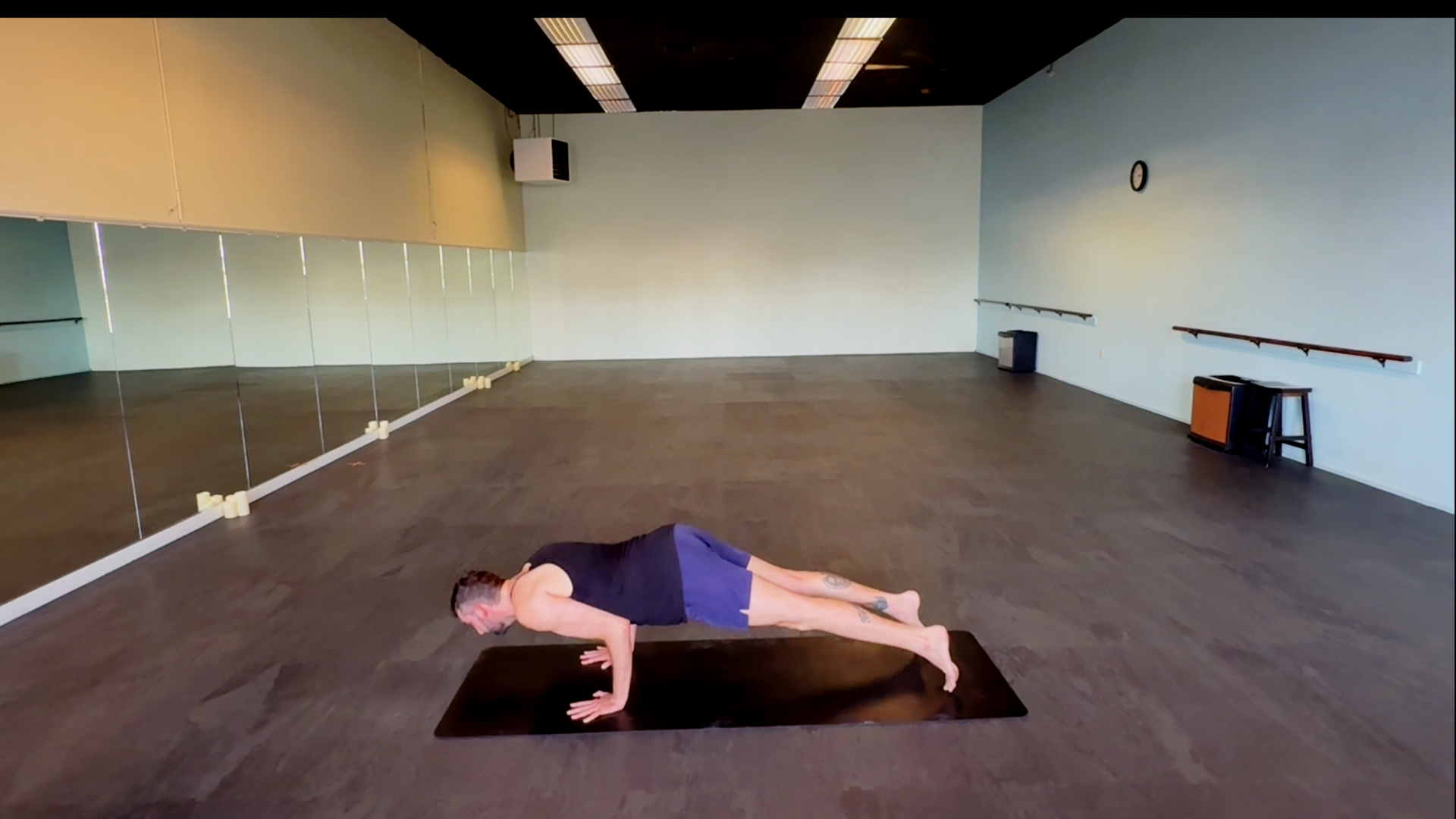
Chaturanga Dandasana
Chaturanga is not just a transition. It is a test.
In most vinyasa practices, it appears between Plank and Upward Dog, but when rushed, it becomes sloppy and disconnected. When practiced with intention, it becomes one of the strongest expressions of disciplined strength in yoga.
On the Warrior’s Path, Chaturanga represents controlled descent. It is the warrior lowering into challenge without collapsing.
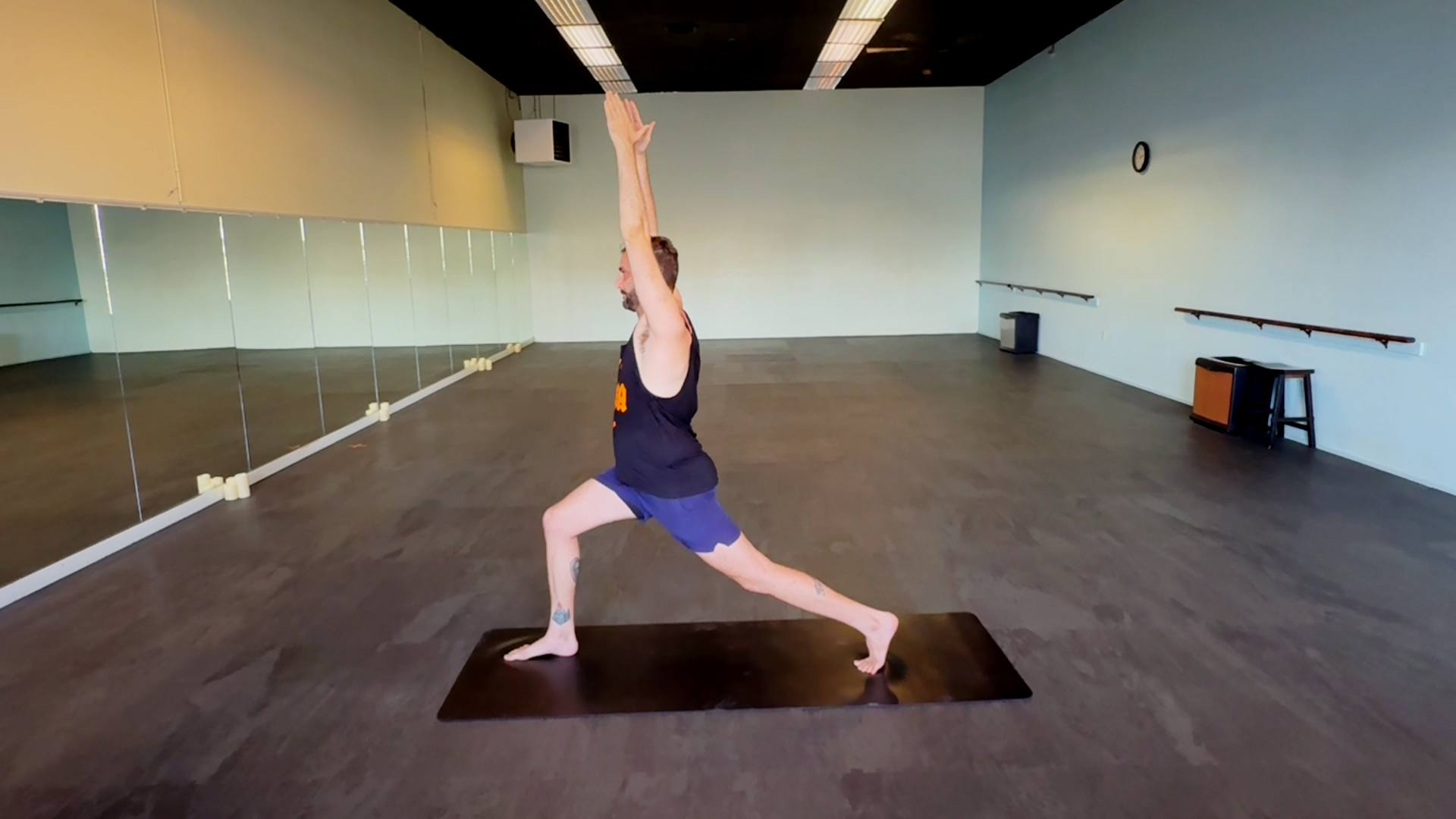
Crescent Pose (Ashta Chandrasana)
Crescent Pose is where grounding meets elevation. Unlike Warrior 1, your back heel is lifted, which immediately demands more balance and engagement from your toes. You are not anchored through two flat feet. You are rising from a narrower base.

Warrior 2 (Virabhadrasana II)
Warrior II expands on what Warrior I began. If Warrior I is the first step forward, Warrior II is the widening of your stance — the moment where you claim more space and ground yourself in unwavering presence. This pose teaches you to open in two directions at once, stretching your awareness and balance across a wider field.