
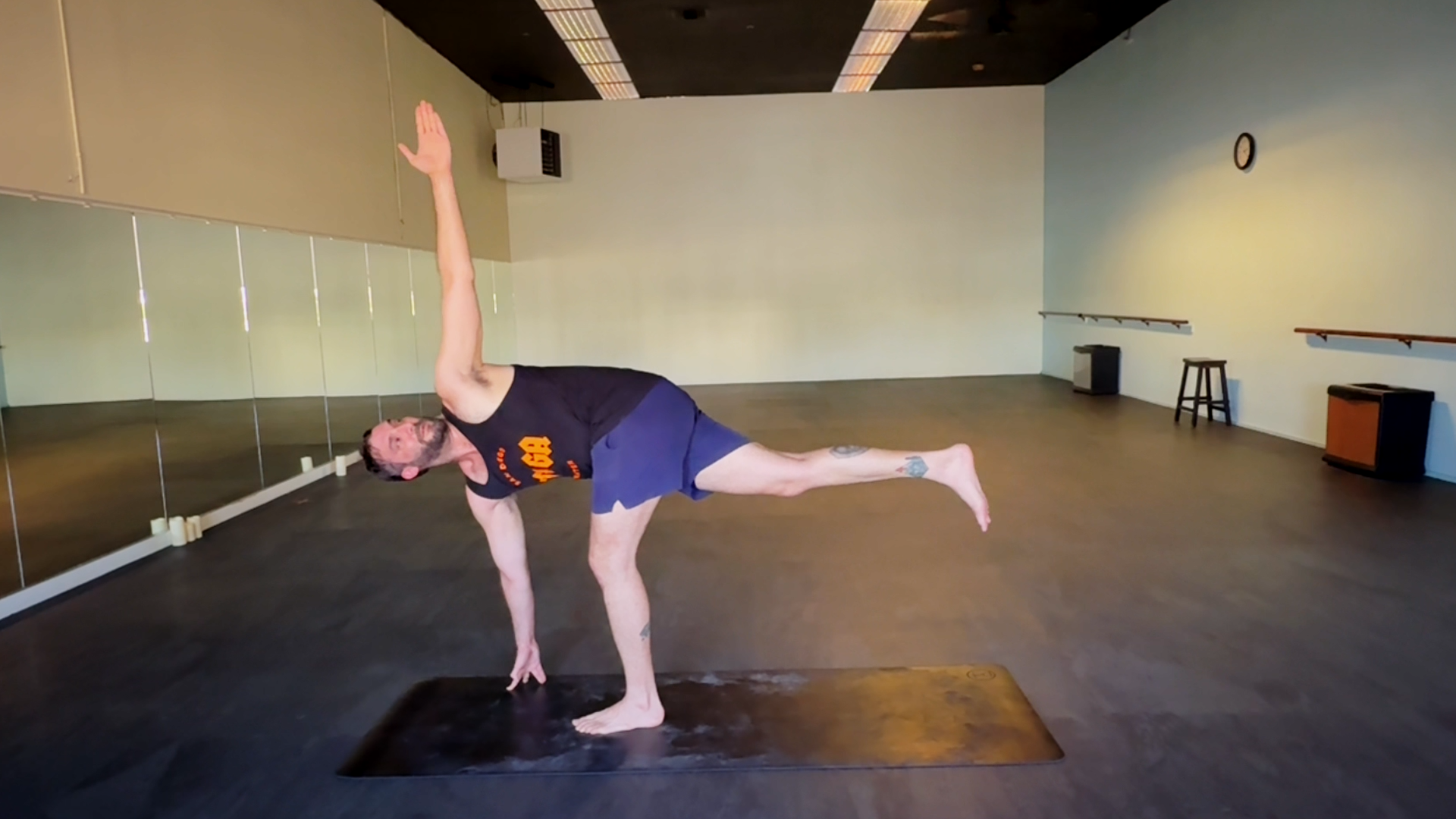
Revolved Half Moon (Parivrtta Ardha Chandrasana)
Revolved Half Moon takes the balance of Half Moon and changes the direction of the opening.
On the Warrior’s Path, Revolved Half Moon represents adaptability. You have already learned how to find your center. Now the pose asks whether you can keep finding it while your perspective changes.
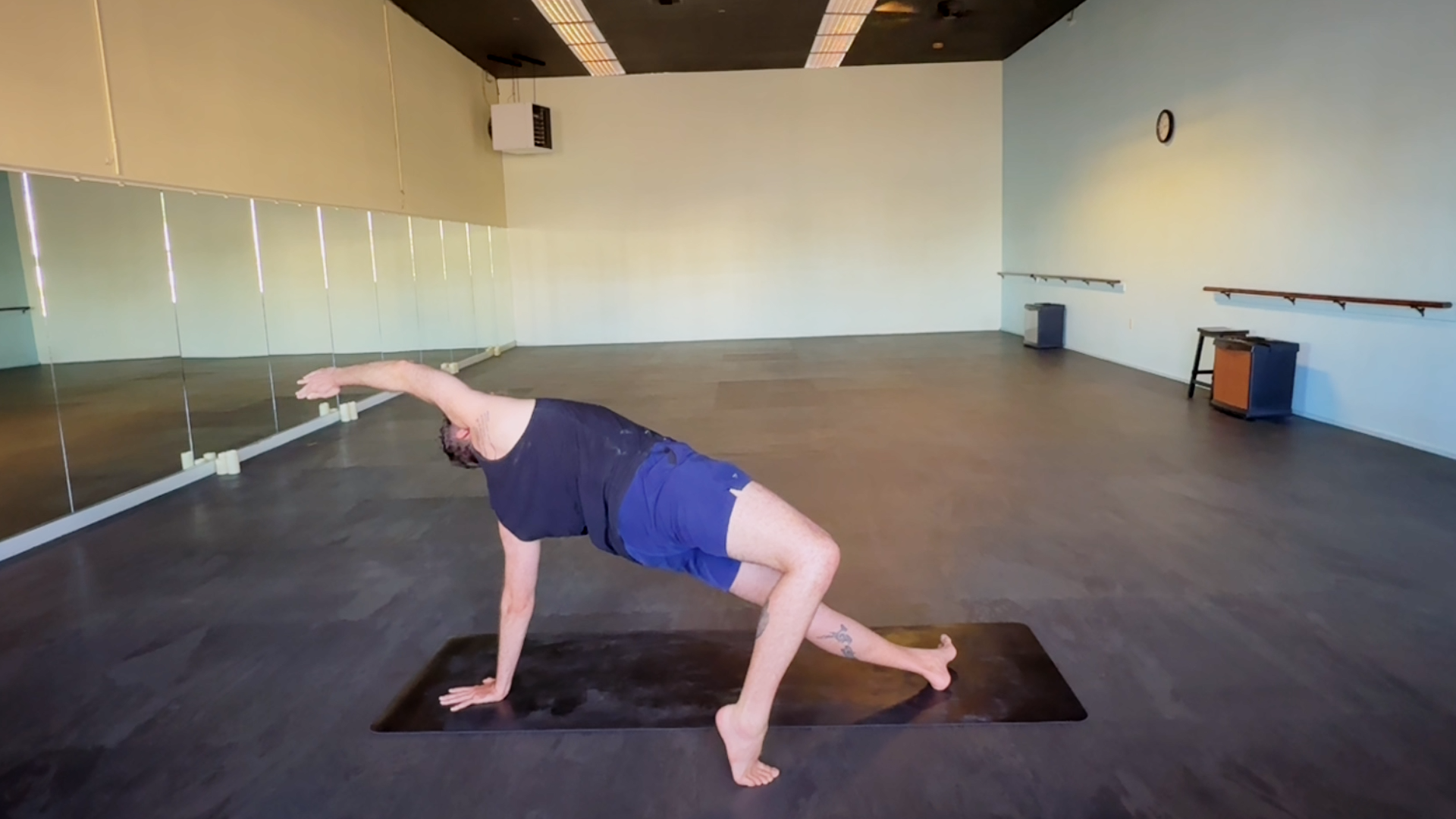
Wild Thing (Camatkarasana)
Wild Thing begins with control and then asks you to open beyond it. On the Warrior’s Path, it represents freedom. You have built the foundation. You have developed the strength. Now you learn what happens when you trust both enough to move beyond the expected.
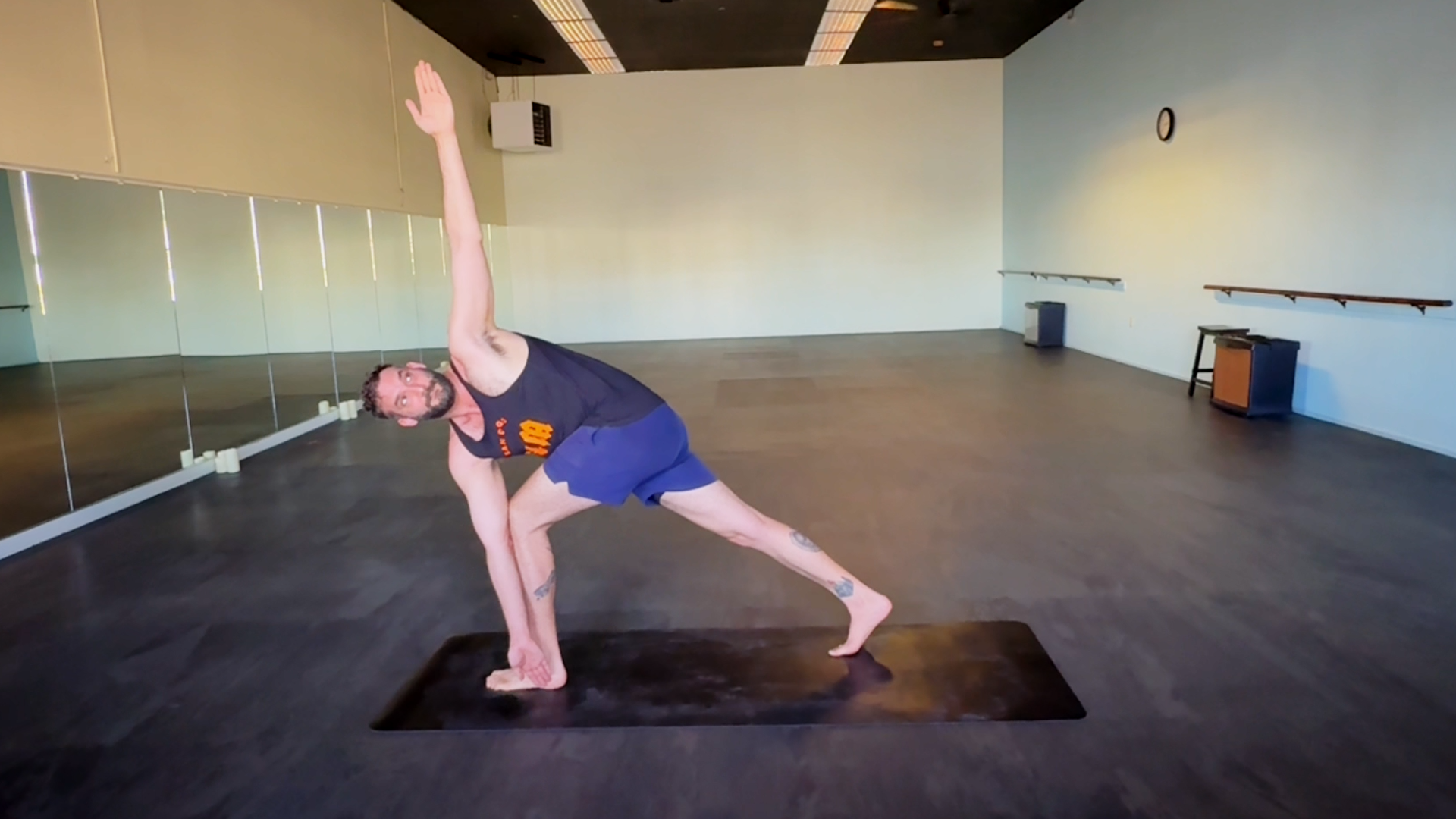
Revolved Side Angle (Parivrtta Parsvakonasana)
Revolved Side Angle builds on the strong foundation of a lunge by introducing rotation. This is not a twist you simply fall into. Your legs and your bottom hand ground you. Your spine lengthens. Then your torso turns across your front leg, asking you to maintain everything you have already built while adding another layer of complexity.
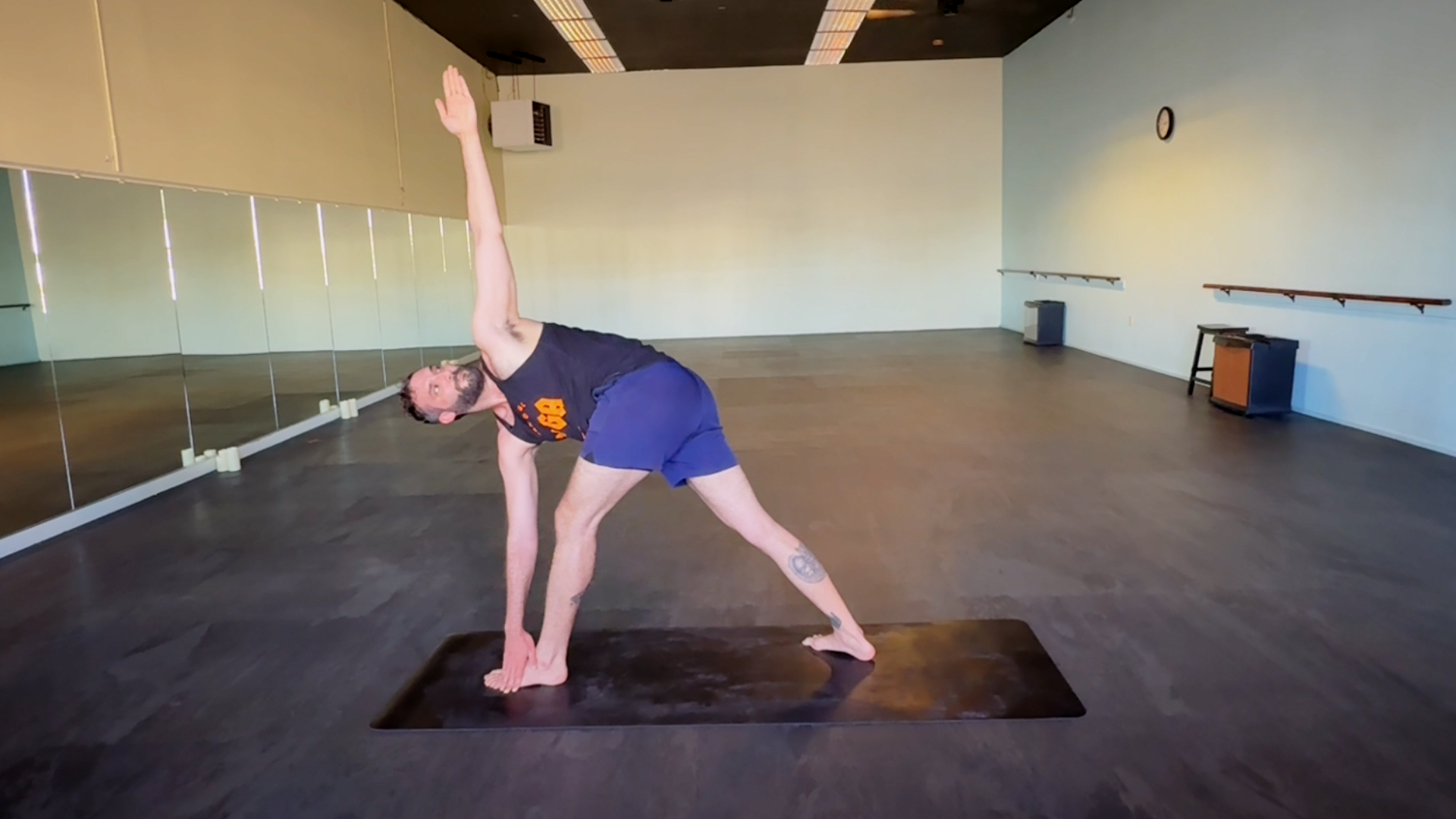
Revolved Triangle (Parivrtta Trikonasana)
Revolved Triangle is not passive. It is not forgiving. It asks for strength, precision, and patience all at once. On the Warrior’s Path, it represents clarity under tension. It is the warrior who remains composed while navigating opposing forces.
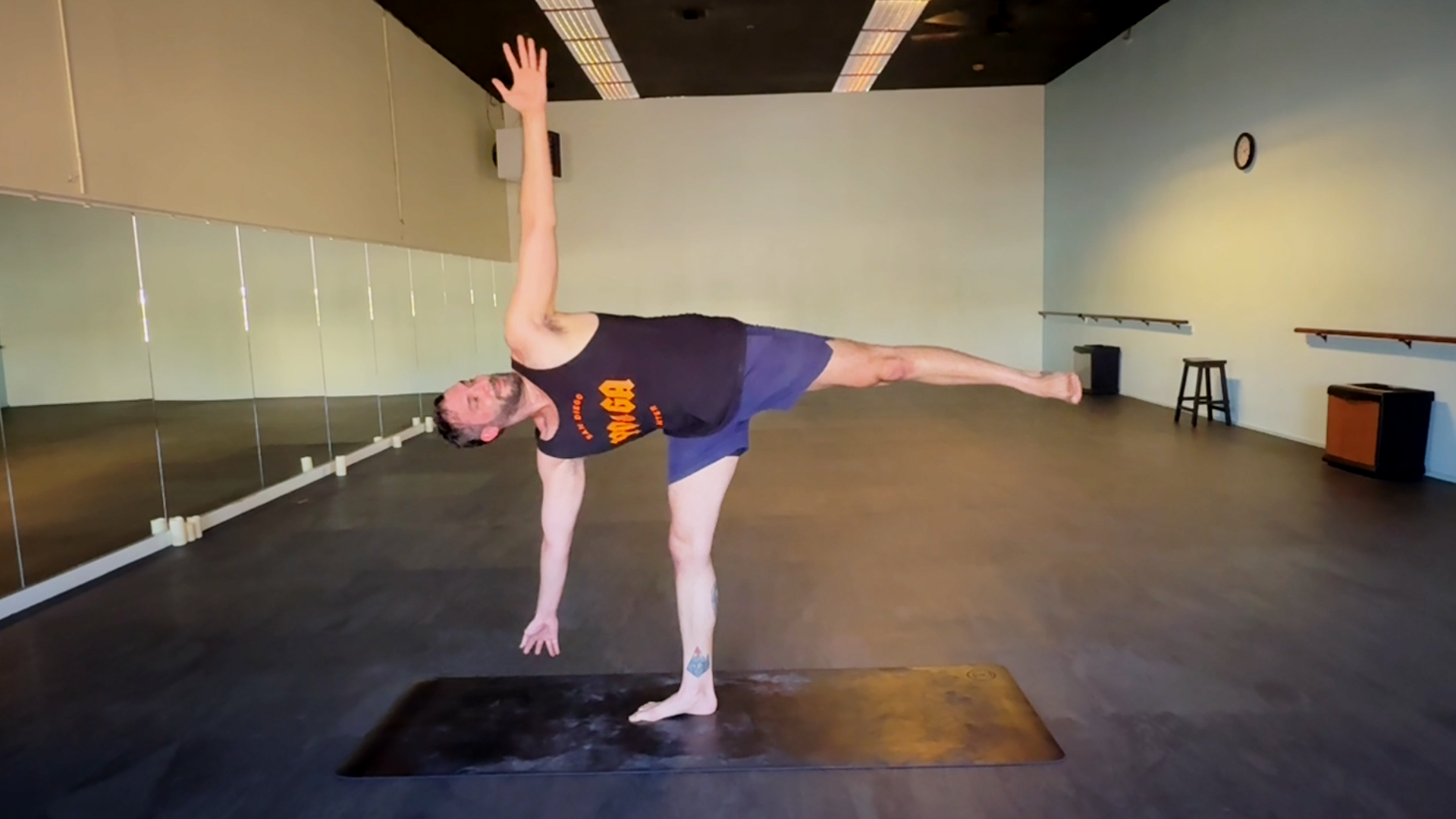
Half Moon (Ardha Chandrasana)
Half Moon Pose builds from the foundation of Triangle and shifts it into balance. You are no longer supported by both feet. One leg roots down while the other lifts. Your body opens wide into space. This is where structure meets instability.

Warrior 3 (Virabhadrasana III)
Warrior III is the leap — the transformation of grounding into flight. If Warrior I is the step and Warrior II is the stance, Warrior III is the soaring strike forward. This pose challenges you to balance strength and surrender, stability and expansion. It strips away the extra, leaving only precision, focus, and trust in your own edge.