
Why Do My Wrists Hurt During Yoga?
Wrist pain is one of the most common concerns I hear from yoga students, regardless of how long they’ve been on the mat. In fact, the longer they’ve practiced with incorrect form or with their attention displaced to their wrists, the more they might complain about how much they hurt.
Sometimes it shows up in Downward Dog. Other times it might appear halfway through Plank or Chaturanga. Occasionally, it lasts long after class, leaving people wondering if yoga just isn't for them.
If that’s you, let’s talk. Most of the time, wrist discomfort doesn't mean your body isn't built for yoga. It simply means your wrists are being asked to do something they haven't been prepared to do yet.
Think about how you use your hands throughout the day. You type, drive, hold your phone, carry groceries, and open doors. You may lift weights, which adds a lot of load-bearing into your wrists, but rarely do you ask your wrists to support a significant percentage of your body weight.
Then you step onto a yoga mat. Suddenly, you’re holding poses that require you to support yourself with your hands, and you’re often asked to balance on both—or even just one—hand.
That's a tremendous change in demand.
Instead of asking, "What's wrong with my wrists?" a better question might be whether you’ve prepared them for what you want them to do.
Whether you have or haven’t experienced it, let’s look at some of the most common causes of wrist pain in yoga and what you can do about it.
Not All Wrist Pain Is the Same
Before we dive into technique, it's important to recognize that not all discomfort is the same.
You might experience:
stiffness before class
muscular fatigue after practice
pressure while bearing weight
pinching in certain positions
sharp pain
numbness or tingling
These sensations shouldn't be lumped together, and you may experience them at different times. You may also experience something not listed and perhaps harder to describe.
Feeling your wrists work during a challenging practice isn't unusual, but sharp pain inside the joint isn't something to ignore. Neither are persistent swelling, numbness, or symptoms that continue long after class ends.
Learning to distinguish between effort and pain is one of the most valuable skills you'll develop as a yoga practitioner.
If it’s effort-based, here’s what you can consider:
1. Your Wrists Aren't Used to Bearing Weight
This is the most common cause of wrist pain, and it can improve over time with consistent practice. Unlike our feet, our hands simply weren't designed by modern life to support our body weight every day.
Our ancestors probably crawled, climbed, and spent more time on the ground. Most of us spend our days sitting at desks, then come to yoga expecting our wrists to support us through poses that mimic similar movements. That's like deciding to run a half marathon without ever jogging around the block.
Your wrists aren't weak; they’re just inexperienced. Fortunately, joints adapt remarkably well when they're gradually and consistently exposed, so while this may be frustrating, don’t give up on yourself quite yet.
2. You're Dumping Into the Heel of Your Hand
Watch someone new to yoga in Downward Dog. Most will collapse all their weight into the base of their palms. The heel of their hand absorbs nearly everything while their fingers become passive passengers.
Instead, think about spreading your fingers as wide as possible. Press evenly through your entire hand. Grip the floor slightly with your fingertips. Pay particular attention to the mound beneath your index finger and thumb, which often lifts without us realizing it.
Your hands should feel active. They're supporting you, not just taking a break underneath you. Sometimes, subtle shifts change everything.
3. Your Shoulders Aren't Helping
Your wrists are only one link in a much larger chain. If your shoulders collapse, your wrists compensate. If your upper back loses stability, your wrists absorb more force.
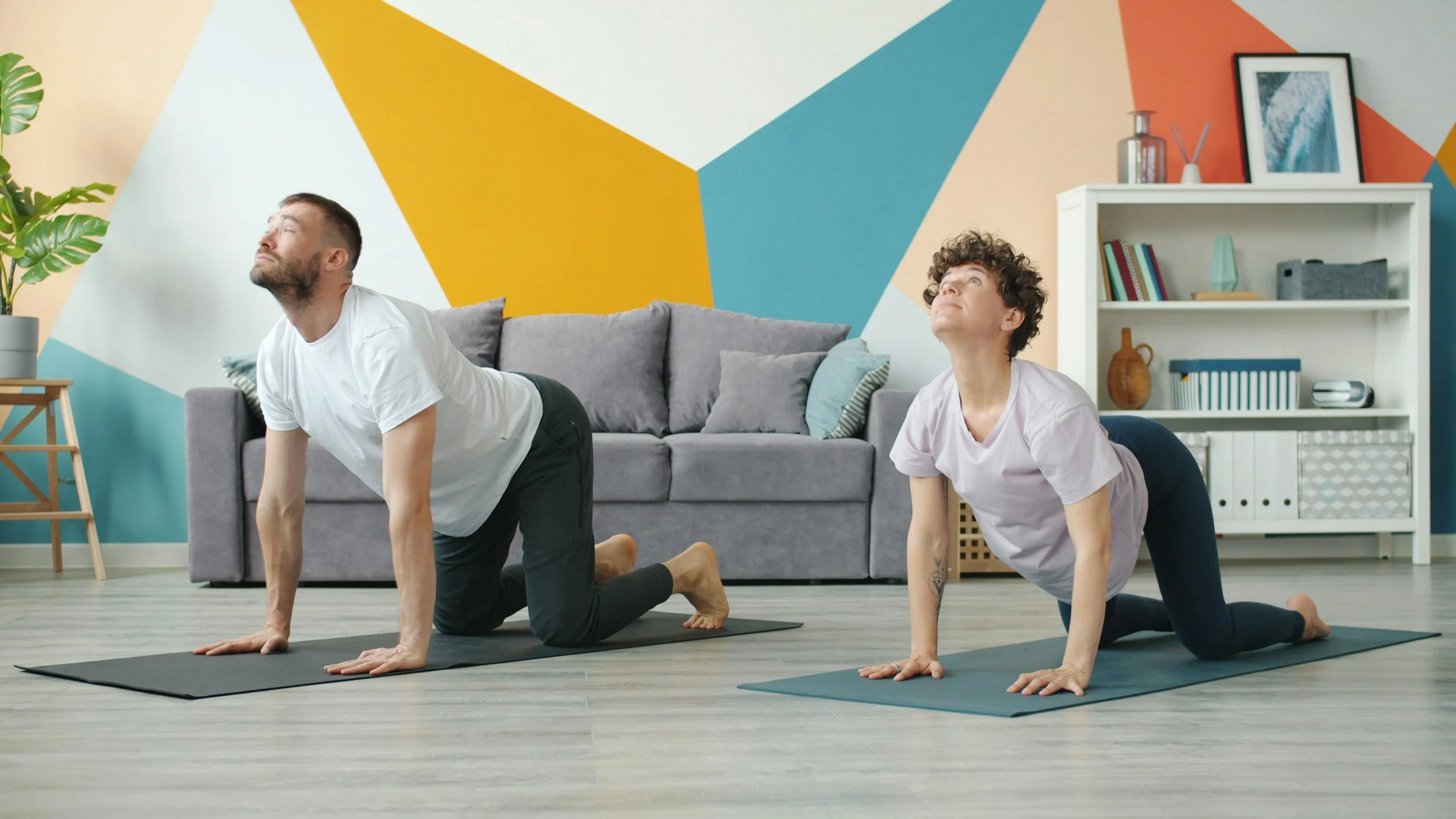
Think about pushing the floor away anytime your hands are on it. The easiest way to practice this is from a Table Top position.
Instead of sinking into your shoulders, gently protract (round) through the shoulder blades and create space between your ears and shoulders. Now your arms, shoulders, chest, and core all begin sharing the workload.
Yoga is rarely about one body part. Everything works together, so even if your intent is to strengthen your wrists, make sure the surrounding muscles, limbs, and joints are equally prepared to carry the load.
4. You're Holding More Tension Than You Need
One of my favorite things to observe while teaching is people's hands. Whenever a pose becomes difficult, they often grip the floor for dear life. Their jaw clenches, their shoulders hunch toward their ears, and their breath becomes labored and shallow (if they remember to breathe at all).
Ironically, all that extra effort often makes the pose harder.
Yoga asks us to distinguish between support and tension, which are far from the same thing. That’s why you hear teachers cue things like “soften your jaw” or “breathe slower.” It’s why they ask you to squeeze certain things while releasing the squeeze in others.
Sometimes your wrists themselves aren't the problem. They're simply responding to tension everywhere else.
5. You're Moving Faster Than Your Body Is Ready For
Vinyasa classes move quickly and often link breath to movement, with constant transitions and shifts from one pose to the next.
Those who get “lost in the flow” either experience excitement and bliss, while others feel totally lost.
Yoga has a way of exposing weaknesses surprisingly quickly, whether by revealing physical limitations or highlighting the quality of your mind.
There's nothing wrong with slowing down. You can take a Child’s Pose when you need to, skip a Chaturanga, or drop to your knees for more support. Build your strength gradually rather than forcing your way through everything.
One of the biggest misconceptions in yoga is that modifying somehow means you're falling behind. You're not. You're practicing intelligently, which is where the real advanced practice happens.
6. Your Wrists Need More Mobility
Sometimes range of motion is the limiting factor over lack of strength. Many yoga poses require significant wrist extension, and if your body doesn't comfortably have that range, it will compensate. Often that compensation creates discomfort.
Improving mobility doesn't mean forcing a stretch, but gradually teaching your nervous system that new ranges of motion are safe and controllable.
Mobility should feel patient, never forced. It’s also one of the most confronting and potentially frustrating parts of the practice, so be kind to yourself as you explore.
7. You Haven't Been Given Permission to Modify
This one has nothing to do with anatomy but rather with either a mindset or the teachers you’ve come into contact with.
I've watched students continue pushing through painful wrists simply because everyone else in class stayed in the pose. I’ve heard others say no one has ever given them permission to modify, while others admit they don’t know what modifications are or how to use them.
No matter the case, remind yourself that yoga isn't a competition.
There is absolutely nothing wrong with using props or modifications to make the pose more accessible. They’re not shortcuts but rather tools that serve as building blocks for the posture of choice.
When Should You Stop?
Yoga should challenge you. That’s the point.
What it should not do, however, is create sharp pain. That’s why you also may hear teachers say to “back off to sensations of pain.” Discomfort and pressure are much different from:
sharp joint pain
persistent swelling
numbness or tingling
pain that continues well after class
difficulty bearing weight during everyday activities
If this is the case, you may want to seek professional medical advice to ensure there aren’t any underlying issues. We’re not here to diagnose injuries today, but to build healthier movement patterns and habits.
Your wrists aren't an obstacle to your yoga practice; they're another part of your body asking to be included. Give them the same attention as your breath, the same patience as your balance, and the same consistency you bring to your practice.
You may find, over time, that your wrists were never holding you back, but just waiting for you to prepare them.
Related Posts
Wrist pain is one of the most common concerns I hear from yoga students, regardless of how long they’ve been on the mat. In fact, the longer they’ve practiced with incorrect form or with their attention displaced to their wrists, the more they might complain about how much they hurt.
Instead of asking, "What's wrong with my wrists?" a better question might be whether you’ve prepared them for what you want them to do.