
Why We Move Side to Side in Yoga
Consider this plus sign:
+
Now imagine living your entire life moving only along the vertical line.
Forward. Backward. Forward. Backward.
That's how most of us move.
We walk forward. We run forward. We climb stairs. We squat. We drive. We sit down and stand back up. Even most strength training programs revolve around pushing, pulling, lunging, or hinging in front of us.
While all the sagittal movement happens frequently, the horizontal line on the plus sign gets ignored. Frontal movement hardly exists.
Then we step into a yoga class. Suddenly we're reaching left and right. Side bending. Twisting. Balancing. Opening through the ribs. Exploring movements that feel awkward simply because we rarely ask our bodies to move that way.
Yoga, especially in practices like vinyasa, reminds us that movement isn't just about going forward. Your body deserves to explore every direction.
Life Happens Mostly in One Plane
Without turning this into an anatomy lecture, our bodies move primarily in three planes of motion:
Sagittal: Forward and backward movement.
Frontal: Side-to-side movement.
Transverse: Rotational movement.
(As a side note, I will die on the hill that “frontal” movement should mean forward and backward and “sagittal” should mean side-to-side, because it makes a lot more sense, but I did not invent these terms or anatomical decisions, so I digress.)
The problem isn't that we're incapable of moving in all three planes of movement; it’s that modern life doesn’t present us with the opportunities to.
Most of us spend our days sitting at a desk, walking from place to place, driving a car, exercising on machines, or repeating the same handful of movement patterns.
We're incredibly practiced at moving forward, but not so much moving sideways.
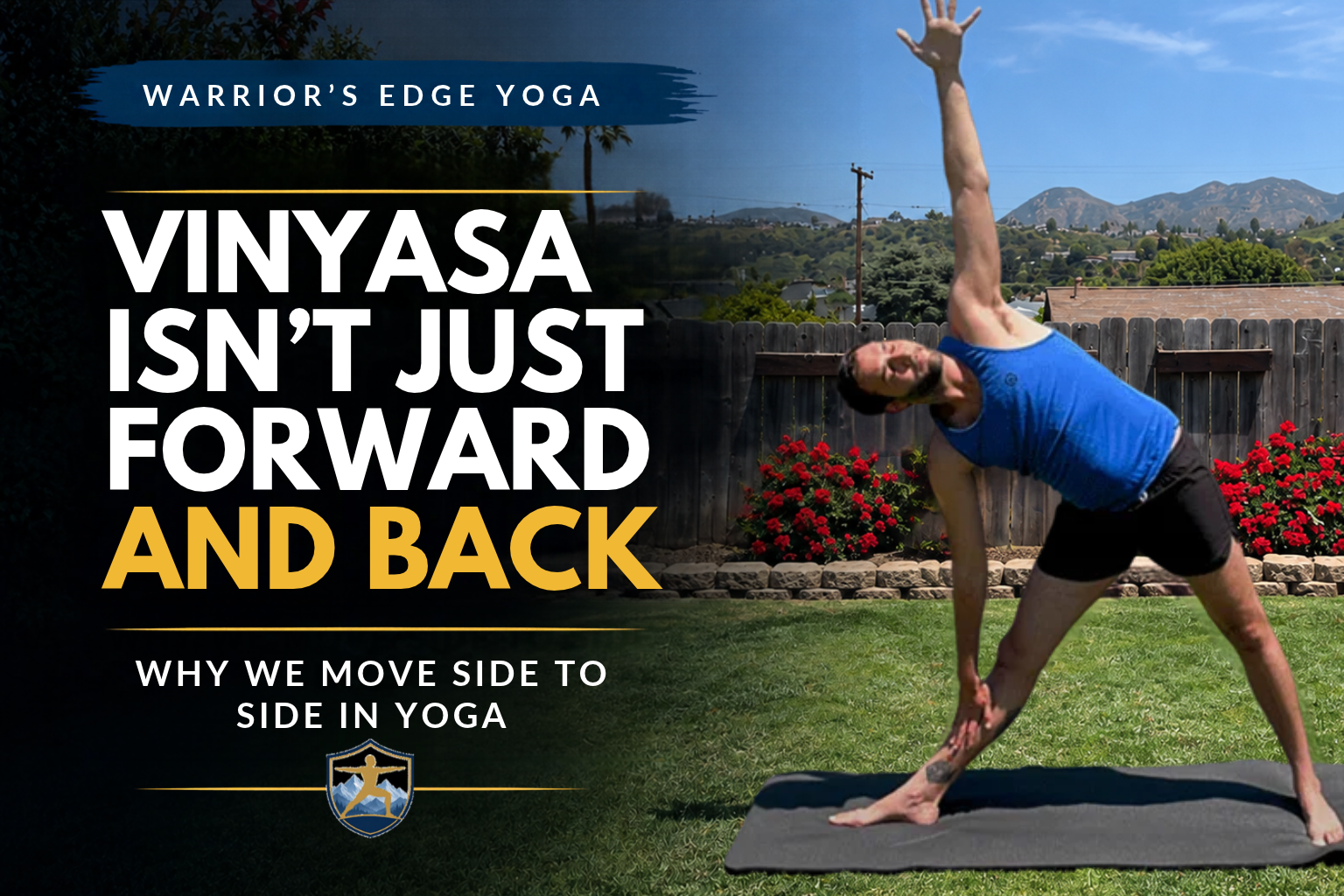
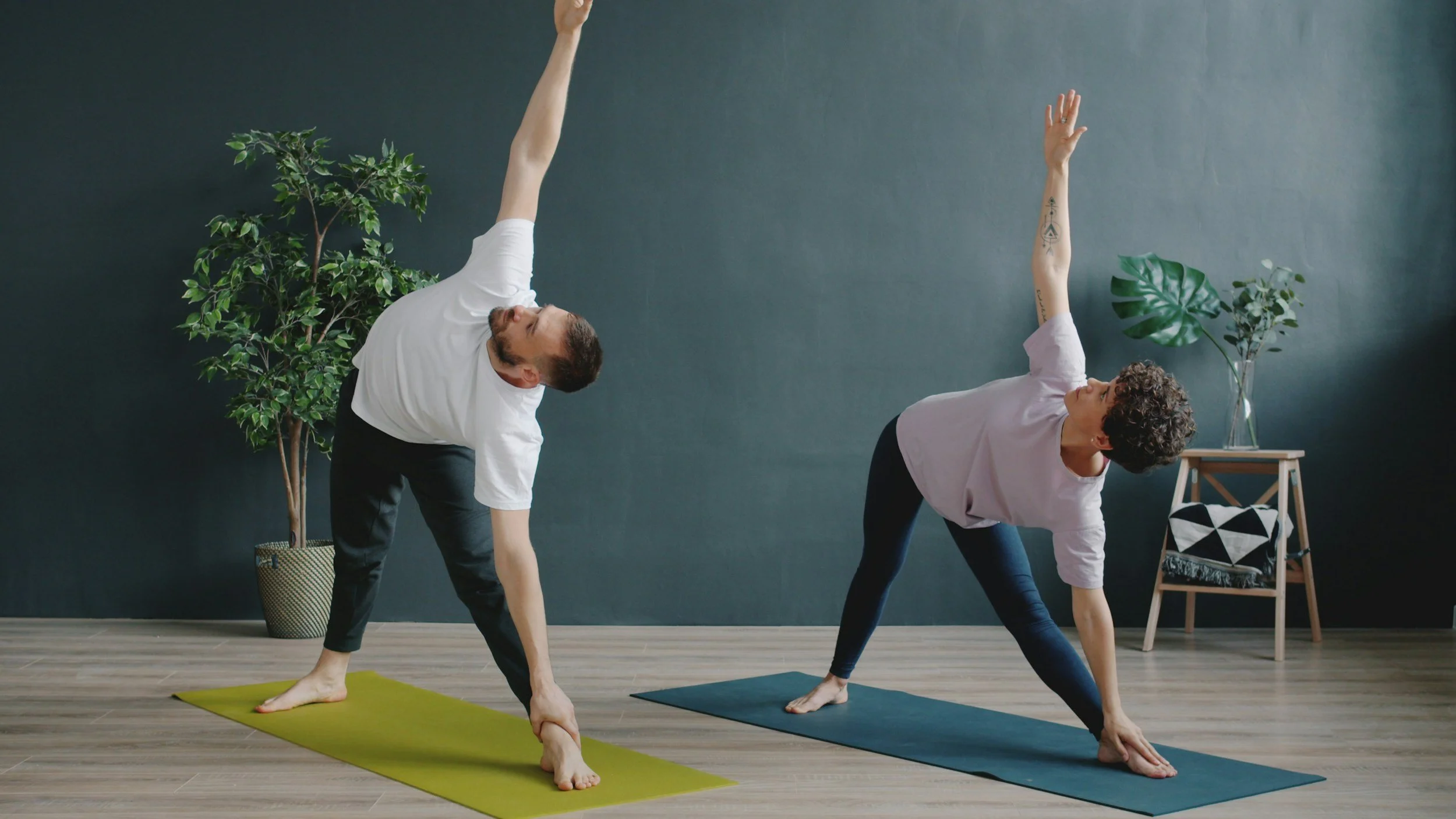
That's one of the reasons poses like Triangle or Half Moon can feel surprisingly foreign. They're not impossible. They're just unfamiliar.
Lateral Movement Builds Stability
People often think balance is all about standing on one foot. That’s true, in its own right, but balance is really about managing movement from every direction.
When you reach sideways, your body has to reorganize itself. Your feet become more inactive, your hips work harder to keep you steady, and your core engages to support your spine. Your ankles might even make tiny adjustments you might not ever notice.
This isn’t just flexibility. It’s coordination. The more directions your body learns to move in confidently, the more resilient it becomes.
Have you ever taken a yoga class and felt sore along the sides of your ribs the next day? Or maybe along the outside of your hips?
That's usually not an accident. Lateral movement engages muscles your body rarely reaches in traditional workouts, and they’re usually the tiny stabilizing muscles that are otherwise harder to target.
Your obliques help support your trunk. Your gluteus medius stabilizes your pelvis. Your quadratus lumborum helps support side bending and upright posture. Even the small muscles between your ribs begin participating more actively.
You don't need to memorize anatomical names to recognize the importance of your body working as a team. When you move in different directions, more players get involved.
Your Spine Was Designed to Move
One of the biggest misconceptions about protecting your back is that keeping it perfectly still somehow makes it healthier.
Our spines weren't built for stillness. They were built for movement. That’s why they can flex, extend, rotate, and side bend. When we only move in one or two of those directions, the others often become stiff simply because we stop asking our bodies to use them.
Yoga gently reintroduces those forgotten movements by encouraging exploration of them. It doesn’t force range of motion, but over time, that exploration often translates into feeling less stiff throughout the rest of your day, as well.
This type of movement also improves breathing by creating space on one side of the body while gently compressing the other when we side-bend.
That movement encourages the rib cage to expand in ways it rarely does in everyday life, because your breath suddenly has somewhere new to go. You begin noticing the sides of your lungs. Your intercostal muscles—the small muscles between your ribs—start participating more fully.
Even Ujjayi breathing can feel different because your rib cage has more freedom to expand.
Breath and movement have always been partners in yoga.
Sometimes changing the direction of your movement changes the quality of your breath.
Why Vinyasa Feels Different
Many forms of exercise focus on repetition. There's value in that. Repeating movements helps us build strength, speed, endurance, and muscle memory.
Vinyasa takes a slightly different approach.
Instead of repeating the exact same movement over and over, it often invites us to explore the same postures in a variety of different transitions and expressions. You may enter Warrior 2 from Crescent Pose one day, then from Revolved Side Angle the next.
Regardless of the posture choice, within a few minutes of a vinyasa practice, you’ve moved forward, backward, sideways, perhaps balanced on one foot, rotated, and supported your body with both your hands and your feet.
Very few movement practices ask your body to be that adaptable, which is one reason vinyasa feels so dynamic. You’re not just exercising. You're expanding your movement vocabulary.
Why It Feels So Awkward at First
If you've ever felt clumsy in Triangle Pose or struggled to find the proper expansion in a Prayer Twist, you're not alone. There are many mechanics that go into every pose, and they run much deeper than “align your top arm with your bottom.”
I’ve been there. I get it. Trying new poses can feel awkward, and that awkwardness can make students feel like they’re doing something wrong. The problem is that they focus on it as “wrong” rather than seeing it as “new.”
Imagine putting on a pair of ice skates for the first time. If you expect to glide effortlessly across the rink on your first go, you’ve already entered with the wrong mindset. If you expect to wobble, perhaps to fall and get back up and try again, and to let yourself move slowly, have fun, and let loose, you’re much more likely to have a successful outing.
It’s the same idea with lateral movement. Your body hasn’t forgotten how to move sideways or refuses to find the twist. It’s simply out of practice.
Movement Beyond the Mat
One of the best things about yoga is that the more you practice, the more you realize how much of what you learn rarely stays on the mat.
Lateral strength shows up everywhere. It could be reaching into the back seat of your car, picking up something beside you, or playing with your dog. It might be walking across uneven ground or catching yourself if you lose your balance.
The stronger and more adaptable your body becomes in different directions, the more prepared it is for the unpredictable movements life throws at you every day. That’s functional movement.
Yoga isn't special because it asks us to move more. It's special because it asks us to move in every possible direction and shows how each one teaches our bodies something new.
Your body was never meant to live on only one line of that plus sign. The greatest strength may come from realizing that it’s not about moving farther forward, but about remembering you're capable of moving in every direction.
Related Posts
Wrist pain is one of the most common concerns I hear from yoga students, regardless of how long they’ve been on the mat. In fact, the longer they’ve practiced with incorrect form or with their attention displaced to their wrists, the more they might complain about how much they hurt.
Instead of asking, "What's wrong with my wrists?" a better question might be whether you’ve prepared them for what you want them to do.